Factory farms UK are industrial systems that keep chickens, pigs and cattle indoors at high stocking densities. Around 70% of UK farmed animals are reared in intensive units (Compassion in World Farming, 2023). This expert roundup explains how those systems work, what welfare standards actually require, and how consumers can support better farming.
How common are factory farms UK — and which animals are most affected?
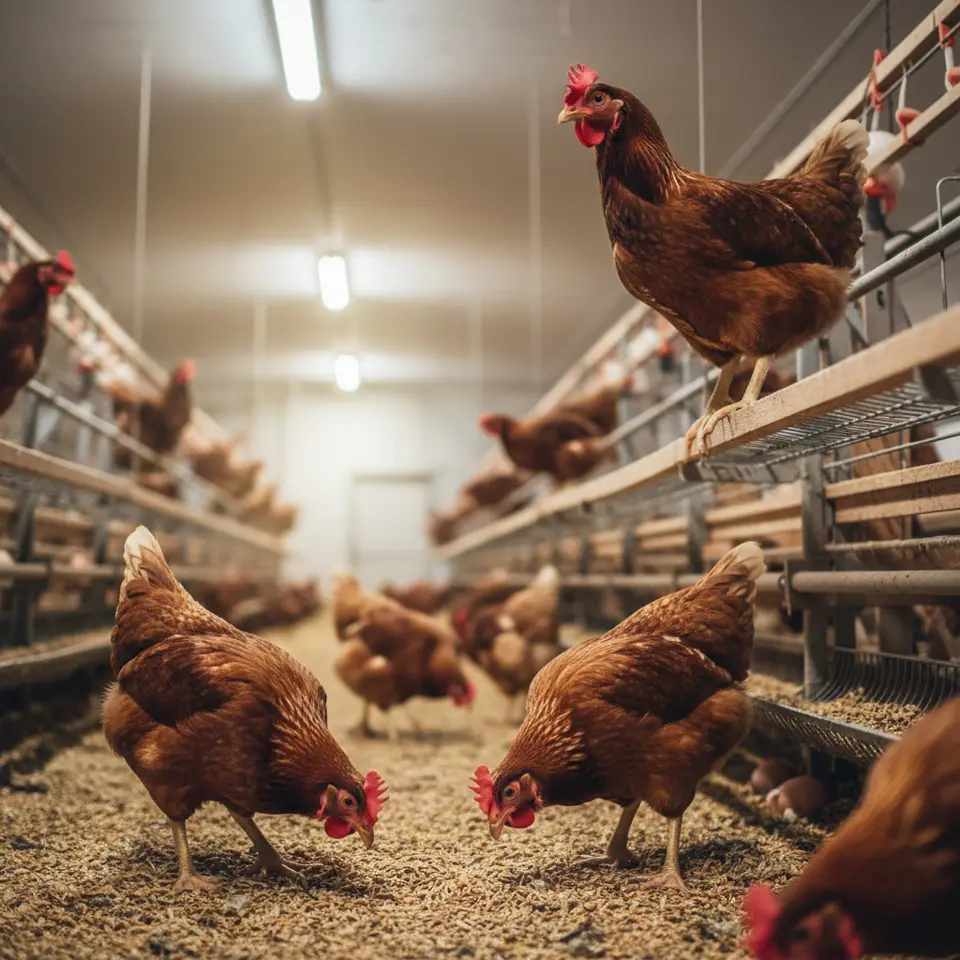
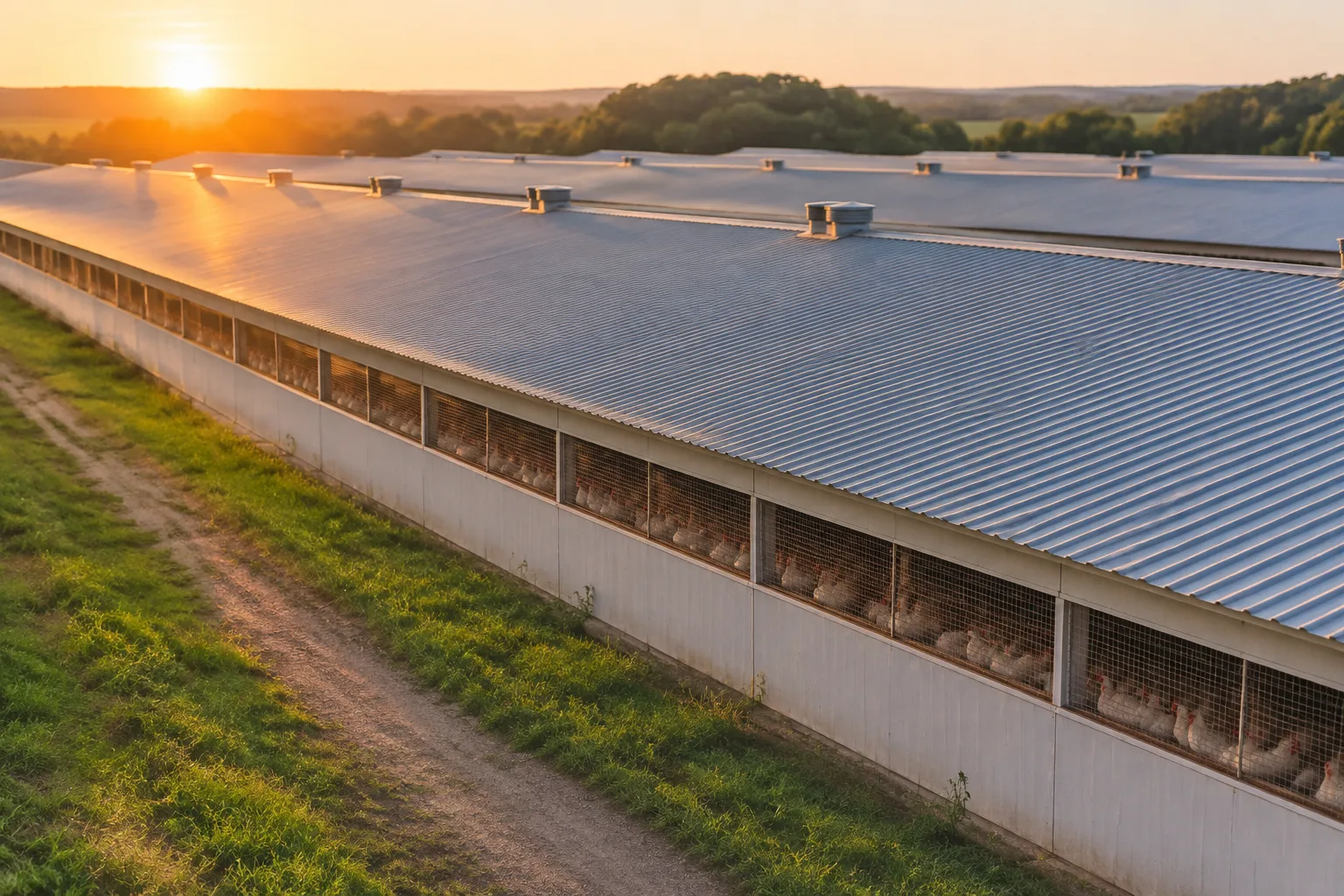
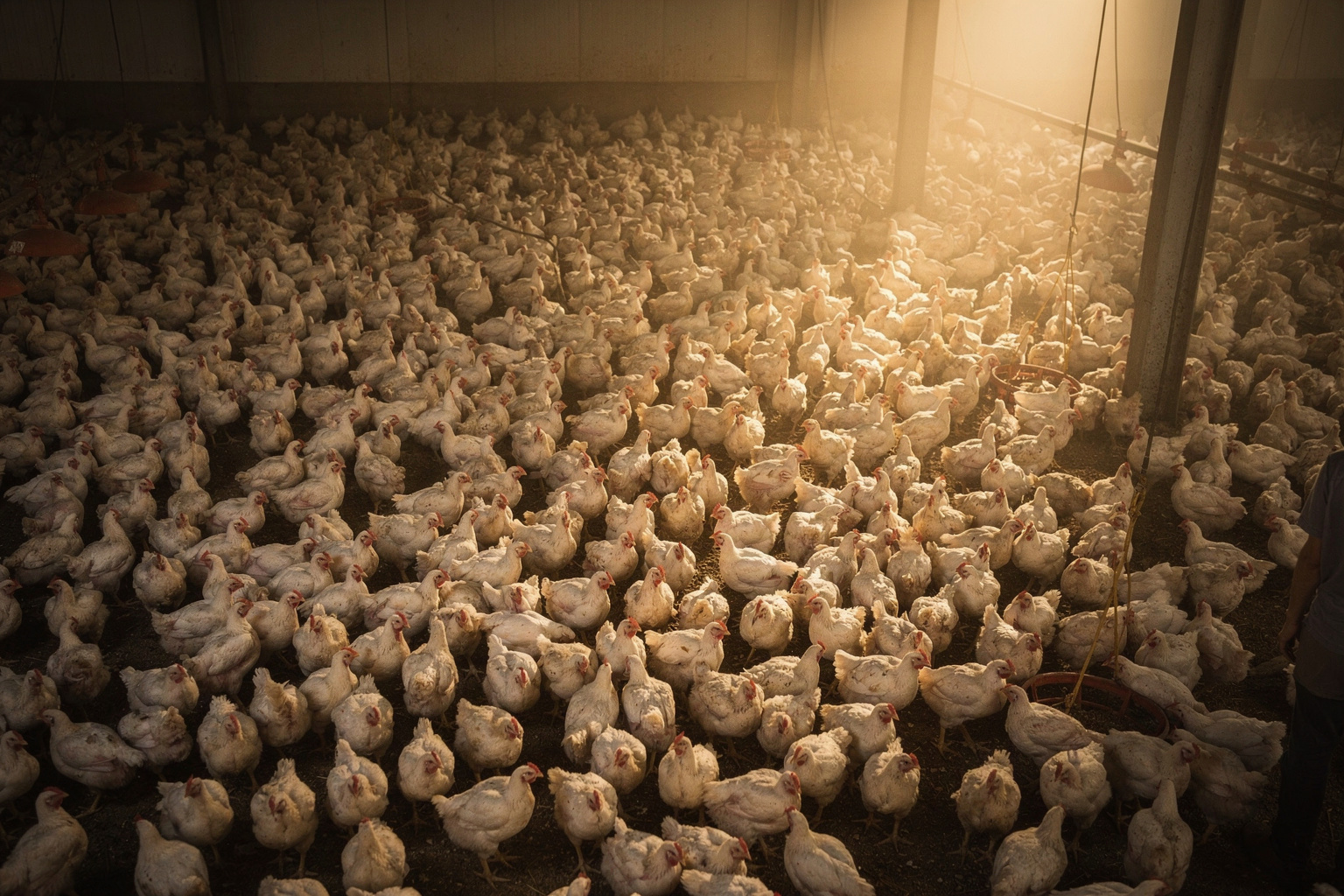
Intensive systems dominate UK chicken production and are widespread in pig and dairy farming, while beef cattle are more often grass-reared for part of the year. The scale is enormous: the UK slaughters over 1 billion meat chickens annually, and the average broiler shed holds 20,000 to 50,000 birds (Defra, 2024).
Pigs are the second most intensively farmed species. Around 60% of UK breeding sows are kept indoors, and many farrowing sows are still confined in crates for weeks at a time despite the 1999 stall ban (AHDB, 2024). Dairy is more mixed: most cows graze in summer, but many are housed indoors for five to six months a year, and a growing number of large units keep cattle inside year-round.
“The UK has some of the better welfare laws on paper, but enforcement is thin. What matters is not the headline ban but the density, enrichment and lighting inside the shed — and on that, most meat chicken production still looks industrial.”
| Species | Typical system | Space per animal | Outdoor access |
|---|---|---|---|
| Meat chicken (broiler) | Indoor shed, 20,000-50,000 birds | About 0.8-1.0 sq ft | No |
| Laying hen | Indoor barn or free range | About 1.2-1.5 sq ft | Only if free range |
| Pig (grower) | Indoor slatted pen | About 8-10 sq ft | Rare |
| Breeding sow | Indoor crate or group pen | About 12-20 sq ft | No |
| Dairy cow | Grazing in summer, housed in winter | Varies by system | Seasonal |
What are UK welfare standards for chickens, pigs and cattle?
UK welfare standards are a patchwork of laws, assurance schemes and retailer codes. The legal baseline is the Animal Welfare Act 2006, which requires animals' needs to be met, but it sets no minimum space allowance for meat chickens — those sit in separate welfare codes of practice that are not always legally binding.
Chickens are the clearest case. The UK banned conventional battery cages for laying hens in 2012 and is phasing out enriched cages, but broiler chickens have no legal maximum stocking density. Red Tractor permits up to 38 kg per square metre, roughly 15-17 birds per square metre (Red Tractor, 2024). RSPCA Assured lowers this and requires enrichment and slower-growing breeds for some lines.
Pigs have stronger legal protections in some areas: the sow stall ban took effect in 1999, tail docking is restricted, and there are minimum pen sizes. But enforcement is inconsistent, and routine tail docking without pain relief continues on many farms. Cattle have no equivalent of the cage bans, though veal crates and tethering are prohibited, and dairy cows are subject to welfare codes on housing, bedding and access to pasture.
Do welfare labels like Red Tractor and RSPCA Assured mean better farming?
Assurance labels are not equal. Red Tractor is a baseline food safety and legal compliance scheme covering most UK meat; RSPCA Assured is a higher-welfare certification with independent inspections; Free Range and Organic require meaningful outdoor access. Only the higher tiers meaningfully change how animals live.
Consumers often read 'farm assured' as a welfare mark, but Red Tractor does not require outdoor access, slower-growing chicken breeds or an end to farrowing crates. RSPCA Assured does require enrichment, lower stocking density and more space, and it is the minimum standard many supermarkets use for their premium own-label lines (RSPCA Assured, 2024). Organic certification under UK law requires outdoor access, organic feed and lower stocking densities.
What do experts say about the biggest welfare problems?
Experts consistently point to three problems: fast-growing chicken breeds, confinement of breeding pigs and the lack of independent enforcement. Each affects hundreds of millions of animals in the UK alone.
Broiler chickens are bred to reach slaughter weight in 35-42 days, which puts strain on their legs and hearts. A 2023 study in Animal Welfare found that up to 30% of UK broilers show gait abnormalities. Farrowing crates remain legal for the first weeks of a piglet's life, despite evidence that they increase stress and reduce maternal behaviour. And because welfare inspections are stretched, breaches often go unrecorded.
“You cannot inspect your way out of a system that is designed for throughput. If 1 billion animals pass through sheds each year, the only realistic lever is to reduce the number of animals reared intensively — which means eating fewer of them.”
Share of UK farm animals in intensive systems
How can consumers support better farming in the UK?
Consumers can shift demand by buying fewer animal products, choosing higher-welfare certification when they do, and supporting plant-based alternatives. Because intensive systems are driven by volume, the most powerful action is reducing overall consumption rather than swapping one label for another.
How to support better farming with your food choices
- 1
Cut back on chicken and pork
Chicken is the most intensively farmed UK meat. Replacing two chicken meals a week with beans, tofu or pulses reduces demand for broiler sheds.
- 2
Look for RSPCA Assured or Organic
These schemes require independent inspections, more space and enrichment. They are stronger than Red Tractor or generic 'farm assured' labels.
- 3
Choose free range carefully
Free range requires outdoor access, but flocks can still be large. Combine it with RSPCA Assured or Organic for the strongest welfare guarantee.
- 4
Ask supermarkets and restaurants
Retailers set their own welfare codes. Emailing customer service to ask for slower-growing chicken breeds and an end to farrowing crates shifts corporate policy.
- 5
Try plant-based swaps
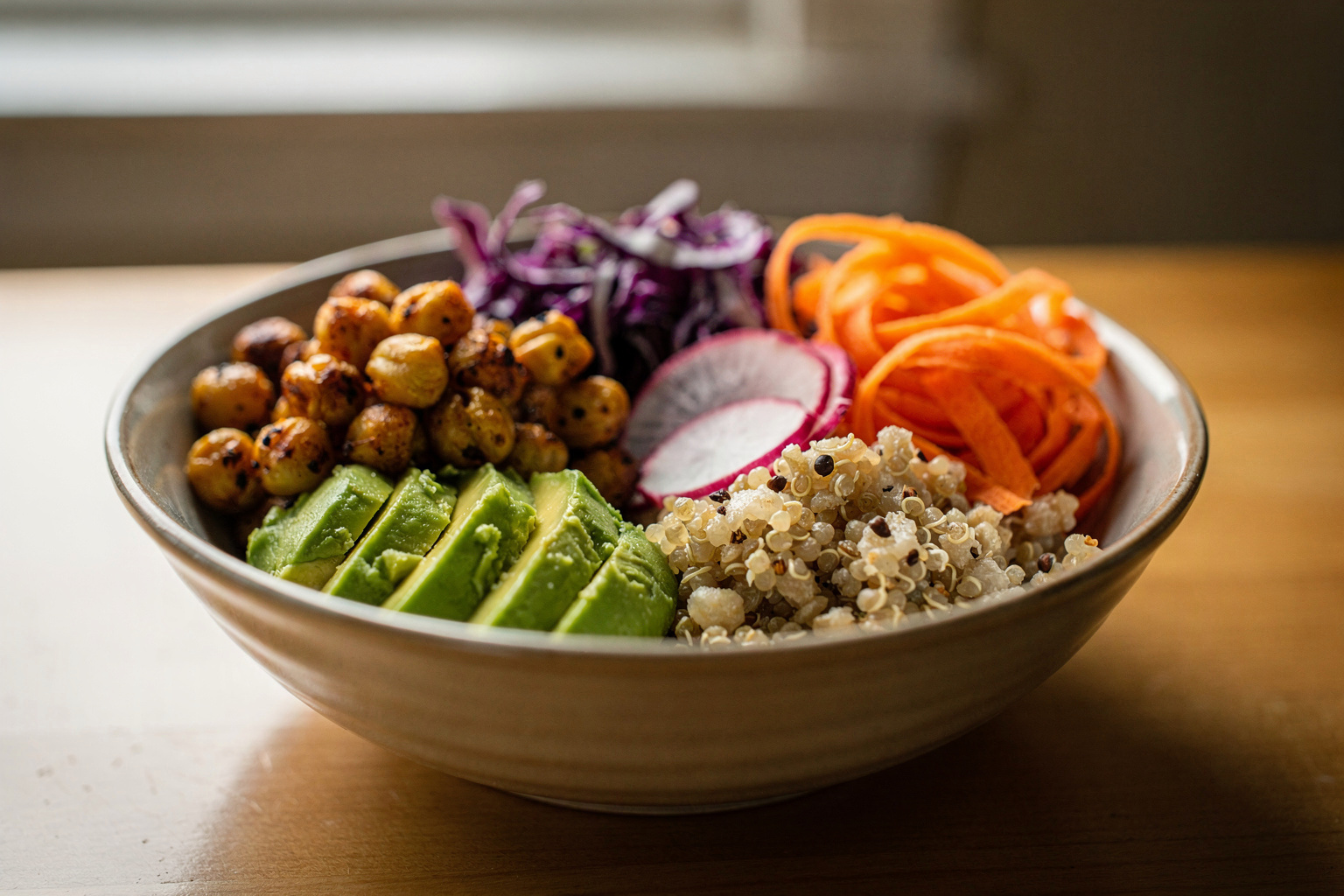
Plant proteins such as lentils, chickpeas, tofu and tempeh have a far lower animal-welfare and climate footprint than any meat, including higher-welfare meat.
- 6
Support welfare campaigns
Charities such as Compassion in World Farming, the RSPCA and Humane League UK run campaigns on stocking density, breed reform and enforcement.
- 7
Check local farm shops and CSAs
Some small mixed farms rear animals on pasture. Visiting, asking about breeds and space, or joining a community-supported agriculture scheme gives direct transparency.
What does the future hold for factory farms UK?
Three forces are converging: tighter welfare rules, climate commitments, and changing diets. The UK's Climate Change Committee has recommended a 20% reduction in meat and dairy consumption by 2030, and plant-based sales continue to grow despite a slowdown in some categories (CCC, 2023; Kantar, 2025).
At the same time, the UK has been slower than the EU on some reforms. The EU is phasing out conventional cages for laying hens and has proposed stricter rules on broiler density, while the UK's post-Brexit welfare reviews have stalled on meat chickens. Campaigners argue that without statutory space limits, voluntary assurance schemes will keep setting the ceiling rather than the floor.
Frequently asked questions
Is factory farming legal in the UK?+
Yes, most intensive systems are legal. The UK bans battery cages for laying hens and sow stalls, but there are no legal maximum stocking densities for meat chickens, and farrowing crates for pigs are still permitted for weeks at a time. Welfare codes set guidance rather than hard limits in several areas.
How many factory farms are there in the UK?+
There is no single official count because 'factory farm' has no legal definition. Around 70% of UK farmed animals are raised intensively, and the UK has roughly 1,000 large pig and poultry units, plus thousands of smaller intensive sheds (Compassion in World Farming, 2023).
Does Red Tractor mean high animal welfare?+
No. Red Tractor is a baseline food safety and legal compliance scheme, not a higher-welfare label. It does not require outdoor access or slower-growing chicken breeds. For stronger welfare, choose RSPCA Assured, Free Range or Organic, which require independent inspections and higher space allowances.
What is the most ethical meat to buy in the UK?+
No meat is free of animal welfare concerns, but Organic and RSPCA Assured Free Range products come from systems with outdoor access, lower stocking densities and enrichment. Reducing overall meat intake, especially chicken and pork, has a larger welfare impact than switching labels.
How can I avoid supporting factory farming?+
Eat fewer animal products, especially chicken and pork; buy RSPCA Assured, Free Range or Organic when you do eat meat and dairy; ask supermarkets to adopt higher-welfare standards; and support plant-based proteins like beans, lentils, tofu and tempeh as everyday staples.