Factory farming is the single largest human use of land on Earth and one of the biggest drivers of greenhouse gas emissions, freshwater pollution and biodiversity loss. This guide sets out what the peer-reviewed evidence says about the environmental impact of industrial animal agriculture — emissions, water, land, deforestation and antibiotic pollution — and what actually reduces the footprint.
How much does factory farming contribute to climate change?
Global food production is responsible for roughly 26-34% of anthropogenic greenhouse gas emissions, and animal agriculture is the largest slice of that total. Emissions come from three main sources: enteric fermentation (methane belched by cattle, sheep and goats), manure storage and application, and land-use change to grow feed crops such as soy and maize.
Methane matters disproportionately in the near term. It traps roughly 80 times more heat than CO2 over a 20-year window, so livestock methane is one of the few climate levers that can slow warming this decade rather than by mid-century (IPCC AR6, 2021).
Greenhouse gas emissions per 100 g of protein
What does industrial animal agriculture do to water?
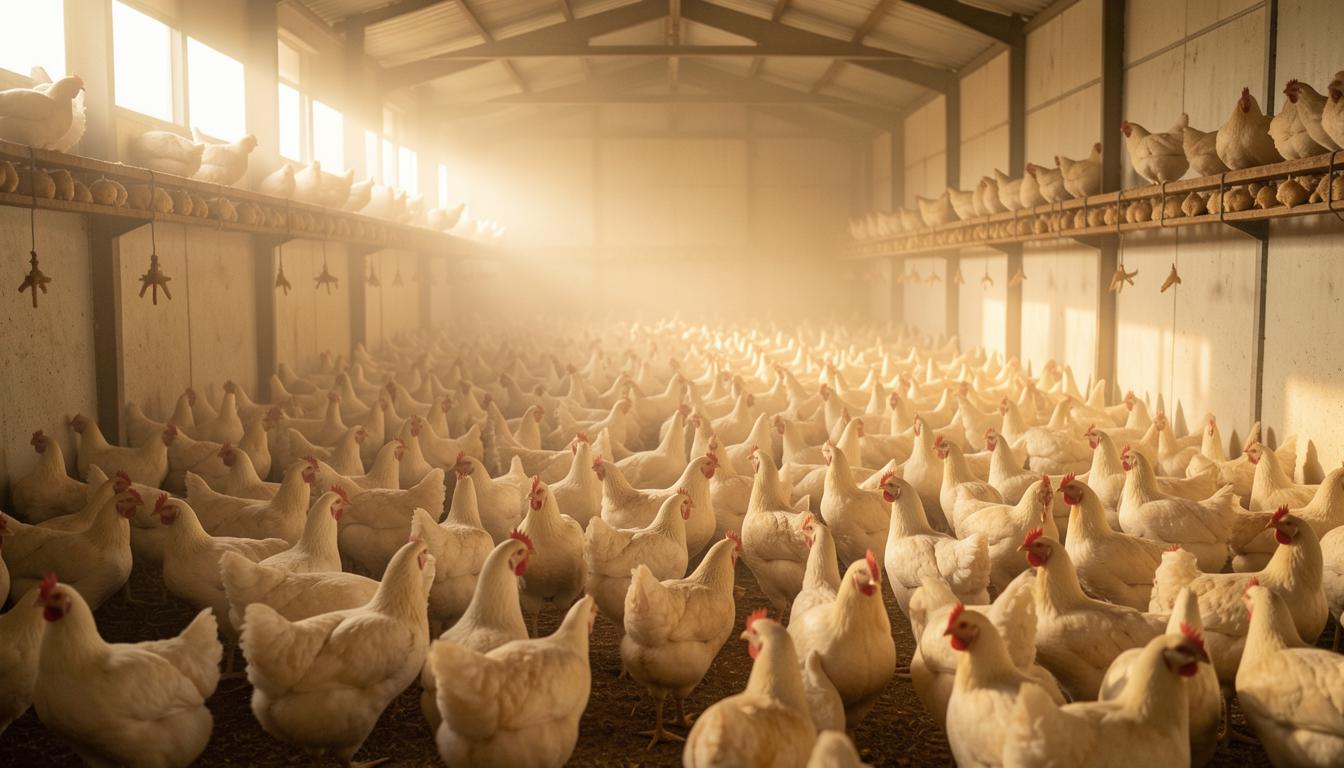
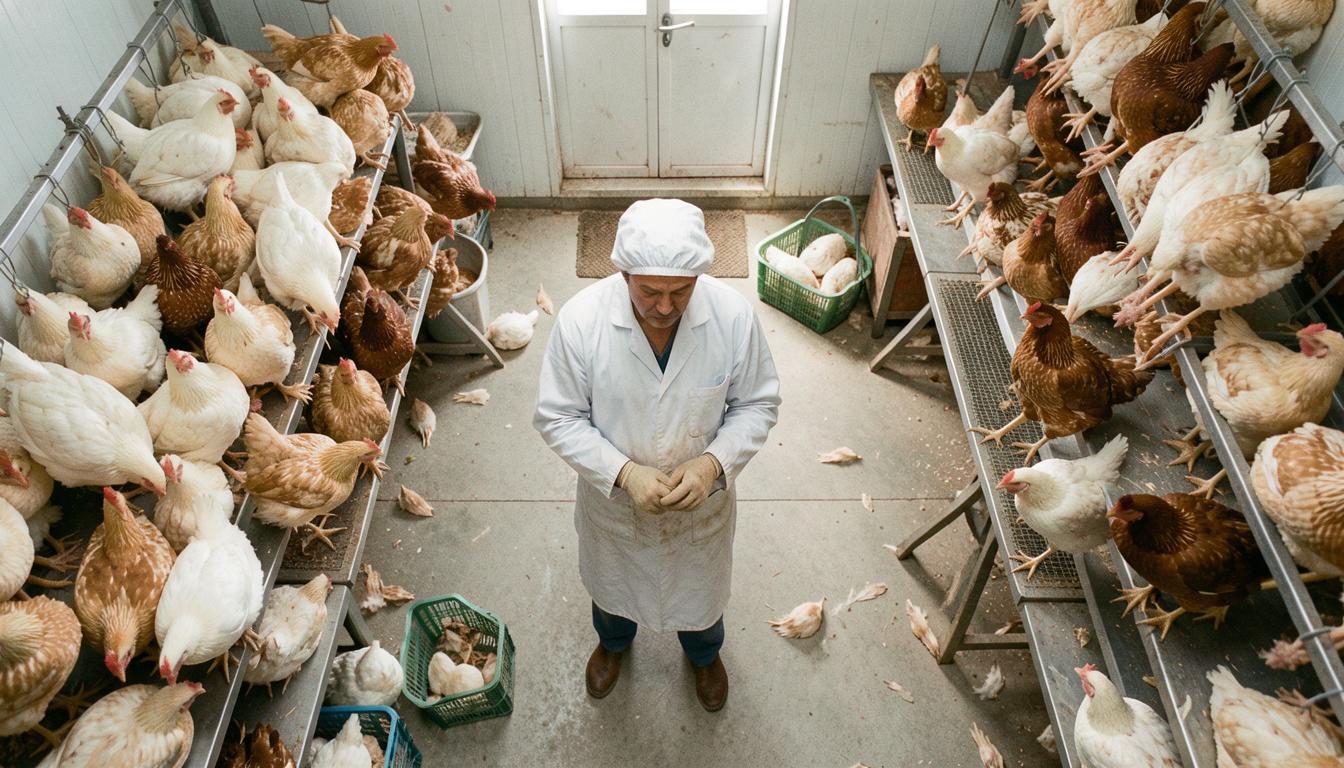
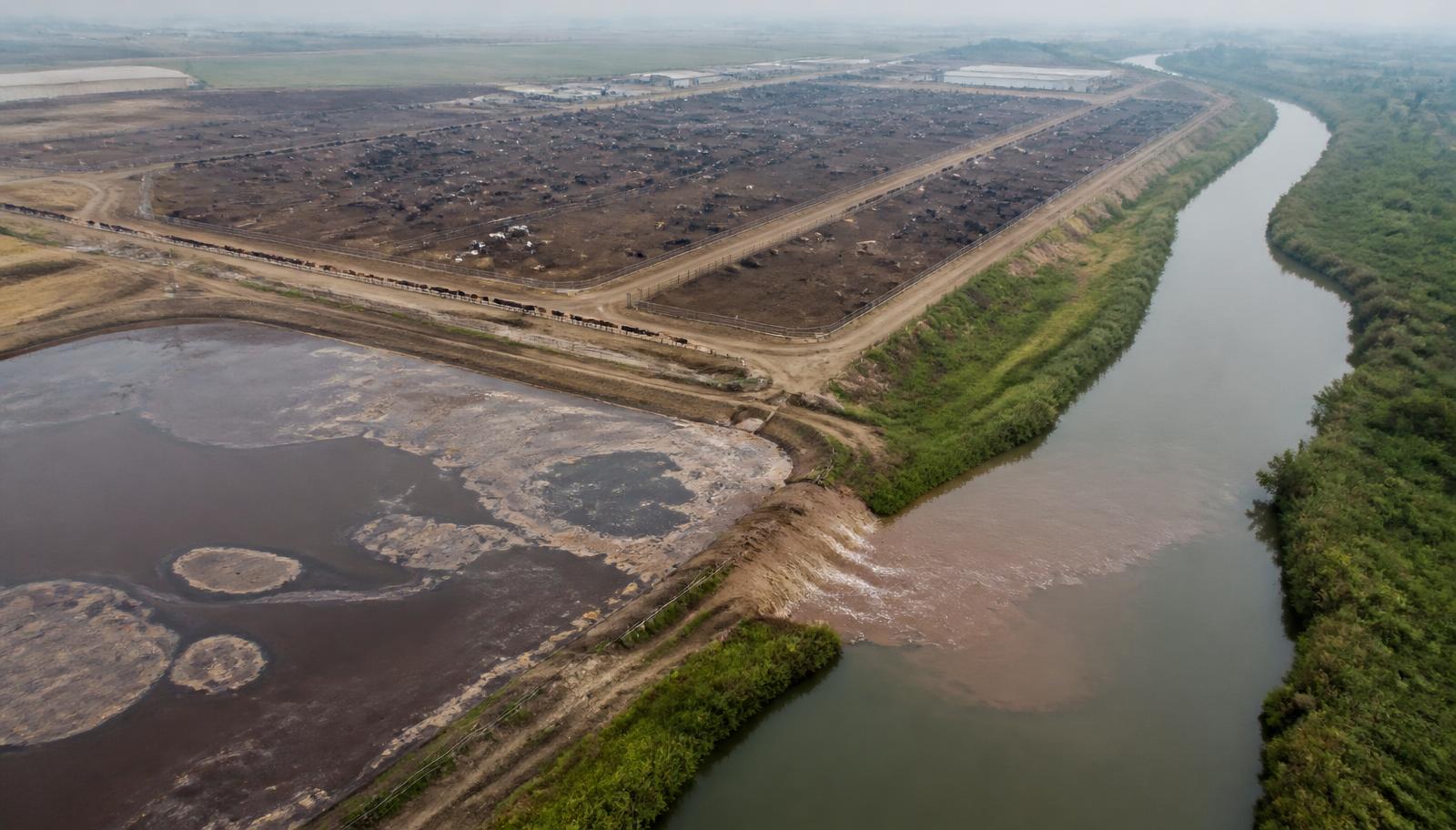
Concentrated animal feeding operations produce enormous volumes of manure with no sewage treatment requirement. In the United States alone, livestock generate several times more waste than the human population, and most of it is stored in open lagoons and sprayed onto surrounding fields.
When nitrogen and phosphorus exceed what crops can absorb, the surplus leaches into groundwater and runs into rivers. The result is eutrophication: algal blooms that strip oxygen from the water and create hypoxic dead zones. The Gulf of Mexico dead zone, fed largely by fertiliser and manure from the Mississippi basin's feed-crop belt, has averaged roughly the size of Connecticut in recent summers (NOAA).
| Food | GHG (kg CO2e) | Land use (m²) | Eutrophication (g PO4e) |
|---|---|---|---|
| Beef (beef herd) | 49.9 | 164.0 | 301 |
| Lamb & mutton | 19.9 | 185.0 | 97 |
| Cheese | 10.8 | 41.0 | 98 |
| Pork | 7.6 | 11.0 | 76 |
| Poultry | 5.7 | 7.1 | 49 |
| Tofu | 2.0 | 2.2 | 6 |
| Peas | 0.4 | 3.4 | 8 |
How much land and forest does factory farming consume?
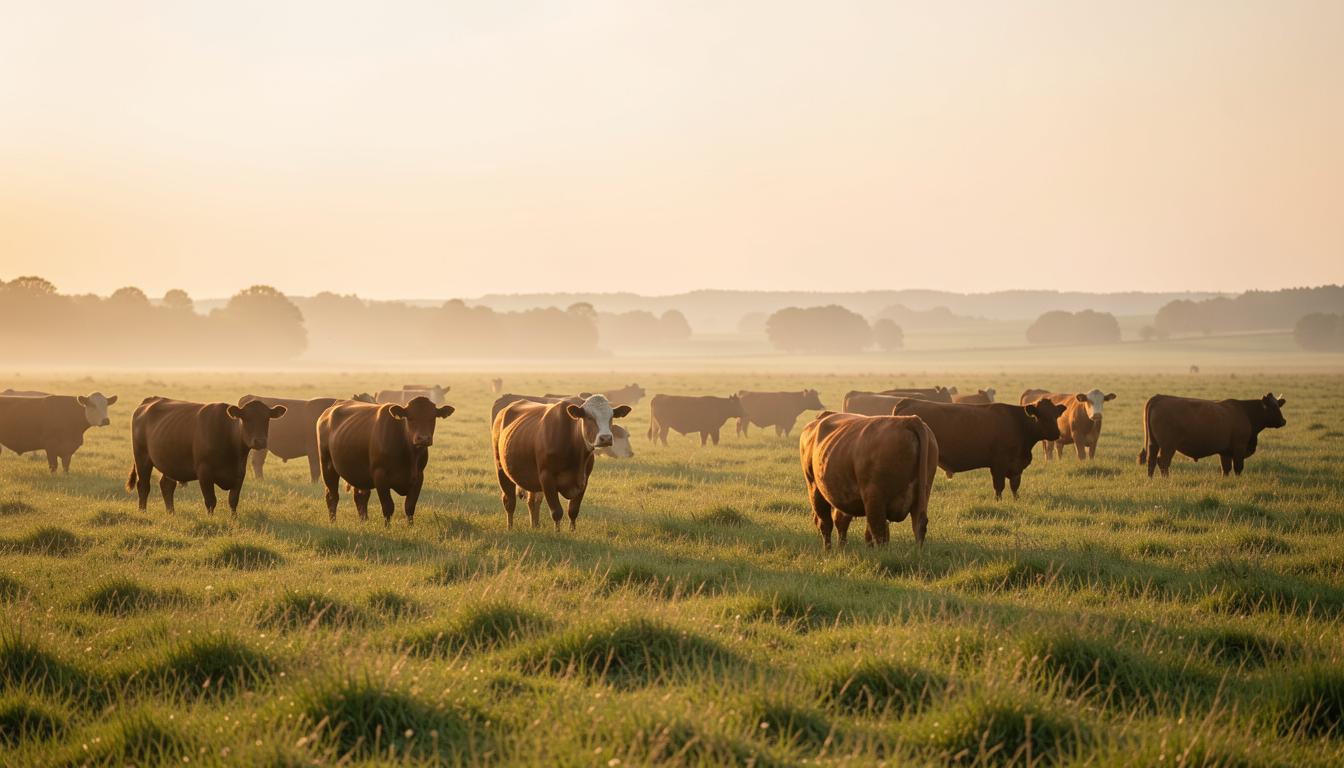
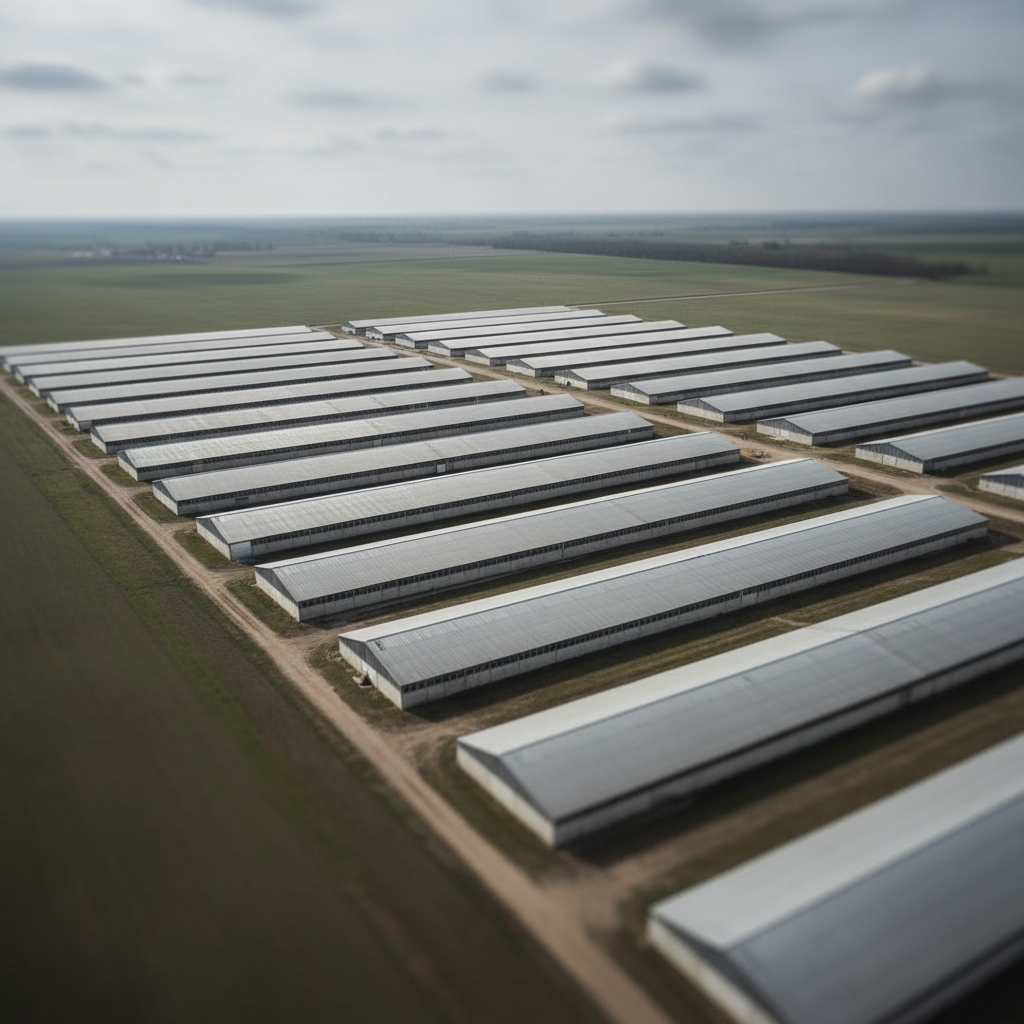
Half of the world's habitable land is farmed, and around 77% of that farmland is used for livestock — as pasture or to grow feed. Yet that vast area returns only about 18% of global calories. Intensive systems reduce land per animal but shift the burden to feed crops grown elsewhere, which is how a chicken barn in Europe becomes deforestation in South America.
Soy is the clearest case. The large majority of the global soy crop is crushed into animal feed rather than eaten directly by people, and soy and cattle expansion together account for most Amazon and Cerrado clearing (Song et al., 2021, Nature Sustainability).
“A vegan diet is probably the single biggest way to reduce your impact on planet Earth — not just greenhouse gases, but global acidification, eutrophication, land use and water use.”
What about antibiotics, air quality and biodiversity?
Routine antibiotic use to compensate for crowding and stress drives resistant bacteria that spread through manure, water and workers. Ammonia and fine particulates from barns and manure application contribute to tens of thousands of premature deaths per year in the US alone, with agriculture the leading source of food-related air-quality mortality (Domingo et al., 2021, PNAS).
Biodiversity loss follows land conversion: livestock farming is implicated as a threat to a large share of species assessed as at risk, and wild mammal biomass has collapsed to a small fraction of the biomass now held in farmed animals (Bar-On et al., 2018, PNAS).
How to cut your food footprint fastest
- 1
Displace beef and lamb first
Ruminants carry the heaviest emissions and land burden. Swapping even a few red-meat meals a week outperforms almost any other single food change.
- 2
Move dairy toward plant milks
Soy, oat and pea milks use roughly a third or less of the emissions, land and water of dairy milk per litre.
- 3
Make legumes the default protein
Beans, lentils, peas, tofu and tempeh deliver protein at a fraction of the climate and eutrophication cost, and they enrich soil nitrogen.
- 4
Cut food waste at home
Roughly a quarter of food emissions come from food never eaten. Planning and freezing recovers that waste directly.
- 5
Push institutional menus
School, hospital and workplace catering shifts thousands of meals at once — far more leverage than an individual grocery basket.
Frequently asked questions
Is factory farming worse for the environment than transport?+
Transport of food is a small share of food emissions — typically under 10% for most products — while production accounts for the majority. Eating less meat and dairy reduces emissions far more than buying local versions of the same animal products.
Does regenerative or grass-fed beef solve the problem?+
Well-managed grazing can improve soil carbon locally, but the effect is limited and reversible, and grass-fed cattle generally need more land and more time to reach slaughter weight, so emissions per kilogram often rise rather than fall.
How much water does factory farming use?+
Animal agriculture accounts for roughly a third of global freshwater use once feed crops are counted. Beef requires on the order of 15,000 litres per kilogram, mostly for feed irrigation, compared with a small fraction of that for pulses.
Would the world have enough food without factory farming?+
Yes. Because livestock consume far more calories in feed than they return as food, shifting cropland from feed to direct human consumption would increase available calories while freeing large areas of land for restoration.
What is the single most effective change an individual can make?+
Reducing or eliminating meat and dairy. Analyses of tens of thousands of farms show a plant-based diet cuts food-related emissions, land use, acidification and eutrophication by roughly half to three-quarters for a typical high-income consumer.
The environmental case against factory farming does not rest on one statistic. It rests on the same pattern showing up across every measured impact category — climate, land, water, air, biodiversity and antimicrobial resistance — in the largest datasets available. Where diets shift toward plants, every one of those measures improves at once.