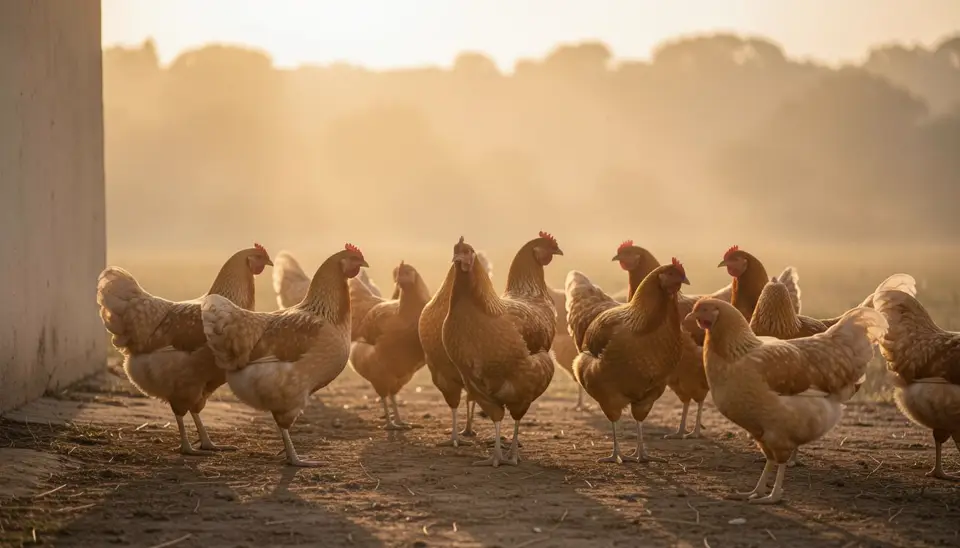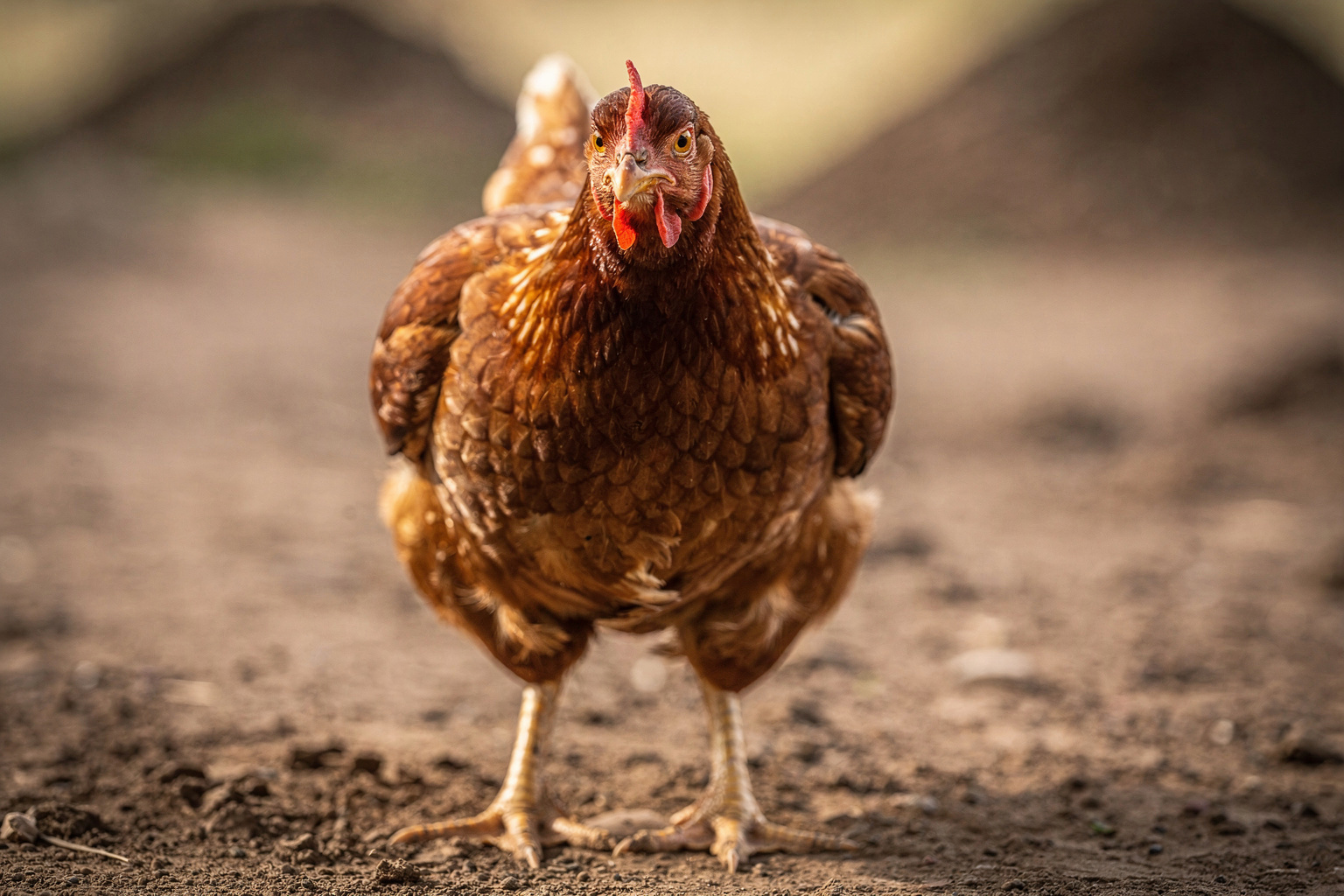
Free range eggs meaning is simple on paper: hens are not kept in cages and must have access to an outdoor area. In practice, the label guarantees access, not use — a pop hole can be open while thousands of hens never step outside, which is why welfare scientists rank it as a middle-tier claim rather than a gold standard.
How we ranked these egg labels from worst to best
We scored five labels against five criteria: (1) whether hens are permanently caged, (2) minimum space per hen, (3) whether outdoor access is required and for how long, (4) whether beak trimming, forced moulting or routine killing of male chicks is restricted, and (5) audit independence. Labels were assessed using published standards from Compassion in World Farming (2023), the RSPCA Assured scheme, Certified Humane (US), and the Soil Association (UK), plus peer-reviewed welfare literature.
| Label | Cages allowed | Outdoor access required | Minimum space | Independent audit |
|---|---|---|---|---|
| Battery cage / enriched cage | Yes | No | 750 cm² per hen | Varies by country |
| Cage-free | No | No | Often 1,000–1,200 cm² | Sometimes |
| Free range | No | Daytime access, not enforced | Usually 1,100–2,500 cm² | Often |
| Certified organic | No | Yes, minimum periods | Higher, plus outdoor range | Yes |
| Pasture-raised / Certified Humane | No | Yes, mandated use | Often 2,500 cm²+ | Yes |
Rank 5 (worst): Battery cage and enriched cage eggs
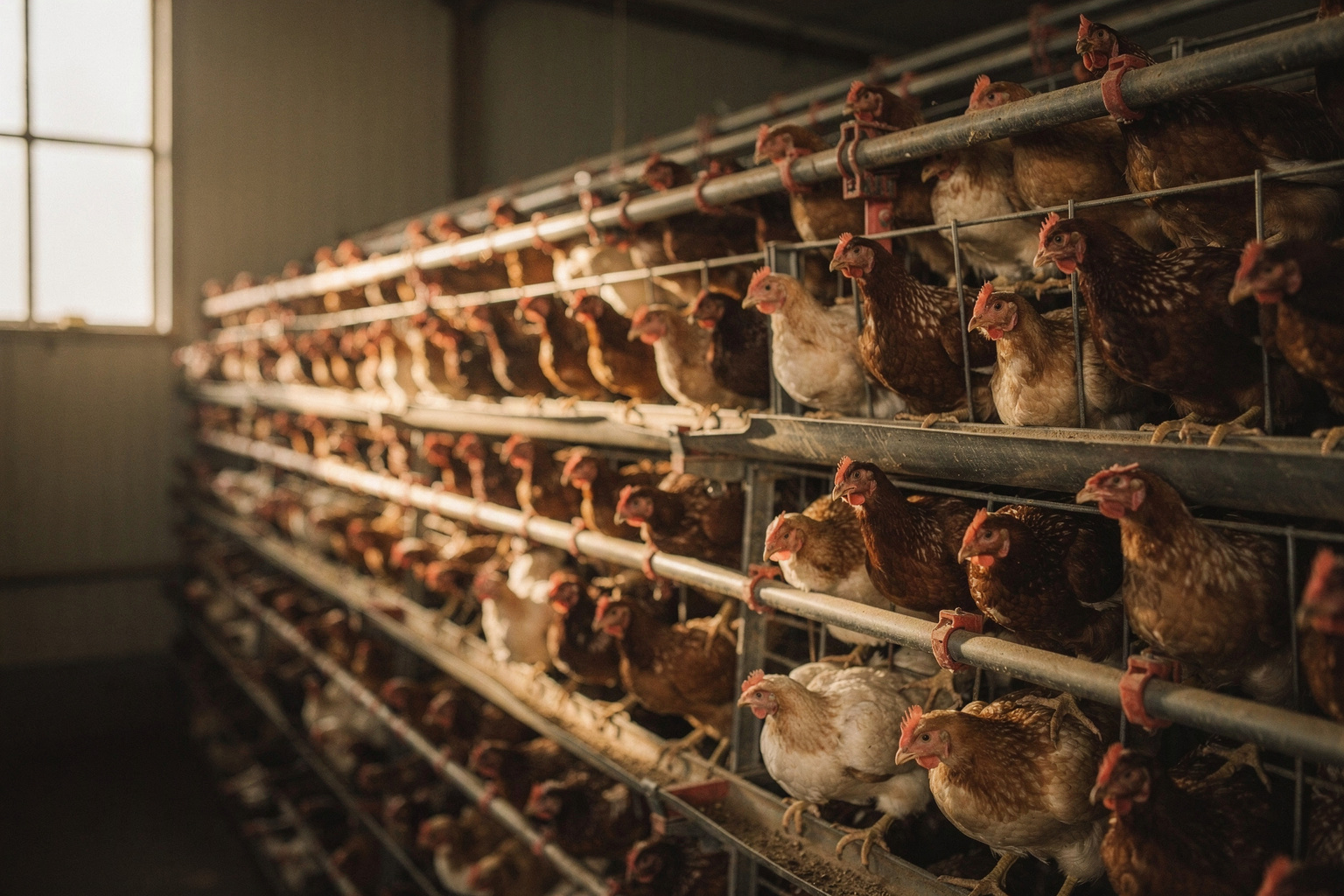
Battery cages are banned across the EU, UK, Switzerland, Norway and several US states, but enriched cages — slightly larger, with a perch and nest box — remain legal in parts of the EU and are still used in the US. A hen in an enriched cage has about 750 cm² of floor space, less than a sheet of A4 paper. The European Food Safety Authority (EFSA, 2023) concluded that even enriched cages fail to meet hens' behavioural needs, citing restricted movement, chronic frustration and elevated stress hormones.
In the US, roughly 70% of the national flock was still caged as of 2023 (United Egg Producers), though cage-free pledges from major retailers have shifted the market. In India, an estimated 60% of eggs come from caged systems (Humane Society International India, 2023), often in stacked battery units with no environmental enrichment. This is the baseline against which every other label improves — modestly.
Rank 4: Cage-free eggs
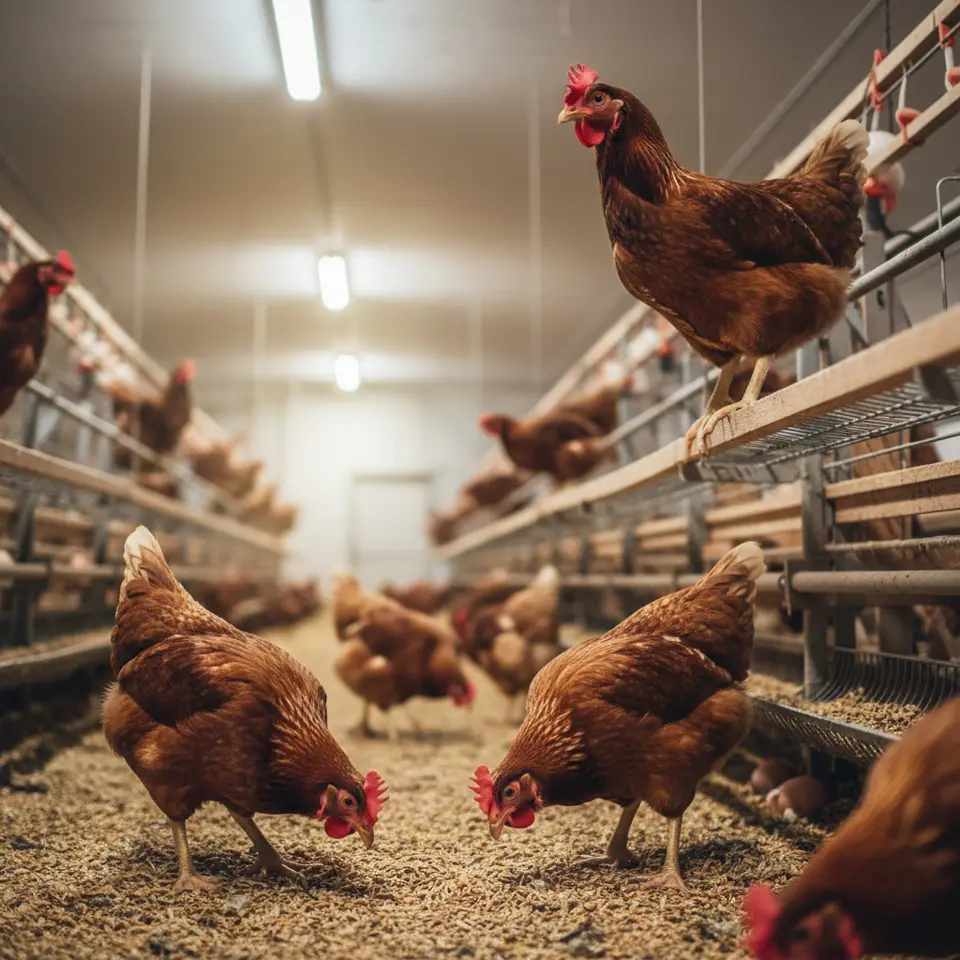
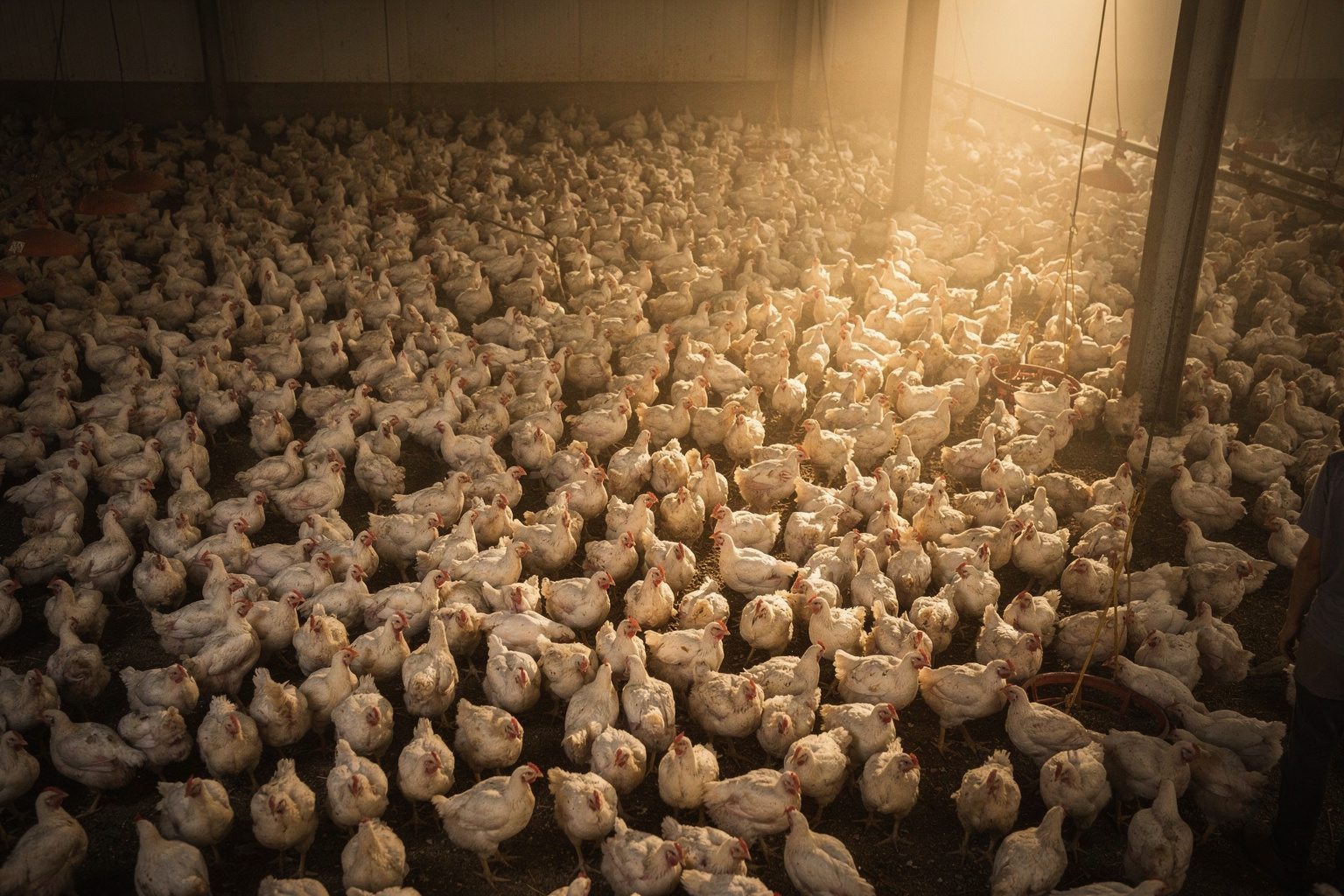
Cage-free means hens live out of cages but usually indoors, in large barns or aviaries, at stocking densities that can reach 15–20 birds per square metre. The hens can move, spread their wings and dust-bathe in litter. They cannot, however, be guaranteed any natural light or outdoor range. In the US, cage-free is the dominant welfare claim on supermarket cartons; in the UK it's rare, because free range and organic dominate the higher-value shelf.
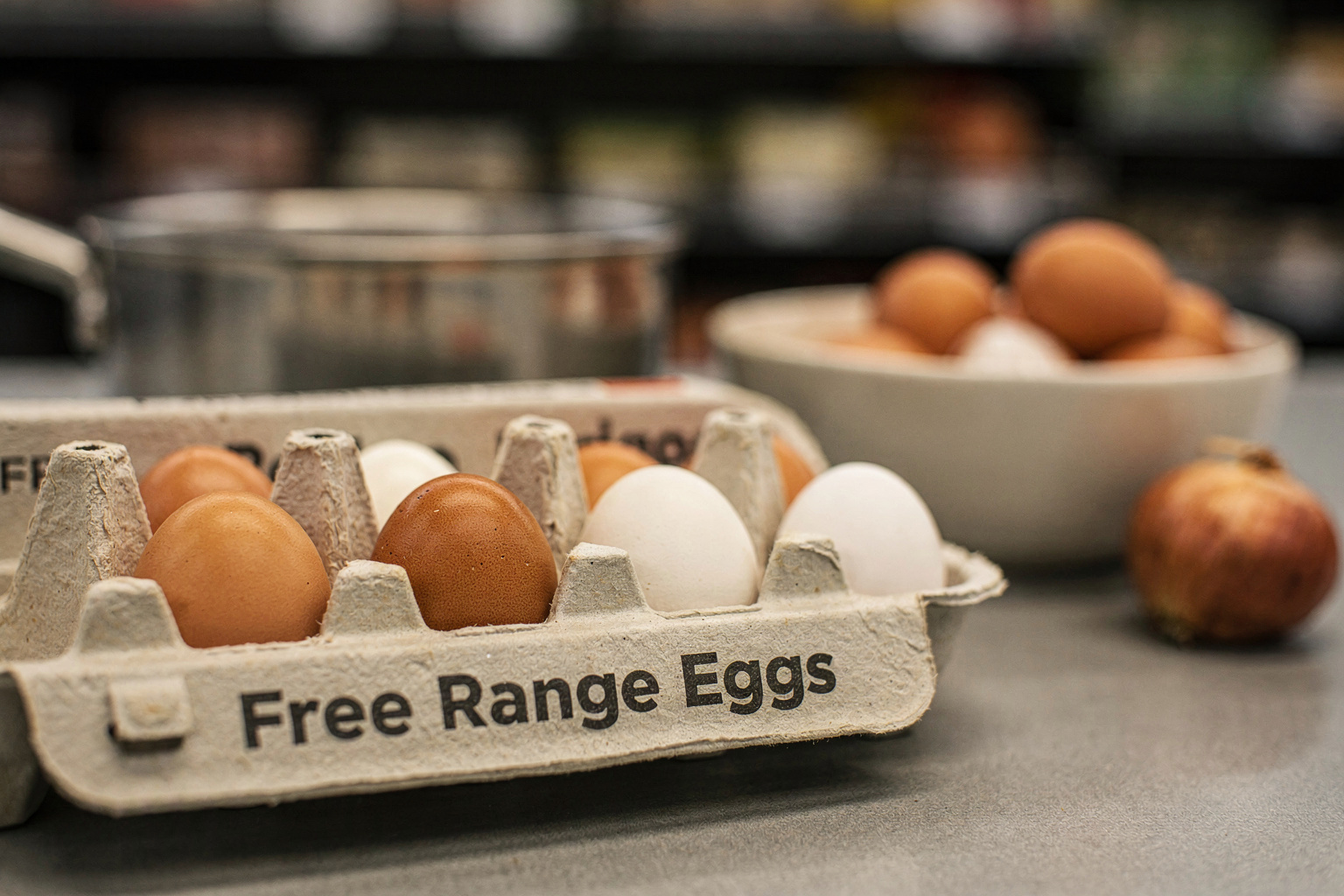
A 2023 review in Animal Welfare found that cage-free systems reduce feather pecking and bone fractures compared with cages, but introduce new risks: keel bone damage from collisions in aviaries, and smothering events in dense flocks. The label improves on cages without solving the underlying problem — hens are still bred for extreme output and killed young.
Rank 3: Free range eggs — what the label does and doesn't guarantee
Free range is the middle of this list, and the label most shoppers ask about. In the UK, Defra's guidance requires hens to have continuous daytime access to an outdoor range for at least half their lifetime, with a maximum indoor stocking density of 9 hens per square metre and 2,500 hens per hectare outdoors. In the EU, Council Directive 1999/74/EC sets similar minimums. In Australia, the national standard allows up to 10,000 hens per hectare outdoors — ten times the EU density — which is why Australian free range eggs vary wildly in practice.
“Access and use are not the same thing. In large free-range flocks, studies show a minority of hens — sometimes as few as 10% — actually use the outdoor range, largely because of fear, feather damage or social exclusion.”
Peer-reviewed work by Sandilands and colleagues (Applied Animal Behaviour Science, 2023) found that outdoor use in free-range flocks is highly skewed: a few hens dominate the pop holes, while the majority stay inside. That means a carton stating 'free range' can come from hens that behaved much like cage-free hens for most of their lives.
Rank 2: Certified organic eggs
Organic certification raises the bar in two ways: it mandates genuine outdoor access for minimum periods, and it restricts feed, antibiotics and beak-trimming practices. In the UK, the Soil Association requires a minimum outdoor range of 10 square metres per hen — four times the free range legal minimum — and prohibits routine beak trimming, a painful procedure still permitted on most free-range and cage-free farms. In the US, USDA Organic requires year-round outdoor access, though 'outdoor' can be interpreted loosely in large operations.
Organic is not cruelty-free. Male chicks are still killed at hatch in most egg supply chains, including organic ones, because layer breeds cannot be used for meat. France and Germany have banned chick culling, and the UK's egg industry has pledged to end it, but the practice remains widespread across the US and much of the EU. Organic is better, not good.
Rank 1 (best of a flawed set): Pasture-raised and Certified Humane eggs
Pasture-raised is the strongest egg label in most markets. Certified Humane's US standard requires at least 2.5 square metres of outdoor space per hen, with rotations and vegetation cover; in the UK, the RSPCA Assured scheme is less stringent but does require genuine outdoor access. Studies indicate that pasture systems reduce feather pecking, improve bone strength and allow natural foraging behaviour at meaningful scale (Animal Welfare, 2022).
But even the best egg label ends with a dead hen. Layers are killed when their output drops, usually between 72 and 100 weeks, and their carcasses are typically sold as low-grade meat or rendered. Male chicks from layer breeds are culled at hatch in most jurisdictions — a practice the UK industry has committed to ending by 2026, with in-ovo sexing technology now commercially available in Europe. The most complete answer to the free range eggs meaning question, on welfare grounds, is to remove eggs from the shopping list.
Share of UK eggs by production system, 2024
What are the best alternatives to free range eggs?
Both free range and organic eggs still depend on the slaughter of hens and, in most countries, the killing of male chicks. Shoppers who want to remove that welfare burden entirely can switch to plant-based egg alternatives. Aquafaba — the liquid from a tin of chickpeas — whips like egg white; commercial products such as JUST Egg (US), Crackd (UK) and Lâcheln (Australia) replicate scrambled eggs and baking. A 2023 UK sales survey by Mintel found that 21% of British households had bought a plant-based egg product in the previous year, up from 8% in 2020.
How to read an egg carton in 60 seconds
- 1
Check the country of origin
A UK carton marked 'free range' meets Defra rules; the same words on an Australian carton can allow up to 10,000 hens per hectare, ten times the EU density.
- 2
Look for a certification stamp
Certifiers such as RSPCA Assured, Soil Association, Certified Humane or Certified Organic add enforceable standards beyond the bare legal minimum.
- 3
Scan for 'pasture-raised' or 'organic'
These two claims require real outdoor range and, in organic systems, restrict beak trimming and routine antibiotic use.
- 4
Ignore unverified terms
'Farm fresh', 'happy hens' and 'cage-free' are marketing language with no standard legal definition in most countries.
- 5
Check the fine print for male chick policy
Look for a mention of in-ovo sexing or a no-cull pledge. Most cartons are silent — which usually means the practice is still used.
- 6
Compare with a plant-based egg
Weigh the carton against aquafaba or a vegan egg brand on price, protein and welfare. In most UK supermarkets, plant-based eggs now cost the same or less per serving.
Frequently asked questions
What does free range mean on an egg carton?+
Free range eggs come from hens kept out of cages with daytime access to an outdoor range, under standards such as the EU's 1999 directive and the UK's Defra rules. The label guarantees access, not actual outdoor use, and US 'free range' has no federal legal definition.
Is free range better than cage-free?+
Generally yes. Cage-free hens have no outdoor access requirement and often live at higher indoor stocking densities. Free range adds a legal right to daytime outdoor access, though in practice many hens never use it.
Are free range eggs the same as organic eggs?+
No. Organic certification typically requires longer outdoor periods, more space per bird and restricts beak trimming and routine antibiotics. Organic is a stricter, independently audited standard than plain free range in the UK, EU and US.
Are free range eggs ethical to buy?+
Free range reduces suffering compared with cages but still involves killing male chicks at hatch in most countries and slaughtering hens at 72–100 weeks. Many welfare organisations, including Compassion in World Farming, treat plant-based alternatives as the more ethical choice.
Do free range hens actually go outside?+
Often not. Studies from SRUC (2023) found that in large flocks, outdoor use can range from under 10% to around 60% of hens on a given day. Weather, flock size and breed strongly affect whether hens use the range.