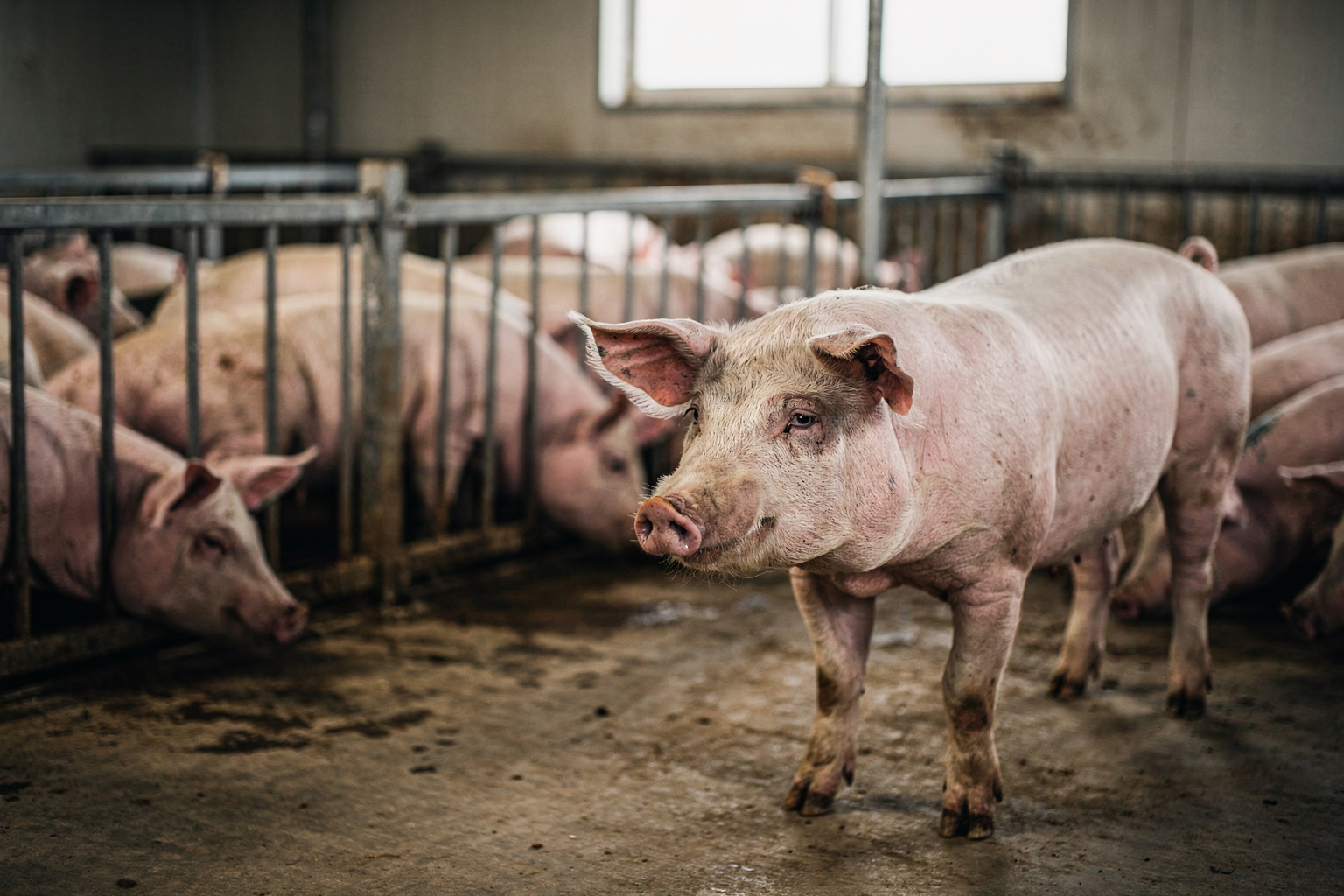
Animals are not property because they are sentient beings with their own interests, not objects for human use. Yet under the law in the US, UK, Canada, Australia and India, most animals are still classified as property. That single legal category makes factory farming possible, because owners can confine, mutilate, breed and kill their animals without violating the animal's own rights. This guide explains why the property framework is contested, what science and law now say about animal sentience, and what it would take to move animals out of the property column.
What does it mean that animals are still property under the law?
In most legal systems, animals are classified as personal property. The owner's interests come first, and the animal's interests are protected only where a welfare law explicitly limits what owners can do. This means an animal can be legally killed for profit, but not legally tortured for fun. The distinction is not about the animal's suffering, but about the owner's use.
In the United States, farmed animals are excluded from the Animal Welfare Act and from most state anti-cruelty statutes, which commonly exempt "standard agricultural practices" (Animal Legal Defense Fund, 2024). In the UK, the Animal Welfare Act 2006 protects animals from unnecessary suffering but still treats them as property. In Canada, the Criminal Code's animal cruelty provisions are widely criticised for failing to protect farmed animals (Animal Justice, 2023). In India, the Prevention of Cruelty to Animals Act 1960 covers some animals but leaves livestock practices largely unregulated (PETA India, 2023).
The legal category matters because it determines who can bring a case. If a pig is property, a pig cannot sue. The owner can sue for damage to property, but the pig's own suffering is not a legal injury. That is the core problem the animal rights case addresses.
Why the property framework exists, and why it is now failing
Property status was not designed for factory farming. It predates it. For centuries, domesticated animals were treated as tools and food sources, and the law reflected that reality. What changed is the scale and industrialisation of animal use.
Between 1960 and today, global meat production rose from around 70 million tonnes to over 360 million tonnes (FAO, 2023). Intensive confinement systems became the norm for chickens, pigs and dairy cattle. The property framework that once governed a farmyard now governs a global industry. A legal category that made sense for a handful of chickens in a yard now shields the confinement of billions.
That mismatch is why courts and legislatures are increasingly uncomfortable with pure property status. The law is being asked to reconcile two things it never had to reconcile before: the economic logic of industrial ownership and the scientific reality of animal sentience.
What does the science of animal sentience show?
Animal sentience is the capacity to feel pain, pleasure, fear and other subjective experiences. If animals are sentient, their interests cannot be reduced to the owner's use. The science is now clear on this point for many species.
The Cambridge Declaration on Consciousness (2012) concluded that non-human animals have the neurological substrates that generate consciousness. More recently, the New York Declaration on Animal Consciousness (2024) stated that there is strong scientific support for consciousness in birds and mammals, and realistic possibility in all vertebrates and many invertebrates. The UK's Animal Welfare (Sentience) Act 2022 formally recognised sentience in vertebrates and some invertebrates, including octopuses, crabs and lobsters (UK Government, 2022).
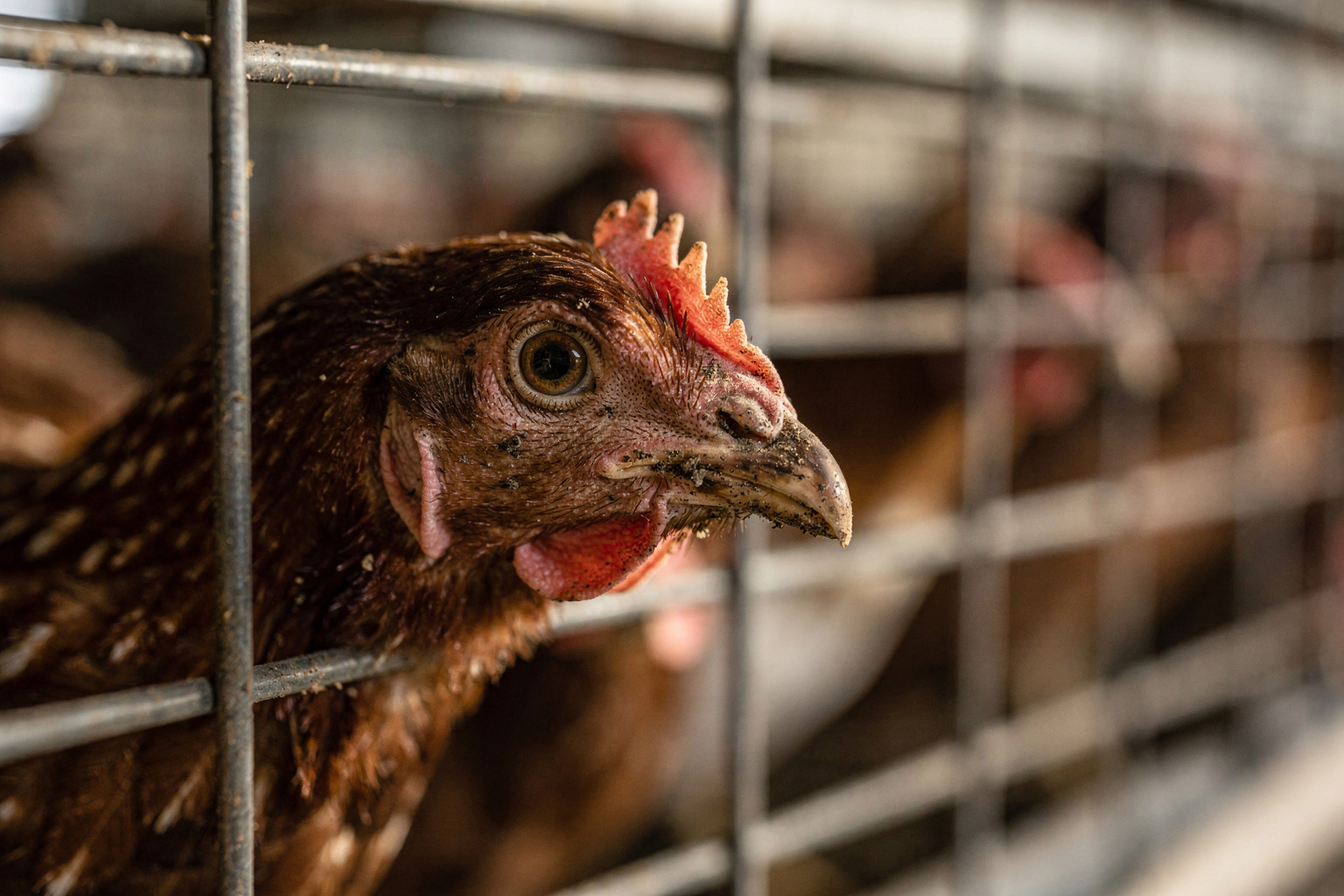
For factory-farmed animals, the implications are direct. Pigs show cognitive abilities comparable to dogs and young children (Animal Cognition, 2015). Chickens can recognise individual faces and feel pain (Applied Animal Behaviour Science, 2019). Farmed fish such as salmon have nociceptors and show pain-related behaviour (Proceedings of the Royal Society B, 2020). If sentience is the basis for moral concern, then the property status of these animals is not neutral. It is the mechanism that permits the harm.
“Sentience is not a luxury that some animals can afford. It is a fact of biology, and once we accept it, property status becomes an ethical and legal anomaly.”
How does property status enable factory farming?
Factory farming depends on treating animals as units of production. Property status provides the legal permission to do so. It allows the confinement of hens in battery cages, the use of gestation crates for pigs, the separation of calves from dairy cows, and the routine mutilation of tails, beaks and horns without pain relief.
These practices are not accidents. They are cost-saving measures that would be illegal if the animals were recognised as rights-holders with their own legal standing. In the US, for example, the pork industry has fought state-level bans on gestation crates, arguing that the property owner's right to use their animals as they see fit is protected (National Pork Producers Council, 2023). In the UK, the 2020 Agriculture Act recognised animal sentience but did not end property status, leaving enforcement dependent on welfare codes.
The result is a system where welfare laws set minimum standards, while property law sets the default. As long as animals are property, the default wins. Welfare reforms improve conditions within the property framework, but they do not challenge the framework itself.
| Country | Property status | Sentience recognition | Farmed animal protections |
|---|---|---|---|
| United States | Yes, all animals | Partial, state-level | Excluded from Animal Welfare Act; state anti-cruelty exemptions |
| United Kingdom | Yes, all animals | Yes, Animal Welfare (Sentience) Act 2022 | Welfare codes; some bans on cages planned |
| Canada | Yes, all animals | No federal recognition | Criminal Code cruelty provisions, weak enforcement for farms |
| Australia | Yes, all animals | No federal recognition | State-based welfare codes; live export permitted |
| India | Yes, all animals | Partial, judicial recognition | Prevention of Cruelty to Animals Act 1960, limited farm coverage |
Global meat production, 1960–2023 (million tonnes)
What would it take to move animals out of property status?
Ending property status is not a single law. It is a series of legal, political and cultural shifts. Three routes have emerged: welfare reform, rights recognition and personhood litigation. Each has strengths and limits.
Welfare reform improves conditions but keeps animals as property. Rights recognition, as in the UK's sentience act, formally acknowledges animal interests but does not automatically change their legal category. Personhood litigation, as pursued by the Nonhuman Rights Project in the US for elephants and great apes, seeks to establish that some animals can be legal persons with rights. A 2022 ruling in New York allowed an elephant named Happy to have her case heard, though the court ultimately denied habeas corpus relief (Nonhuman Rights Project, 2022). In India, the Uttarakhand High Court in 2018 declared animals "legal persons" with rights and duties, though the ruling was stayed on appeal (Uttarakhand High Court, 2018).
None of these routes has yet dismantled property status for farmed animals. But they have shifted the terms of the debate. The question is no longer whether animals can have rights, but which animals, and how those rights are enforced.
What are the main arguments against animal rights?
Opponents of animal rights usually make three arguments. First, that rights require duties, and animals cannot have duties. Second, that human interests should come first. Third, that animal welfare laws are enough, and rights are unnecessary.
The first argument confuses rights with reciprocity. Children and people with severe cognitive disabilities have rights without duties, and the law recognises this. The second argument is a claim about priority, not about whether animals can have rights at all. Most rights systems already balance competing interests; the question is what weight to give animal interests. The third argument assumes welfare laws are enforced, which they often are not. In the US, state anti-cruelty exemptions for standard agricultural practices mean many farmed animal harms are simply legal (Animal Legal Defense Fund, 2024).
The case for animal rights does not require that animals have the same rights as humans. It requires that their sentience gives them a moral and legal standing that property status denies. That is a lower bar than full personhood, and it is where most of the current debate sits.
How can individuals act on the case for animal rights?
The case for animal rights is not only a legal argument. It is also a practice. Consumers in the US, UK, Canada, Australia and India can reduce the demand that factory farming depends on by choosing plant-based foods, supporting welfare and rights campaigns, and pressuring supermarkets to stop selling products from the most intensive systems.
In the UK, campaigns such as Veganuary have persuaded major supermarkets to expand plant-based ranges, and the number of people reducing meat has grown (Veganuary, 2024). In the US, meat consumption remains high, but plant-based milk now accounts for around 15% of retail milk sales (Good Food Institute, 2023). In India, where dairy is culturally central, plant-based alternatives are growing in cities such as Mumbai and Bengaluru, though the market remains small (GFI India, 2023).
These shifts matter because they change the economics. If fewer animals are reared for food, fewer animals are exposed to property-based exploitation. Legal change is slow, but demand change is faster and it compounds.
How to take action on animal property status
- 1
Learn the legal landscape
Find out how your country classifies animals. In the UK, read the Animal Welfare (Sentience) Act 2022. In the US, check whether your state exempts farmed animals from anti-cruelty laws.
- 2
Support rights-focused organisations
Donate or volunteer with groups working on legal personhood and sentience law, such as the Nonhuman Rights Project in the US or the Animal Law Foundation in the UK.
- 3
Pressure retailers and policymakers
Write to supermarkets asking them to stop sourcing from the most intensive systems, and support candidates who back animal sentience legislation.
- 4
Cut animal products from your diet
Reducing or eliminating meat, dairy and eggs lowers demand for factory-farmed animals, which are the most exposed to property-based legal regimes.
- 5
Use your professional skills
Lawyers can work on test cases. Journalists can investigate welfare enforcement gaps. Scientists can contribute to sentience research that informs law.
- 6
Follow court cases
Track personhood-litigation rulings, including the Happy the elephant case in New York and animal personhood decisions in India and Latin America.
What does the future of animal rights look like?
The future of the animal rights case depends on whether sentience science continues to outpace legal change. The trend is toward recognition. In 2022, the UK recognised sentience in vertebrates and some invertebrates. In 2024, the New York Declaration on Animal Consciousness broadened the scientific consensus. In the EU, discussions continue about a sentience-based legal framework for farmed animals.
But recognition is not the same as rights. The gap between the two is where factory farming operates. Closing that gap will require legal reform, political will and consumer pressure. None of these is guaranteed, but all are underway. The property status of animals is not immutable. It is a legal choice, and legal choices can be changed.
For readers in the US, UK, Canada, Australia and India, the most immediate action is dietary. Every meal that replaces animal products with plant-based food reduces the number of animals treated as property. That is not a substitute for legal change, but it is a material contribution to it.
Frequently asked questions
Are animals legally property in all countries?+
Most countries classify animals as property, though some, including the UK and India, have recognised sentience or legal personhood in limited contexts. Farmed animals are usually the least protected because agricultural practices are often exempt from anti-cruelty laws.
What is the difference between animal rights and animal welfare?+
Animal welfare seeks to improve how animals are treated within existing systems, while animal rights argues that animals should not be treated as property or used as resources at all. Welfare can reduce suffering; rights challenges the legal category that permits it.
Has any country ended the property status of animals?+
No country has fully ended property status for all animals. Some have recognised sentience in law, and courts in India and the US have considered personhood claims, but no jurisdiction has removed animals from the property category entirely.
Does legal personhood mean animals would have the same rights as humans?+
No. Legal personhood means an entity can hold rights and have its interests represented in court. Corporations already have personhood. For animals, it would mean their interests could be legally protected, not that they would vote or bear duties.
How does factory farming depend on animals being property?+
Factory farming requires owners to confine, breed, mutilate and kill animals at scale. Property status gives owners that legal power. Without it, practices such as gestation crates and battery cages would be subject to the animals' own legal interests, which is why the industry defends property-based law.
The case for animal rights is ultimately a case about consistency. We already accept that sentient beings should not be treated as mere objects. The legal system has simply not caught up. Recognising that animals are not property is the first step toward treating them as what they are: beings with interests of their own.