Bird flu and factory farms are linked because highly pathogenic avian influenza spreads fastest where thousands of birds are packed together. Dense indoor flocks amplify the virus, trigger mass culls, push egg prices up, and occasionally infect farm workers. This guide explains the seasonal patterns and what readers across the US, UK, Canada, Australia and beyond can do.
How does bird flu spread in factory farms?
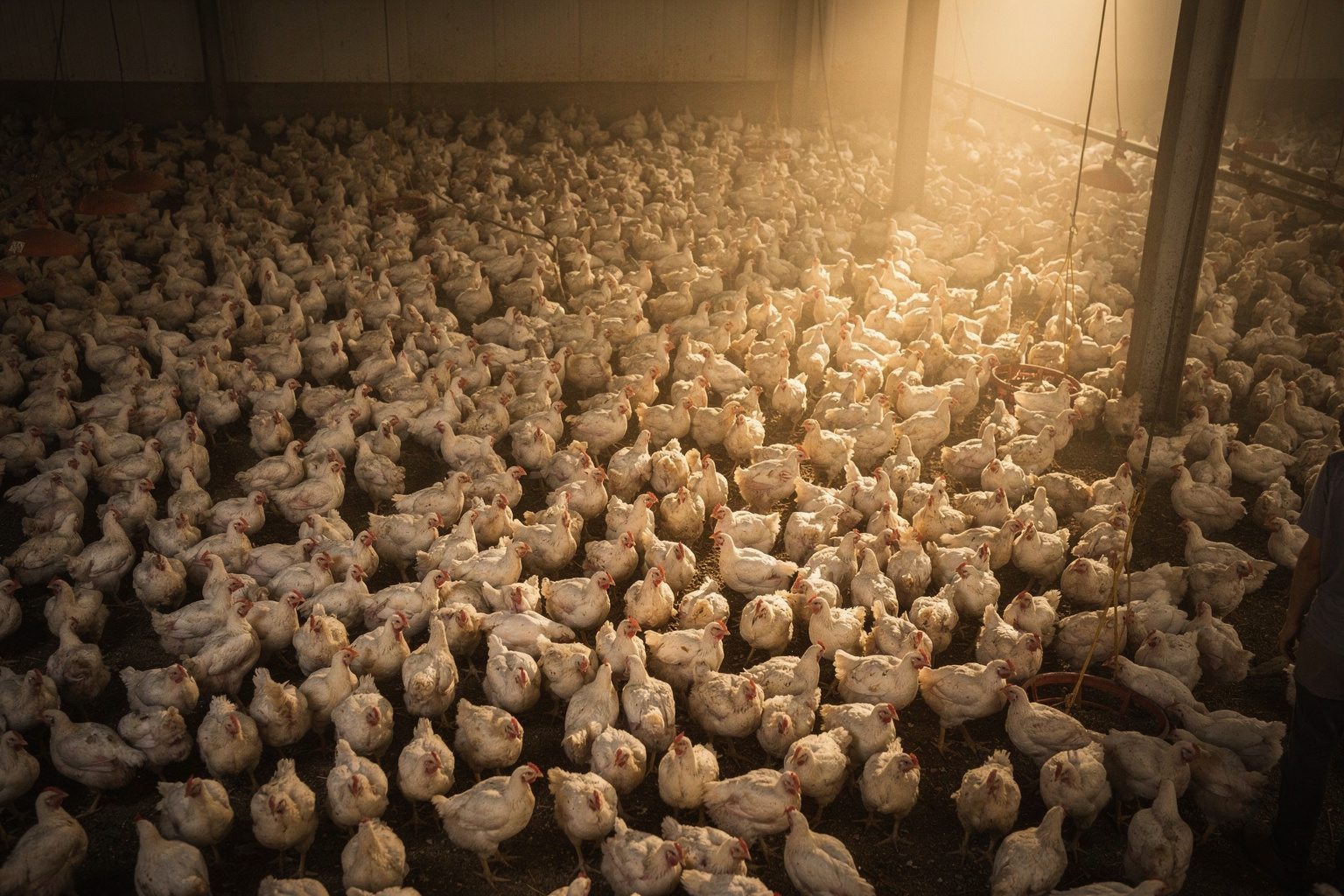
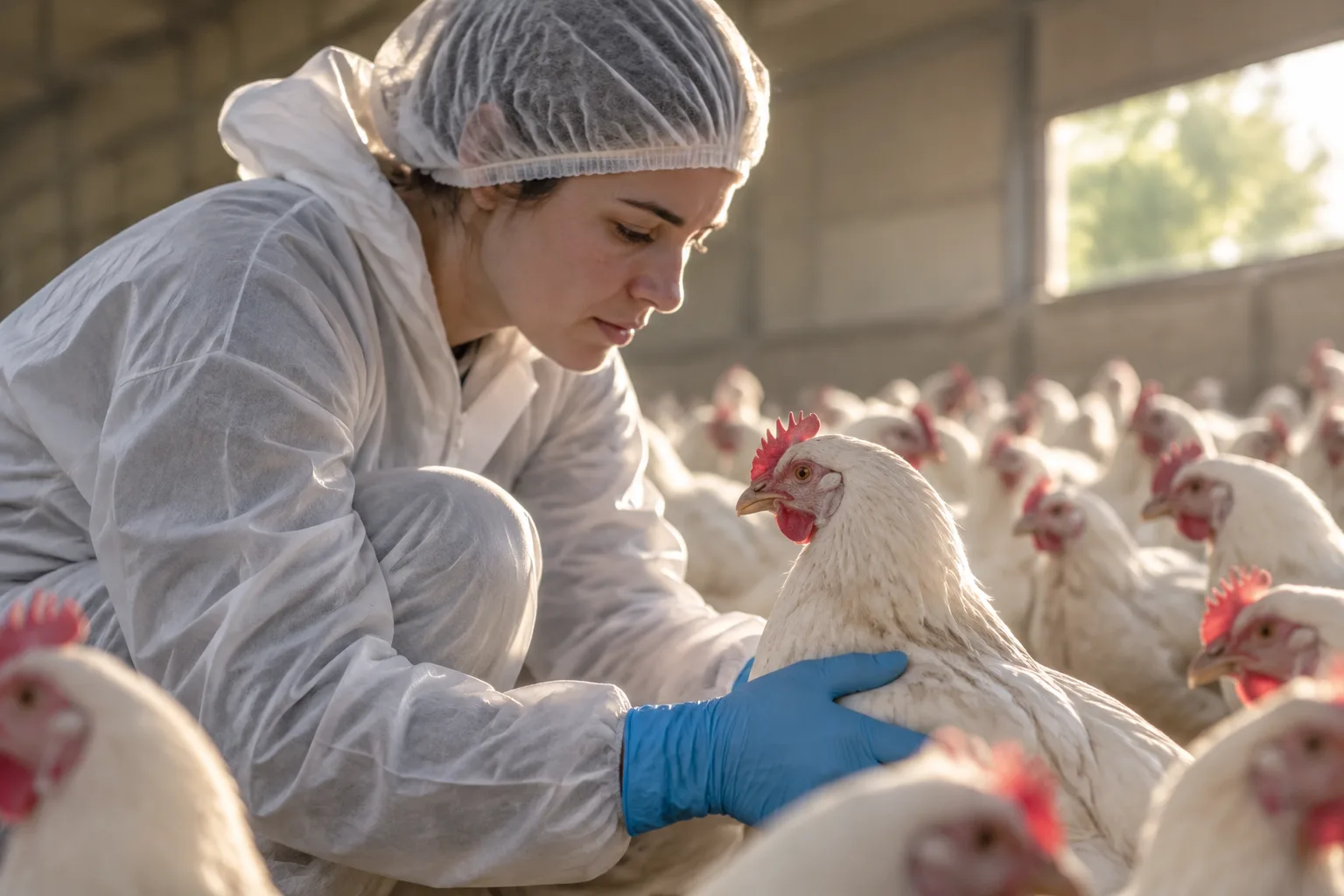
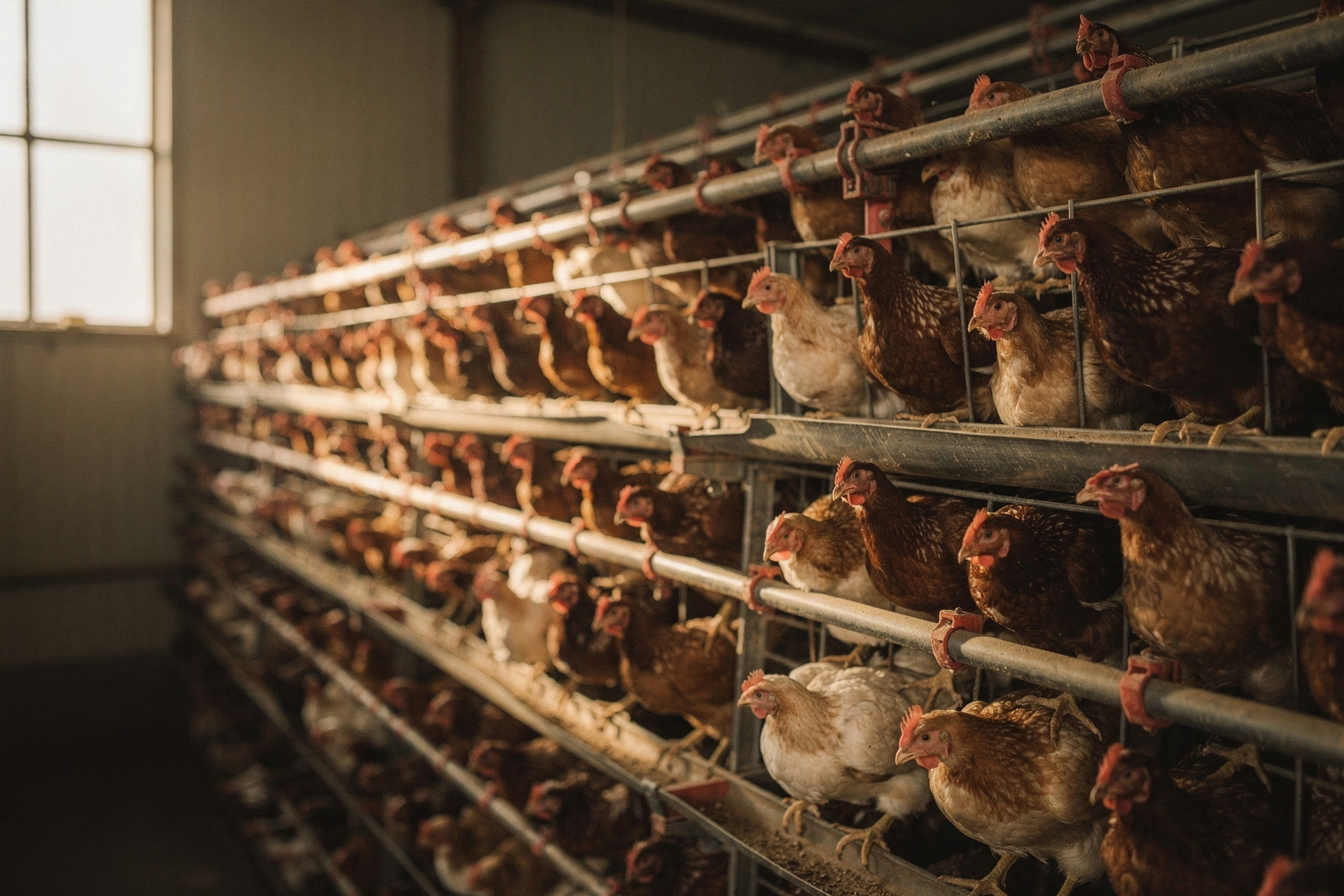
Bird flu spreads easily in factory farms because tens of thousands of genetically similar birds share the same airspace, drinkers and feeders. Once the virus enters a shed, it can sweep through a flock within days, and exhaust fans can carry contaminated dust to nearby units. Wild waterfowl are the main natural reservoir, but transport trucks, workers, equipment and rodents can also move the virus between sites (World Organisation for Animal Health, 2023).
That is why official responses often involve culling every bird on an affected premises. In the US alone, more than 90 million poultry have been culled since 2022 because of H5N1 outbreaks, according to US Department of Agriculture data cited by Reuters in 2024. In the UK, the Animal and Plant Health Agency reported repeated housing orders for poultry across several winters, forcing free-range flocks indoors for weeks at a time.
Why do bird flu outbreaks peak in certain months?
Bird flu outbreaks peak in autumn and winter because cooler, damper conditions help influenza viruses survive longer in the environment, and wild waterfowl migrate in larger numbers. In the northern hemisphere, November to February is the highest-risk window for poultry farms; in the southern hemisphere, the pattern shifts toward the cooler months of May to August. Indoor factory farming can blur these seasonal boundaries because ventilation and stocking density create year-round transmission opportunities.
| Season | Main driver | Risk for factory farms | Typical regions affected |
|---|---|---|---|
| Autumn (Sep–Nov) | Wild bird migration | High | US Midwest, UK, Canada |
| Winter (Dec–Feb) | Cold, damp air; indoor crowding | Very high | Europe, US, East Asia |
| Spring (Mar–May) | Mixing of wild and farmed birds | Moderate | Australia, India |
| Summer (Jun–Aug) | Heat stress; ventilation issues | Moderate | Southern hemisphere |
What happens during an outbreak on a factory farm?
When HPAI is confirmed, the standard response is immediate culling of the entire flock, followed by disinfection and movement restrictions. In the UK, the Department for Environment, Food and Rural Affairs (Defra) imposes a 3km protection zone and a 10km surveillance zone around infected premises. In the US, state and federal agencies coordinate depopulation, often using methods such as foam or carbon dioxide, which animal welfare scientists have criticised for distress and inconsistency (American Veterinary Medical Association, 2023).
Those culls have economic ripples. Egg prices in the US spiked sharply in 2022–2023 and again in 2024 as outbreaks cut laying flocks; UK egg shortages in 2022 led some supermarkets to ration boxes. For households, the result is higher grocery bills and occasional empty shelves, as shown in the table below.
US egg price index rises during major bird flu years
“The 2022–2024 H5N1 panzootic is unprecedented in its geographic spread and the number of mammal species affected. Factory farming does not cause the virus, but it creates the density that lets it mutate and spread.”
Can bird flu infect humans and other mammals?
Bird flu can infect humans, but current H5N1 strains do not spread easily between people. Most human cases have involved direct contact with infected poultry or contaminated environments, and symptoms range from mild respiratory illness to severe pneumonia. Between 2003 and 2024, the World Health Organization recorded over 880 human H5N1 cases globally, with a case fatality rate above 50% — though that figure reflects mostly severe hospitalised cases in countries with limited surveillance.
The bigger shift is in mammals. H5N1 has been detected in foxes, seals, mink and, since 2024, dairy cattle in the US, where it has also infected several farm workers. The US Centers for Disease Control and Prevention (CDC, 2024) reported that these human cases were mild and linked to close contact with infected cows or poultry. Scientists worry that mammal-to-mammal transmission could give the virus new opportunities to adapt.
What can readers do month by month?
How to reduce bird flu risks and support safer food systems
- 1
January–February: Check local outbreak alerts
Follow Defra, USDA or your national animal health agency for housing orders and outbreak maps. Avoid visiting poultry farms or live bird markets if an outbreak is active nearby.
- 2
March–April: Review your egg and poultry sources
If you still buy eggs or chicken, look for certified higher-welfare or pasture-raised labels, which often mean lower stocking densities. Better still, try plant-based alternatives such as tofu scramble or aquafaba.
- 3
May–June: Support plant-based proteins
Swap one poultry meal a week for beans, lentils or soy-based alternatives. This reduces demand for factory-farmed chicken and eggs, easing the conditions that amplify bird flu.
- 4
July–August: Practice kitchen hygiene
If you handle poultry, wash hands, boards and knives with hot soapy water. Cook poultry to 74°C (165°F) to kill influenza viruses and other pathogens.
- 5
September–October: Prepare for migration season
Backyard flock keepers should keep birds indoors or under cover where possible. Report sick or dead wild birds to local wildlife authorities rather than handling them.
- 6
November–December: Advocate for change
Support campaigns by organisations such as Compassion in World Farming or the Humane League that push for smaller flock sizes, better surveillance and a shift away from intensive poultry production.
Regional notes for the US, UK, Canada, Australia and India
In the United States, H5N1 in dairy cattle has expanded the outbreak beyond poultry, with cases reported in at least 15 states by late 2024 (USDA, 2024). The UK has seen repeated housing orders and a mandatory registration scheme for poultry keepers introduced in 2024. Canada reported its first domestic H5N1 human case in British Columbia in 2024, linked to poultry. Australia recorded its first H7 HPAI outbreaks in Victoria in 2024, leading to culls of hundreds of thousands of birds. India, meanwhile, has reported sporadic H5N1 outbreaks in poultry and wild birds across states including Maharashtra and Kerala, with live bird markets often implicated.
Frequently asked questions
Is bird flu dangerous to humans?+
H5N1 can infect humans, but current strains do not spread easily between people. Most infections come from close contact with infected poultry or contaminated environments. Human cases range from mild to severe, and the World Health Organization has recorded over 880 cases since 2003.
Can you get bird flu from eating eggs or chicken?+
Properly cooked eggs and poultry are considered safe because heat kills influenza viruses. The main risk is handling infected birds or contaminated surfaces, not eating cooked food. Always cook poultry to 74°C (165°F).
Why are factory farms linked to bird flu outbreaks?+
Factory farms pack thousands of genetically similar birds into enclosed sheds, so a single introduction can infect an entire flock quickly. High density, shared air and stress on birds' immune systems make industrial poultry units ideal environments for avian influenza to spread and mutate.
How does bird flu affect egg prices?+
Outbreaks lead to mass culls of laying hens, reducing supply. In the US, egg prices rose sharply in 2022 and 2023 during major H5N1 outbreaks, with the Bureau of Labor Statistics egg price index climbing from 100 in 2019 to around 190 in 2023.
What is the best way to help stop bird flu?+
Reducing demand for factory-farmed poultry and eggs is one of the most effective consumer actions. Choosing plant-based proteins, supporting higher-welfare producers where available, and backing campaigns for smaller flock sizes all lower the risk of future outbreaks.