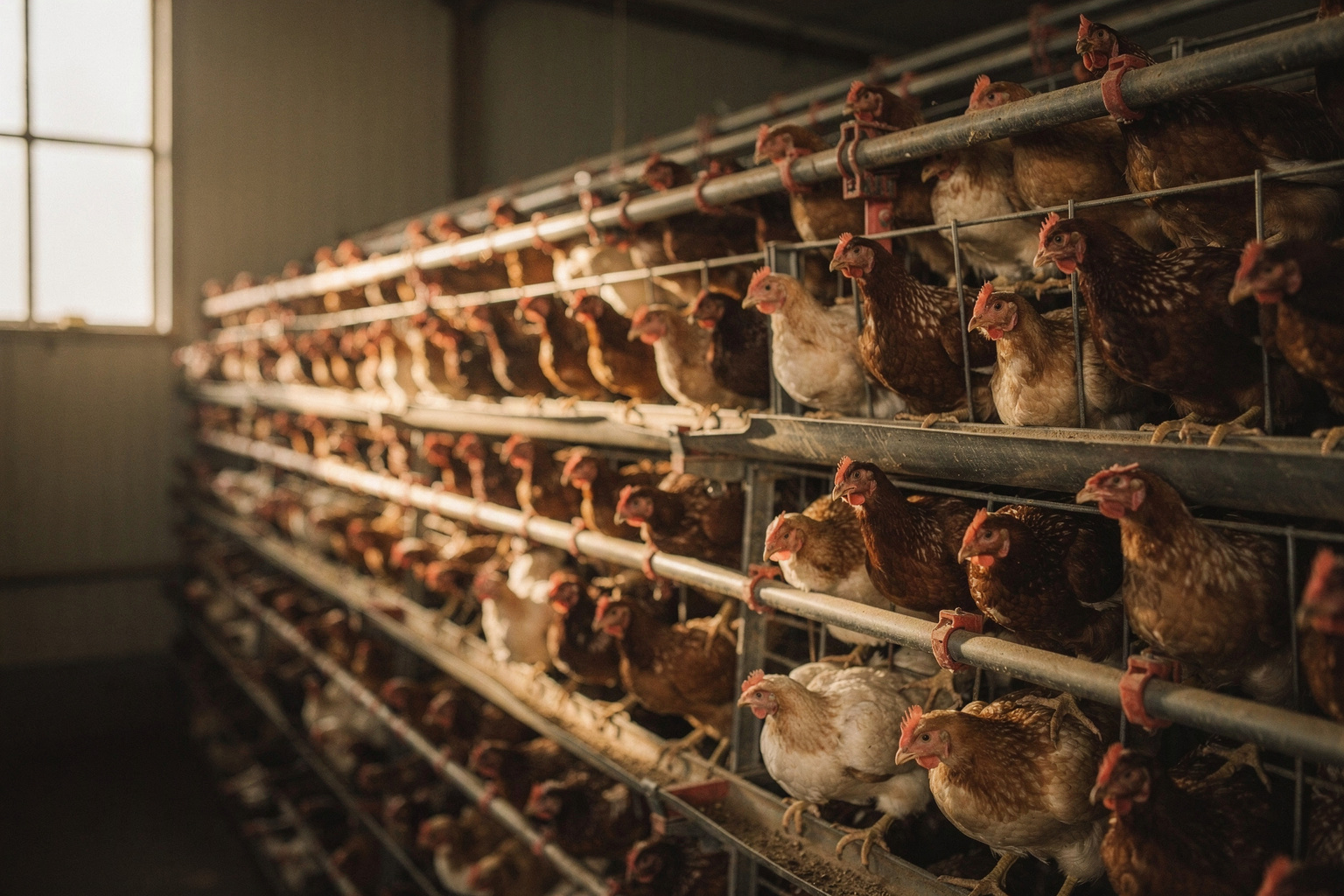
Animal farming drives wildlife loss mainly by destroying habitat: grazing, feed crops, and manure runoff push out insects, birds, and freshwater species. In the UK, farming accounts for 72% of land use (DEFRA, 2023), and a 2022 study in Nature found that 60% of global biodiversity loss stems from land-use change linked to agriculture.
What did our dairy farm look like before the transition?
In 1994, my parents milked 120 cows on 200 hectares in County Kilkenny. The land was neat, the hedges trimmed, and the river that ran along our boundary was a brown ribbon of mud in winter. We never thought of ourselves as wildlife killers, but we were replacing wild plants with ryegrass and wild animals with cattle.
By 2015, the stream that once had trout and white-clawed crayfish was lifeless. A local angling club stopped fishing it. The dawn chorus, once loud enough to wake us, had thinned to a few blackbirds. A 2019 Irish Wildlife Trust report found that 68% of Irish farm streams failed basic water quality standards due to agricultural runoff (IWT, 2019).
Why did we decide to leave dairy farming?
The decision was both economic and ecological. Milk prices crashed in 2016, and we were working 80-hour weeks for less than minimum wage. Meanwhile, a neighbour had planted oats and was turning a profit with far fewer inputs. We also couldn't ignore the growing evidence that animal agriculture is a leading cause of biodiversity loss.
A 2021 Chatham House report linked global livestock production to 60% of biodiversity loss. In Europe, farmland bird populations fell 57% between 1980 and 2020, mostly due to intensive farming (PECBMS, 2022). We realised our farm was part of the problem.
“If we want wildlife back, we have to change what we farm and how we farm it. There is no biodiversity strategy that bypasses the dinner plate.”
How did we transition from dairy to oats?
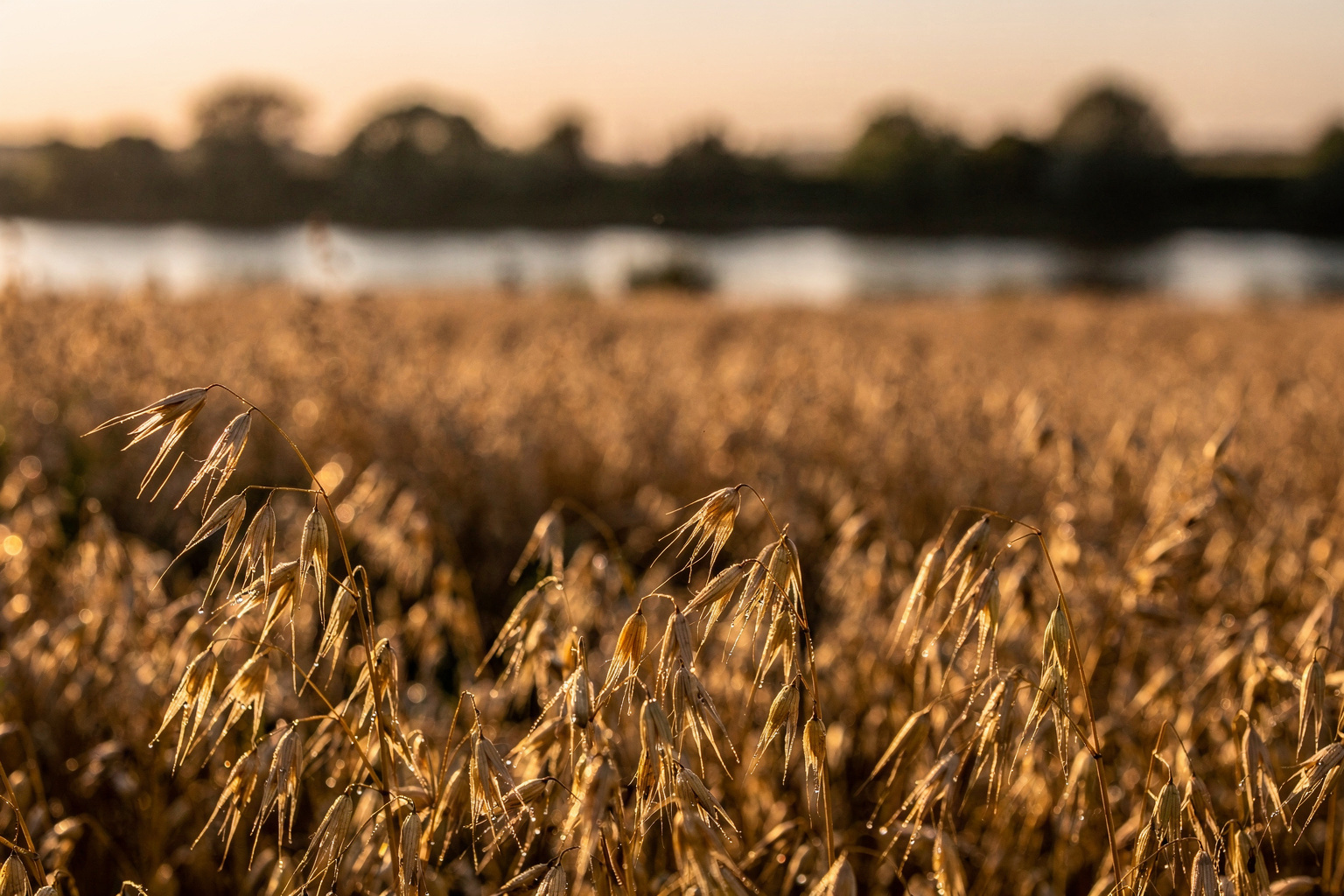
We sold the herd in 2018, ripped out the silage paddocks, and sowed 60 hectares of oats. The remaining 140 hectares became a mix of wildflower margins, native woodland, and wetland restoration. We kept the old milking parlour as a store and a reminder.
How to transition from dairy to wildlife-friendly crops
- 1
Assess your land
Identify 20% of your farm that can be returned to nature — stream banks, field corners, or wet patches — and exclude livestock from those areas.
- 2
Choose a marketable crop
Oats, flax, or heritage wheat can be profitable without the manure and antibiotic inputs of livestock. Oats are in demand for plant milks.
- 3
Stop using slurry and synthetic fertiliser
Replace with green manure or compost. This prevents nutrient runoff that causes algal blooms and fish kills in nearby rivers.
- 4
Plant native hedgerows and trees
A 2-metre-wide hedge of hawthorn, blackthorn, and hazel provides nesting sites for 30+ bird species. Do this on field boundaries.
- 5
Leave wild margins
Allow 6-metre strips of wildflowers and grasses around fields. These support pollinators, small mammals, and ground-nesting birds.
- 6
Monitor wildlife
Record bird, insect, and plant species each year. Citizen science apps like iNaturalist help track recovery and guide management.
- 7
Connect with local conservation groups
Groups like the Irish Wildlife Trust or the Wildlife Trusts in the UK offer advice, funding, and peer support for rewilding.
What were the results for wildlife and our farm?
Within four years, the changes were undeniable. A 2025 farm biodiversity survey by the National Biodiversity Data Centre recorded 42 bird species on our land, up from 11 in 2017. The stream, now fenced off from any livestock, has returned to clear water with brown trout and mayfly larvae. We also turned a profit for the first time in a decade.
Bird species count on our farm, 2017–2025
| Indicator | Dairy (2017) | Oats (2025) |
|---|---|---|
| Bird species | 11 | 42 |
| Water quality (Q-value) | Poor (Q3) | Good (Q4-5) |
| Profit per hectare | €420 | €610 |
| Labour hours per week | 80 | 45 |
| Synthetic fertiliser (kg/ha) | 180 | 0 |
What would we tell other farmers and consumers?
For farmers: the transition is hard, but the status quo is harder. We lost money for two years, but now we have a business that doesn't depend on subsidies or antibiotics. For consumers: every time you choose oat milk over dairy, you send a signal that supports farmers like us and reduces the demand that drives habitat destruction from animal farming.
In the US, animal agriculture occupies 41% of all land in the contiguous states (USDA, 2022). In Brazil, cattle ranching is responsible for 80% of Amazon deforestation (INPE, 2021). The link between what we eat and what survives in the wild is direct and urgent.
Frequently asked questions
How does animal farming drive wildlife loss?+
Animal farming drives wildlife loss by converting forests, grasslands, and wetlands into pasture and feed crops, eliminating habitat. It also pollutes rivers with manure and fertiliser, and uses pesticides that kill insects — the base of the food chain. Livestock now uses 77% of global agricultural land (FAO, 2023).
Is grass-fed beef better for wildlife?+
Grass-fed beef still requires vast land and water, and it often replaces native ecosystems. Even well-managed grazing can compact soil, erode riverbanks, and reduce plant diversity. No form of beef supports wildlife at the scale of natural habitats.
What crops can replace dairy and help wildlife?+
Oats, flax, hemp, and heritage grains are profitable alternatives that need no manure or antibiotics. They also allow wildflower margins and hedgerows to thrive. Oat milk demand rose 25% in Europe between 2020 and 2025 (Euromonitor, 2025).
How quickly can wildlife return after removing livestock?+
Invertebrates and water quality can improve within one or two years after fencing off streams and stopping slurry. Bird and mammal populations often take three to five years to recover, depending on local species pools.
What can consumers do to reduce animal farming wildlife loss?+
Swap dairy, meat, and eggs for plant-based alternatives. Choose products with certified sustainable palm oil and avoid those linked to deforestation. Support farmers who are transitioning to plant-based agriculture, and ask supermarkets to stock wildlife-friendly options.