Free range eggs vs pasture raised eggs differ mainly in how much outdoor access hens are expected to have, but the labels do not mean the same thing everywhere. Free-range rules may set minimum access or space; pasture-raised claims often promise more room, yet can lack a legal definition. Check the country, certification and actual standard before paying extra.
What do free-range and pasture-raised labels legally mean?
Free range has a clearer legal footing in some places than pasture raised, but the practical meaning still depends on local rules. Regulations may specify outdoor area or access while saying less about vegetation, range maintenance, flock size, or whether timid birds can get outside.
In the United States, USDA guidance for the voluntary “free range” claim requires producers to demonstrate that birds have continuous access to the outdoors during the production cycle. It does not establish a single nationwide minimum outdoor area per hen. “Pasture raised” is not a standardised federal production category, so consumers need to check who verifies the claim (USDA FSIS, 2024).
In the United Kingdom, free-range egg rules cap indoor stocking density at nine hens per square metre and require access to an outdoor range, with a maximum of 2,500 hens per hectare of usable range, equivalent to four square metres per hen if fully used (UK Government, 2024). EU rules also set a four-square-metre outdoor-area requirement for free-range eggs. Those figures do not mean every hen spends the day outside.
Australia’s national free-range standard allows up to 10,000 hens per hectare outdoors, subject to requirements including access to the range for at least eight hours a day when weather permits. Canada has no single, comprehensive government definition that makes “pasture raised” a consistent measure across cartons. In both countries, certification details and the producer’s evidence matter (Australian Consumer Law, 2017; CFIA, 2024).
| Market | Free-range signal | What to check |
|---|---|---|
| United States | Outdoor access must be demonstrated for the free-range claim | Outdoor area, access arrangements and any independent certification |
| United Kingdom | Maximum nine hens per square metre indoors; range-area rules apply | Range condition, pop-holes and whether the carton names an audited scheme |
| European Union, including Ireland | Free-range rules include four square metres of outdoor area per hen | Actual range use, vegetation and the scheme or producer behind the claim |
| Australia | Free-range standard permits up to 10,000 hens per hectare outdoors | Daily access arrangements, flock size and independent verification |
| Canada | The words on their own do not give one uniform pasture standard | Certification rules, outdoor-space figures and claim substantiation |
Which label is more likely to mean a better life for hens?
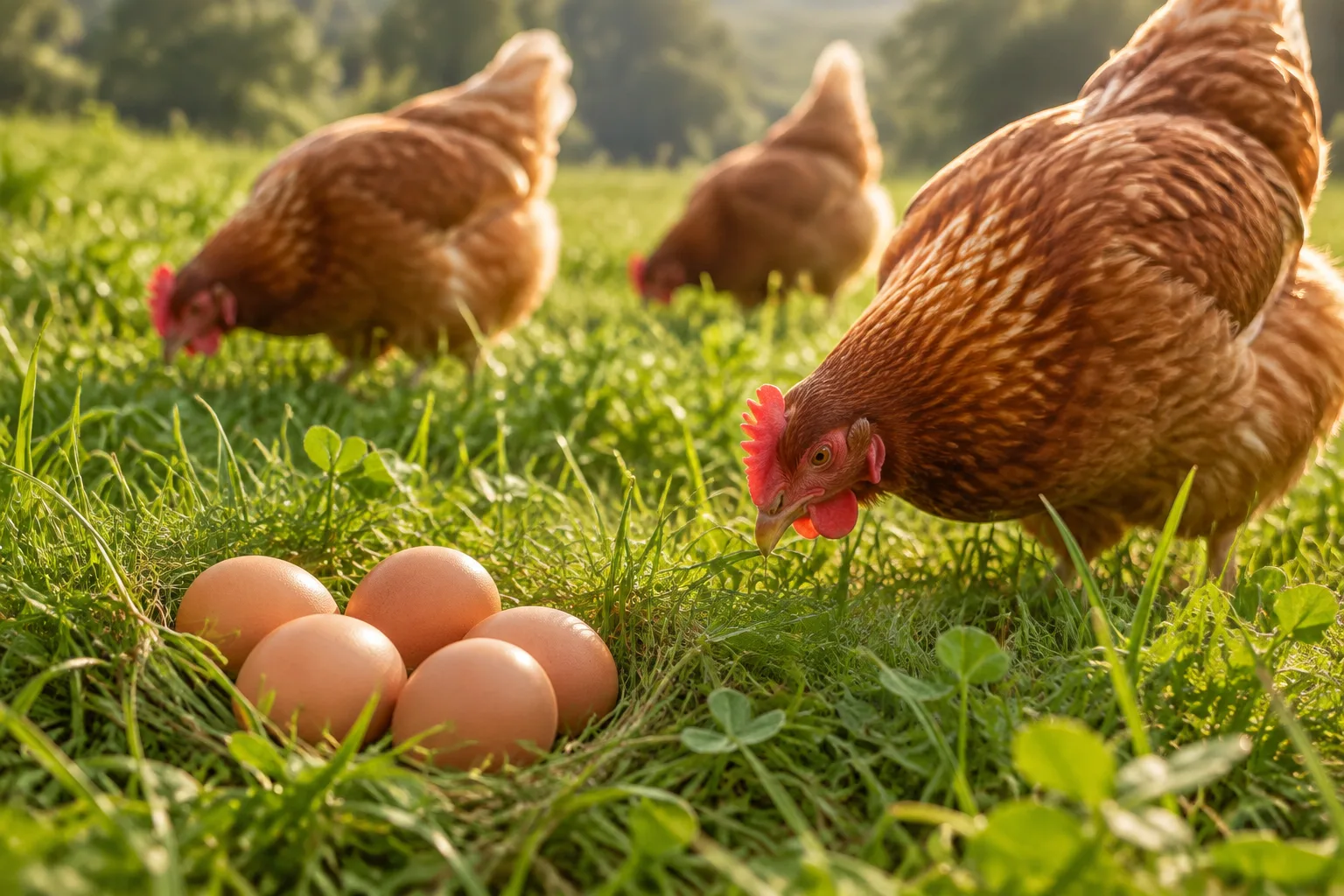
Pasture raised can describe a better opportunity to forage and move outdoors, but a label cannot prove that the opportunity is real for every bird. A well-run free-range farm may offer a usable, sheltered range; a nominally pasture-based system can still have crowding, poor ground cover or limited access.
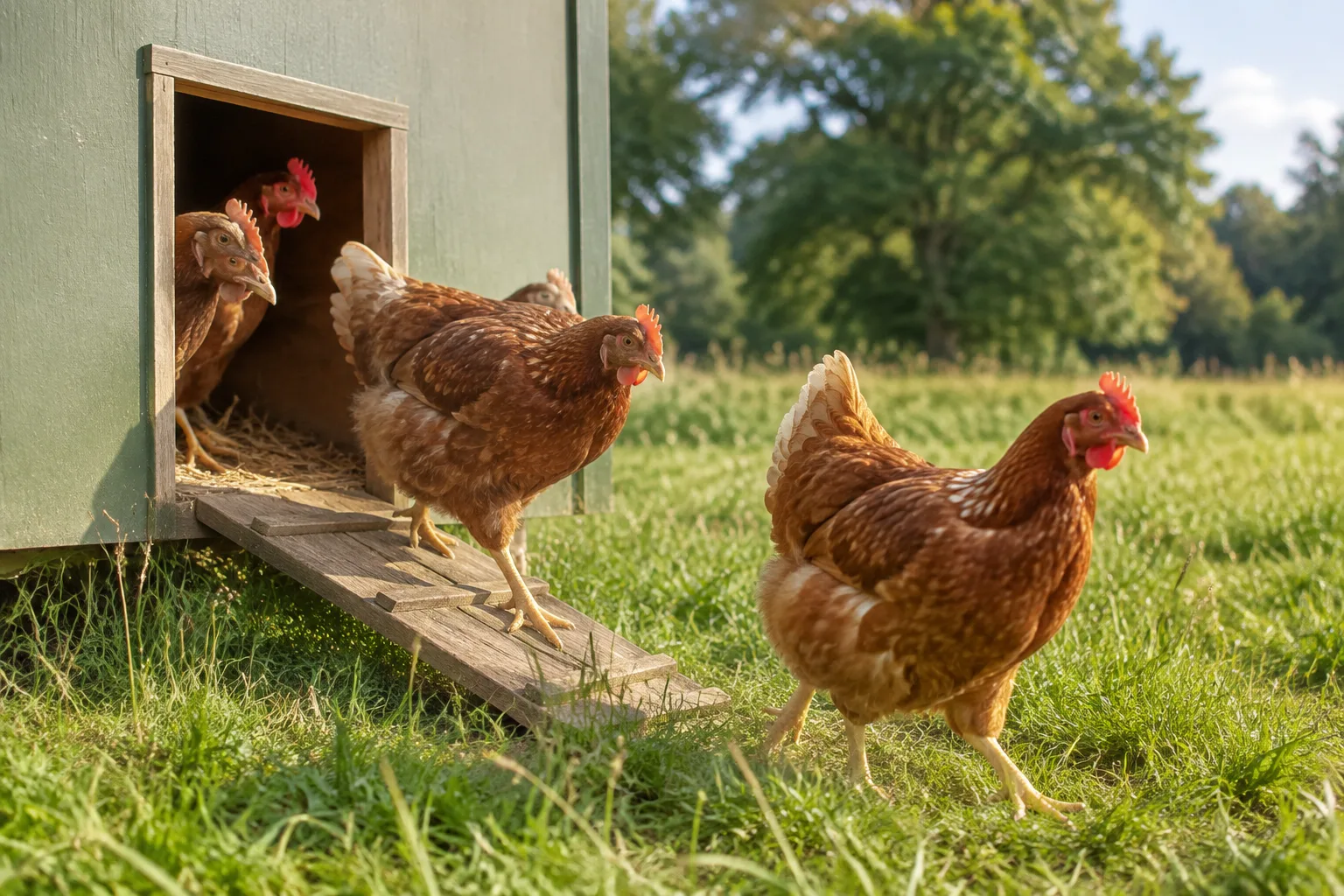
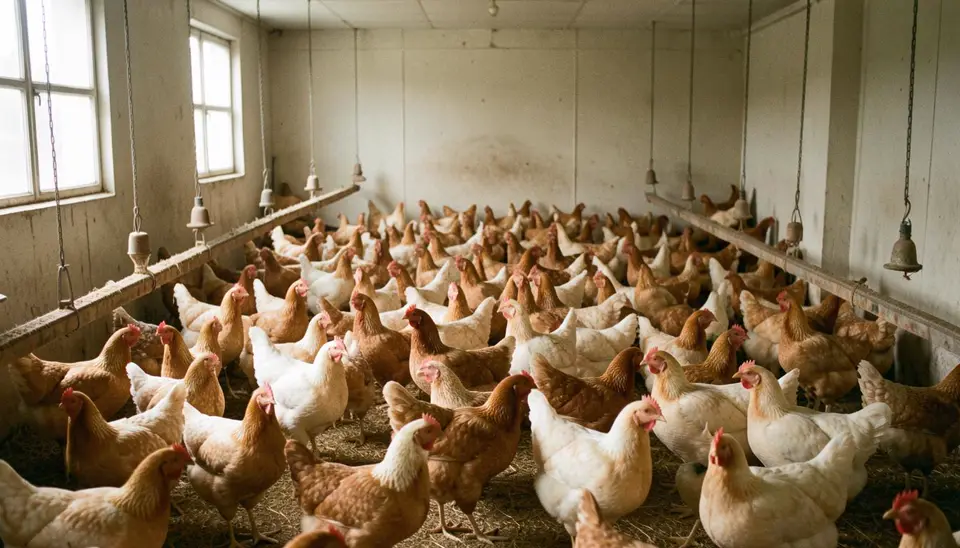
Look beyond the carton’s pastoral pictures. Ask how much outdoor space each hen receives, how the range is kept attractive and sheltered, how many hens share a flock, and whether birds can reach several pop-holes. A range close to the shed with trees or other cover may encourage use; barren ground or a distant perimeter can leave much of the outdoor area underused.
A certification gives shoppers something testable. For example, Certified Humane’s pasture-raised standard specifies at least 108 square feet of pasture per hen, while its free-range standard sets a lower outdoor-space requirement. That is a useful comparison between two particular audited standards, not proof that every product carrying either phrase meets those conditions (Certified Humane, 2024). Read the standard itself: audits, permitted flock sizes and enforcement are part of the promise.
“A vegan diet is probably the single biggest way to reduce your impact on planet Earth.”
Outdoor access does not resolve every welfare issue. Commercial laying hens may still experience beak treatment, disease, injury, stress from large flocks and slaughter when egg production declines. Male chicks from egg breeds are also a separate supply-chain concern: a pasture claim does not say whether a producer uses in-ovo sexing, raises males for meat, or relies on another approach.
What is the real price of free-range or pasture-raised eggs?
The shelf price is only the visible part of an egg’s cost. Shoppers may pay more for land, labour, lower stocking density or certification, while climate pollution, animal suffering, public-health risks and some supply-chain costs are not itemised at checkout. There is no dependable, internationally comparable figure that adds all those externalities to a dozen.
The climate ledger is measurable, though still imperfect. A global life-cycle analysis estimated average emissions of about 4.67 kilograms of carbon-dioxide equivalent per kilogram of eggs. At roughly 60 grams per shell-on egg, that works out to around 3.4 kilograms of CO2e per dozen; it is a broad average, not a measured footprint for every free-range or pasture-raised carton (Poore and Nemecek, Science, 2018; Our World in Data, 2024).
Climate footprint per kilogram of selected foods
That per-kilogram chart is a climate-cost comparison, not a complete true-cost price tag. The footprint of an individual egg can vary with feed, manure management, energy, transport and land use. Research does not support assuming that pasture-raised eggs automatically emit less than free-range eggs: more outdoor land can improve access while also changing feed use and land requirements.
| Cost category | What the sticker price may cover | What remains outside the receipt |
|---|---|---|
| Production and feed | Feed, housing, energy, transport and retailer costs | Public support for some crop production can indirectly affect feed prices; it is not a fixed subsidy per egg |
| Climate and land | Some farm investment in manure handling and energy | Greenhouse gases, land occupation, nutrient pollution and habitat pressures |
| Animal welfare | Outdoor access, space or certification premiums where offered | Pain, injury, restricted behaviour, male-chick fate and end-of-laying slaughter |
| Health and antibiotics | Veterinary care and disease controls on the farm | Potential resistance risks from antimicrobial use; not every risk can be attributed to eggs or priced per dozen |
| Labour and supply chain | Wages, packing, inspection and distribution costs | Worker safety, low-paid or insecure work, and pressure to meet fast production targets |
Public subsidies should be described carefully. Governments support agriculture through different programmes, but there is no universal per-dozen subsidy for eggs that can simply be added to a shopper’s bill. Support for feed crops may influence input markets indirectly; the size and direction of that effect depends on the country and policy, so a precise egg-level number would be misleading.
Health and labour costs also need proportion. Antibiotic resistance is a serious food-system concern, but it is not valid to assign all resistance to eggs or to imply that pasture-raised birds never receive treatment. In the United States, FDA rules restrict medically important antibiotics for growth promotion and require veterinary oversight for their use in food animals (FDA, 2017). Farm, packing and processing workers may face repetitive tasks, dust, machinery hazards and production pressure; the carton rarely shows how those jobs are organised.
How can you compare cartons and shop with confidence?
The most useful comparison is not simply “free range” against “pasture raised.” Compare the specific standard, evidence and price, then decide which conditions you are willing to support. Prices vary by country, retailer, season and flock health, so a local shelf comparison is more reliable than a universal price claim.
How to check egg labels before you buy
- 1
Identify the exact claim
Separate regulated terms such as free range in your market from broad phrases such as pasture raised. Do not assume a picturesque carton represents a legal welfare guarantee.
- 2
Find the certifier
Look for a named third-party scheme, then search its current laying-hen standard. Check that the scheme publishes rules and explains how farms are audited.
- 3
Compare outdoor space
Look for a measurable figure, such as square feet per hen or hens per hectare. Check whether the standard counts usable range rather than land birds cannot reach.
- 4
Ask whether hens use the range
Check for access hours, pop-hole arrangements, shelter, vegetation and range maintenance. Outdoor access on paper is weaker than a well-designed range birds can actually use.
- 5
Read the welfare policy
Look for rules on flock size, beak treatment, mortality, transport and end-of-laying slaughter. Ask what happens to male chicks; outdoor claims do not answer that question.
- 6
Compare the price with your priorities
If the premium buys a clearly audited improvement you value, it may be meaningful. If standards are vague or the cost is prohibitive, consider buying fewer eggs or choosing beans, tofu or chickpeas.
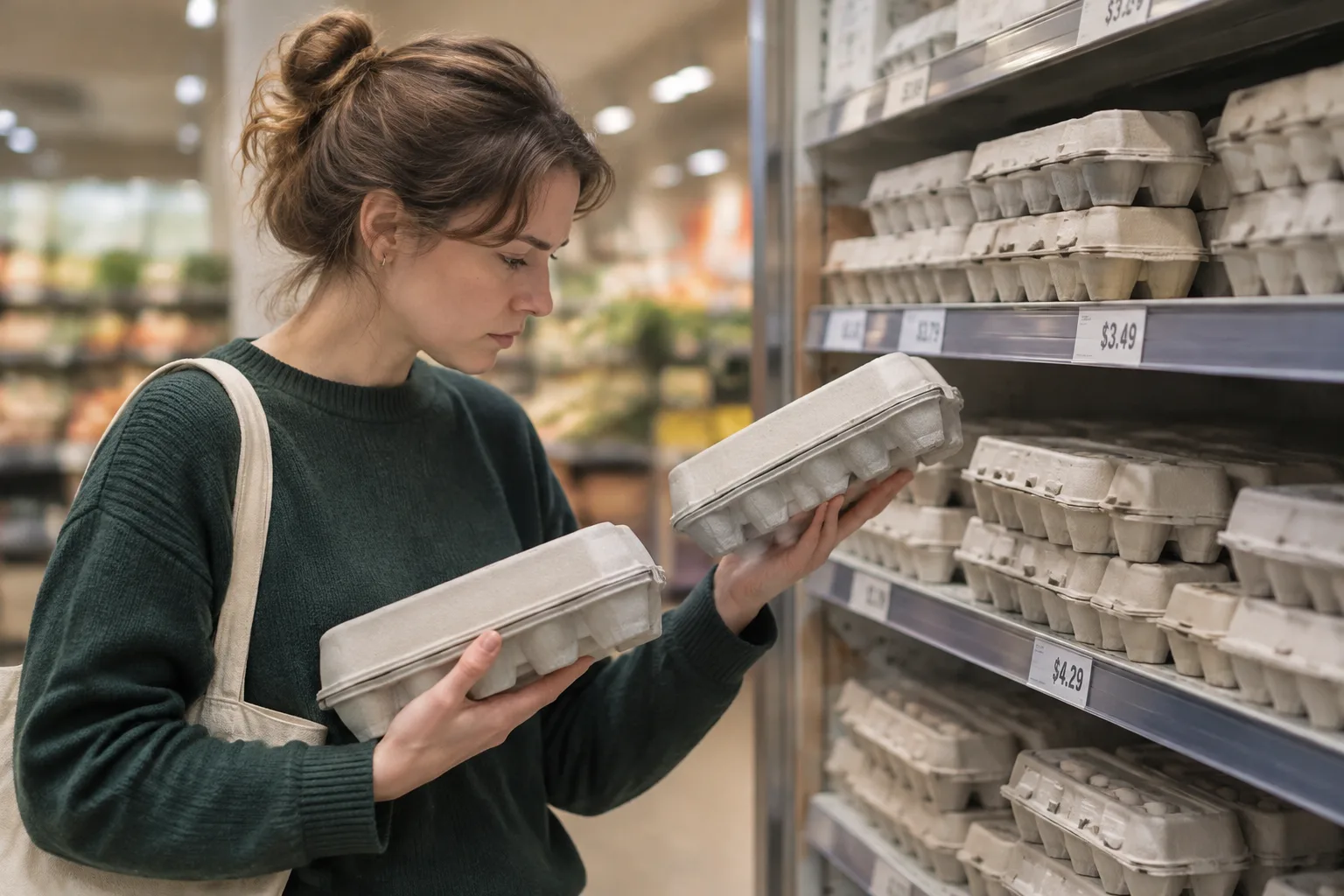
For a useful supermarket check, compare two cartons side by side and search their scheme names on your phone. In the US, UK, Canada, Australia and Ireland, rules differ enough that advice from another country may not apply. During Christmas baking, Thanksgiving meals, or a Veganuary reset, recipes built around tofu, chickpea flour or flax can reduce dependence on egg labels altogether.
Frequently asked questions
Frequently asked questions
Are pasture-raised eggs better than free-range eggs?+
They can be, when a credible standard gives hens more usable outdoor space and verifies access, but the phrase “pasture raised” does not guarantee that outcome everywhere. Compare the certifier’s published rules, flock conditions and audit process. A well-managed free-range farm may offer better conditions than a weakly verified pasture claim.
What is the difference between free-range and pasture-raised eggs?+
Free range usually means hens have some outdoor access, with requirements that vary by country. Pasture raised generally implies access to more outdoor land or vegetation, but it has no single consistent definition across major English-speaking markets. The exact difference depends on the local law and any third-party certification.
Do free-range hens actually go outside?+
Some do, but access does not mean every hen leaves the shed. Range design, weather, flock behaviour, shelter, pop-hole placement and distance from the building can affect use. A useful standard explains how outdoor access works and how the range is maintained, rather than relying only on the words “free range.”
Are pasture-raised eggs healthier?+
Pasture-raised eggs are not automatically healthier than other eggs. Nutrient levels can vary with feed and production conditions, but the label is not a reliable substitute for a nutrition panel or food-safety advice. Choose eggs for taste, price or a verified welfare standard, not because the phrase alone promises a health benefit.
Are pasture-raised eggs worth the extra cost?+
That depends on whether the price premium buys a verifiable improvement you value and can afford. Check the standard for outdoor space, access and independent auditing before paying more. If the claim is vague, or the premium does not fit your budget, buying fewer eggs or choosing plant-based ingredients are practical alternatives.