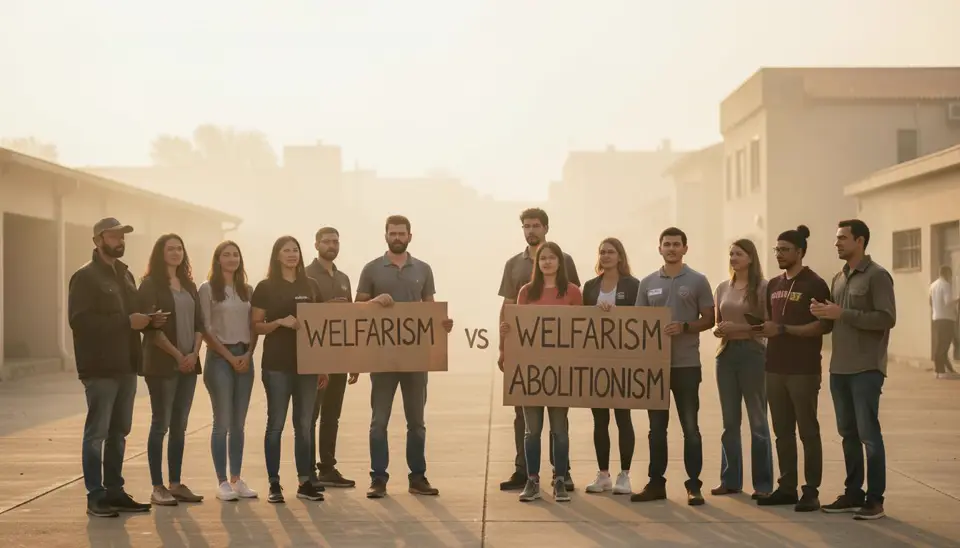
Animal rights vs animal welfare describes two related but different ways of protecting animals. Welfare asks whether animals are healthy and can experience good lives, even when people use them; rights arguments challenge whether animals should be treated as property or used at all. The distinction shapes laws, labels and advocacy, but the two approaches can overlap.
1. What is the difference between animal rights and animal welfare?
Animal welfare asks how an animal is treated and what it experiences. A welfare assessment can consider injury, disease, hunger, fear, social contact and opportunities for meaningful behaviour. Contemporary frameworks also ask whether animals can experience positive states, not merely whether they are free of obvious harm. The Five Domains model, developed by animal-welfare scientists, examines nutrition, physical environment, health, behavioural interactions and the resulting mental state (Mellor et al., 2020).
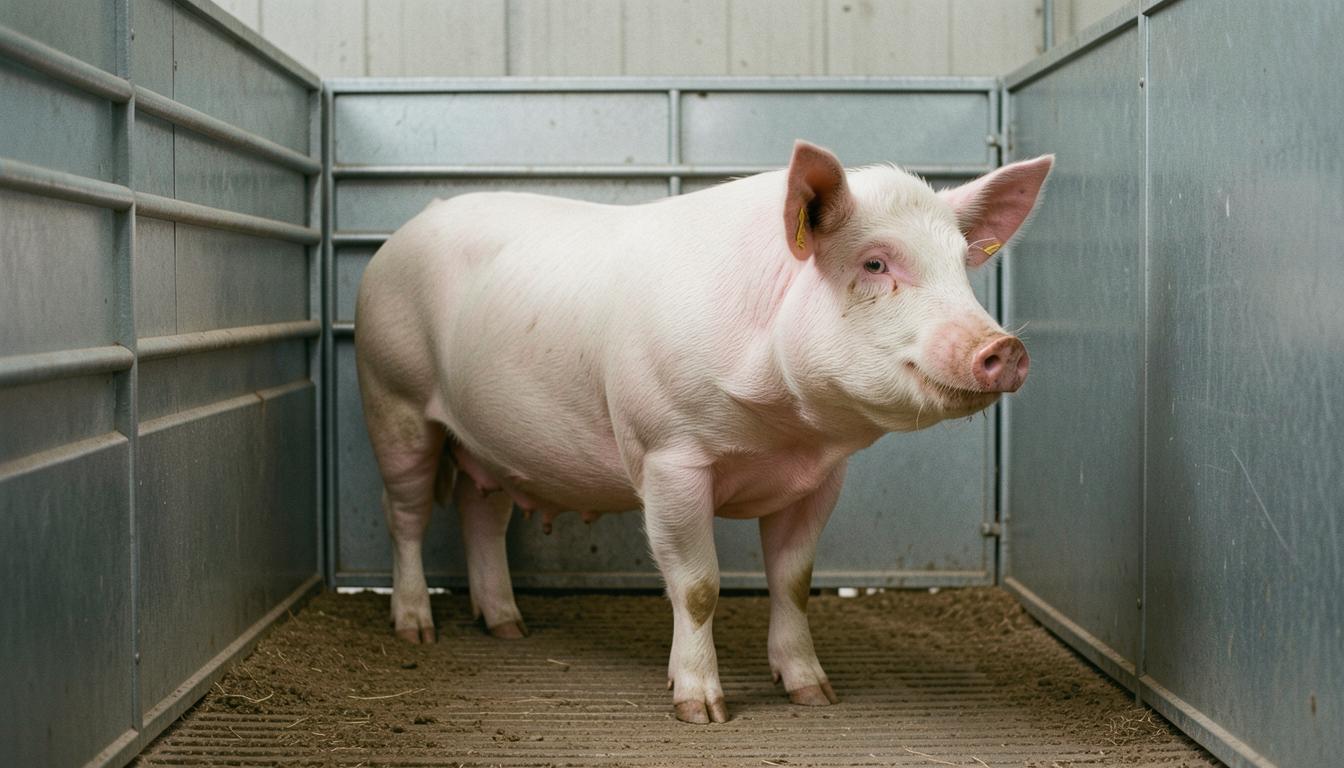
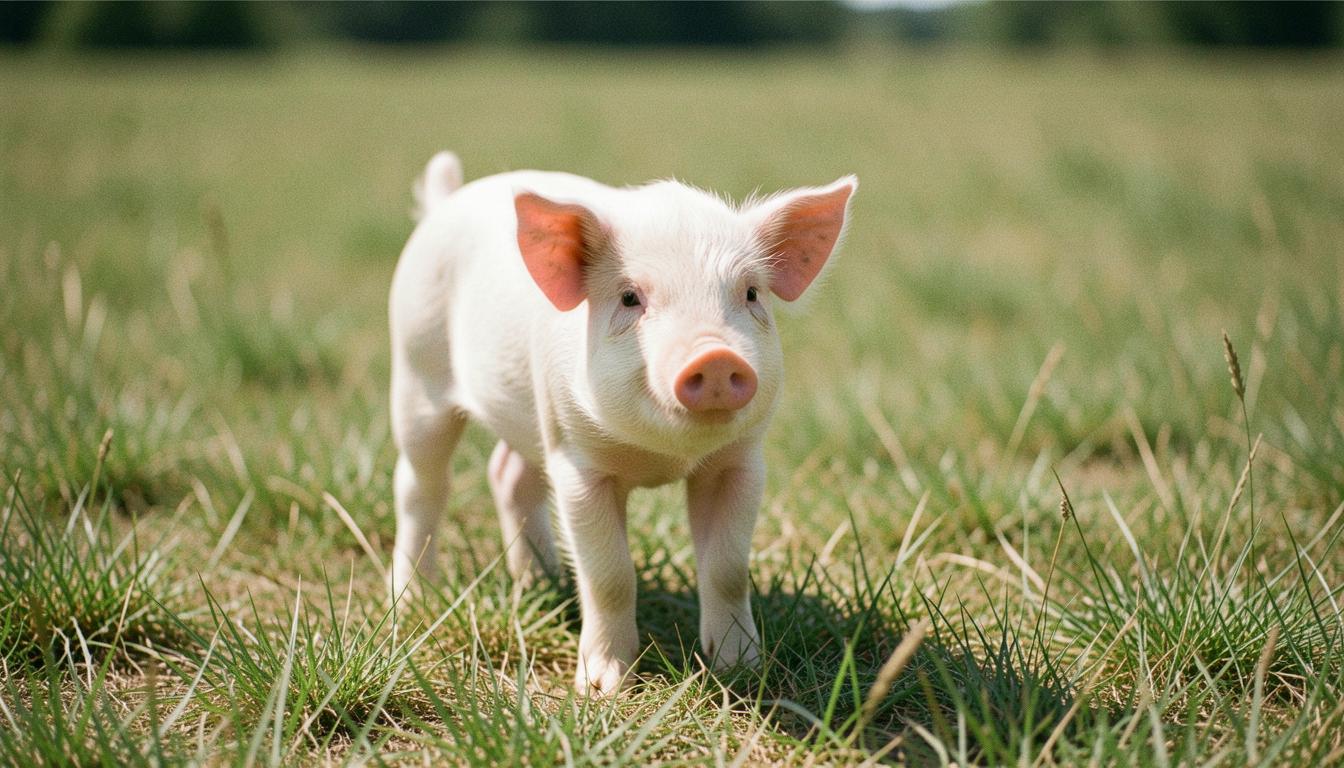
Animal rights asks a prior question: what may people do to an animal, even if they do it carefully? A rights advocate may argue that a pig should not be confined and killed for food even if the pig received veterinary care. Welfare reformers may instead seek more space, less painful procedures, effective stunning and better handling. Some people combine both approaches, supporting reforms now while working toward a future with less animal use.
“The basic principle of equality does not require equal or identical treatment; it requires equal consideration.”
The distinction is not a contest between people who care and people who do not. It is a disagreement about the endpoint. Welfare can offer immediate, measurable improvements; rights thinking questions whether the system should depend on using animals in the first place. Sentience matters to both: the Cambridge Declaration on Consciousness brought together researchers who affirmed evidence for conscious experience in nonhuman animals, although scientific understanding varies across species (Francis Crick Memorial Conference, 2012).
2. How do the two approaches lead to different ethical arguments?
Welfare ethics usually weighs harms against benefits and asks how suffering can be prevented or reduced. It can support a ban on painful procedures without pain relief, a limit on transport time or better access to nesting areas. Rights ethics places more emphasis on the animal as an individual with interests that should not be overridden simply because using the animal is convenient or profitable.
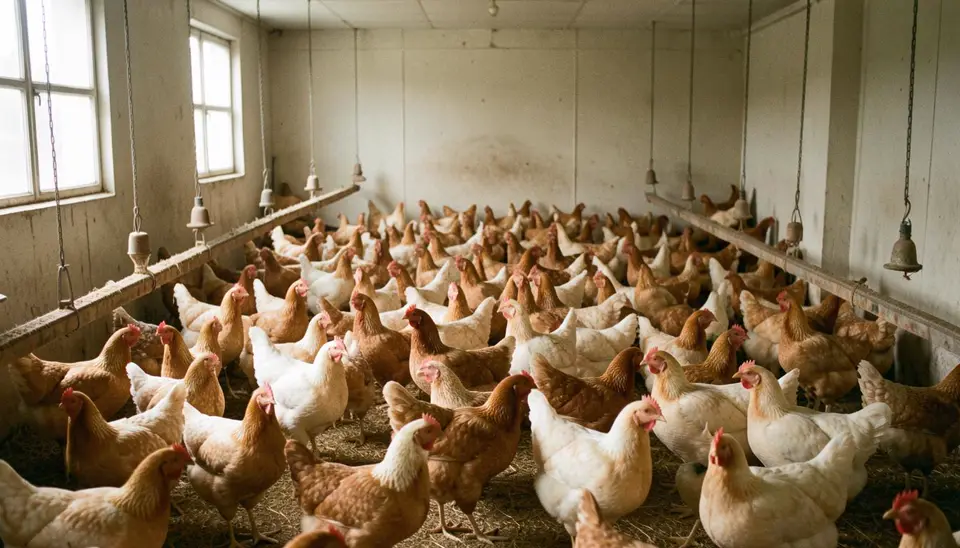
Consider a laying hen. A welfare standard might require a cage-free system, nesting areas, perches and a limit on stocking density. A rights-based argument may object that breeding, keeping and killing hens for eggs still treats them as production units. A cage-free claim can therefore signal a change in conditions while leaving the underlying use intact.

This difference appears in advocacy choices. A campaign focused on welfare may target a company’s housing policy or a regulator’s inspection rules. A rights campaign may press institutions to replace animal products with plant-based meals. These strategies can coexist: campaigns may pursue enforceable protections now while also reducing demand for practices that cause confinement or slaughter.
3. What do animal protection laws actually recognize?
Animal laws usually regulate particular conduct rather than settle the full philosophical debate. Some prohibit cruelty; others set rules for farming, transport, research, slaughter or companion-animal care. Even when a law recognizes sentience, that recognition does not necessarily make an animal a legal person, end its property status or give it a direct right to sue.
| Jurisdiction | Example of legal approach | What it does not automatically mean |
|---|---|---|
| United States | The Animal Welfare Act covers some animals and activities, including certain research and exhibition settings. | It does not provide a general on-farm welfare code for animals raised for food; coverage exclusions matter. |
| United Kingdom | The Animal Welfare Act 2006 imposes a duty of care; the 2022 Sentience Act recognizes specified animals in government-policy review. | Sentience review does not itself create animal personhood or a general right to bring a legal claim. |
| Canada | The Criminal Code prohibits specified forms of cruelty; provincial and territorial rules also apply. | There is no single comprehensive federal farm-animal welfare statute covering every stage of production. |
| Australia | State and territory laws govern much animal protection; national welfare standards are implemented through jurisdictional systems. | Rules and enforcement can differ between states and territories. |
| European Union | Article 13 of the Treaty on the Functioning of the EU recognizes animals as sentient beings in specified policy areas. | Recognition does not end animal use; detailed protections depend on EU and national rules. |
Legal milestones show both progress and limits. New Zealand’s Animal Welfare Act 1999 defines animals as sentient; France’s Civil Code described animals as living beings endowed with sentience in 2015; Quebec also recognized animals as sentient in 2015; and the United Kingdom passed its Animal Welfare (Sentience) Act in 2022. These laws do not create identical rights, but they make it harder for policy to treat animal experience as irrelevant.
Selected statutory recognition of animal sentience
The chart marks legal recognition, not a ranking of countries. A statute may acknowledge sentience yet leave important gaps in farming, transport or slaughter rules. Conversely, a specific welfare regulation can improve conditions without stating that animals hold rights. The practical questions are what conduct the law covers, which animals it includes, whether inspections are independent and what happens when a business breaks the rules.
4. What does the distinction mean for farms, labels and food choices?
For shoppers, animal welfare usually appears as a production claim: cage-free eggs, pasture-raised meat or a third-party certification. These terms are not interchangeable, and legal definitions vary by country and product. A label may address the animal’s housing but say little about breeding, painful procedures, transport or slaughter. Check the standard behind the words rather than assuming that a pleasant-sounding phrase has one universal meaning.
In the United States, USDA Organic rules include outdoor access requirements for organic poultry, while “cage-free” refers to housing without conventional cages and does not promise outdoor access. In the UK and EU, egg production systems are identified through regulated codes, but a production method still cannot tell you everything about an individual bird’s life. In Australia and Canada, certification schemes and provincial, territorial or state rules add their own requirements.
Price debates can obscure the ethical question. When egg prices rise during avian-influenza outbreaks, a low-cost carton may seem like the only realistic choice; yet price does not reveal how hens were housed or what safeguards applied. People who want to reduce reliance on animal products can compare affordable beans, lentils, tofu and other plant proteins, while supporting stronger, transparent standards for animals who remain in production.
A plant-based meal is a practical way to avoid demand for a particular animal product; it is not a substitute for enforcing protections for animals already in farms or laboratories. At Thanksgiving, Christmas, Easter or during Veganuary, readers may face familiar food traditions and competing household needs. A useful approach is to make the choices that are workable, ask clear questions of retailers and institutions, and support policies that apply across the supply chain rather than relying on personal purchasing alone.
5. How can readers turn the comparison into action?
Use the rights-versus-welfare distinction to make advocacy more precise. If your immediate goal is to reduce suffering, ask for a measurable, enforceable standard with independent monitoring. If your goal is to challenge animal use, support policies and institutional changes that replace animal products and activities with alternatives. The strongest public arguments say clearly which outcome they seek and how progress will be measured.
How to assess an animal-protection claim
- 1
Identify the animal and stage
Ask which species and which part of life the claim covers: breeding, housing, transport, slaughter, research or companion-animal care. A rule for one stage cannot stand in for protection throughout the animal’s life.
- 2
Find the actual standard
Look up the law, certification criteria or company policy behind the claim. Check requirements for space, social contact, pain relief, outdoor access and killing methods instead of relying on a slogan.
- 3
Check who verifies it
Find out whether inspections are independent, how often they occur, whether records are public and what penalties follow a violation. A standard without credible monitoring may offer little assurance.
- 4
Name the ethical endpoint
Decide whether you are seeking better conditions within animal use, a reduction in use, or both. Clear goals help you assess campaigns, legislation and corporate promises without treating all reforms as equivalent.
- 5
Choose a concrete next step
Contact a retailer about its sourcing policy, support enforceable legislation, choose plant-based options where practical, or back a reputable sanctuary or advocacy group. Track a specific change rather than counting awareness alone.
For lawmakers, the distinction can expose a common gap: laws that state a principle but do not supply inspections, resources or remedies. For businesses, it separates a welfare target such as ending cages from a broader commitment to reduce animal use. For readers, it offers a way to ask whether a reform makes an animal’s life better, changes the animal’s legal standing, or does both.
Frequently asked questions
Are animal rights and animal welfare the same thing?+
No. Animal welfare focuses on an animal’s physical and mental condition and on improving its treatment. Animal rights concerns the claims or protections animals should have, including whether people may own or use them. A welfare reform can improve conditions while leaving animal use in place, so the terms describe related but distinct goals.
Can an animal have welfare without having rights?+
Yes. Governments and businesses can set welfare rules that protect animals from particular harms without recognizing them as legal rights-holders. Many laws regulate treatment while animals remain property under the law. Whether that is ethically sufficient is a central disagreement between welfare-focused and rights-focused arguments.
Does recognizing animal sentience give animals legal rights?+
Not by itself. Recognition of sentience means the law acknowledges animals’ capacity for experiences such as pain or distress, or requires decision-makers to consider that capacity. The legal consequences depend on the statute. A sentience law may guide government policy without granting animals personhood, standing in court or a general right not to be used.
Do animal welfare labels mean a product is cruelty-free?+
Not necessarily. A label usually refers to specific production criteria, such as housing or handling, and may not cover every stage of an animal’s life. Standards differ between countries and certification programmes. Read the published criteria and check independent verification; choosing plant-based products avoids demand for the animal product itself.
Which is better: animal rights or animal welfare?+
The answer depends on the ethical goal. Welfare reforms can deliver practical protections for animals under current systems, while rights arguments challenge whether those systems should use animals at all. Many advocates pursue immediate welfare improvements and longer-term reductions in animal use, rather than treating the approaches as mutually exclusive.