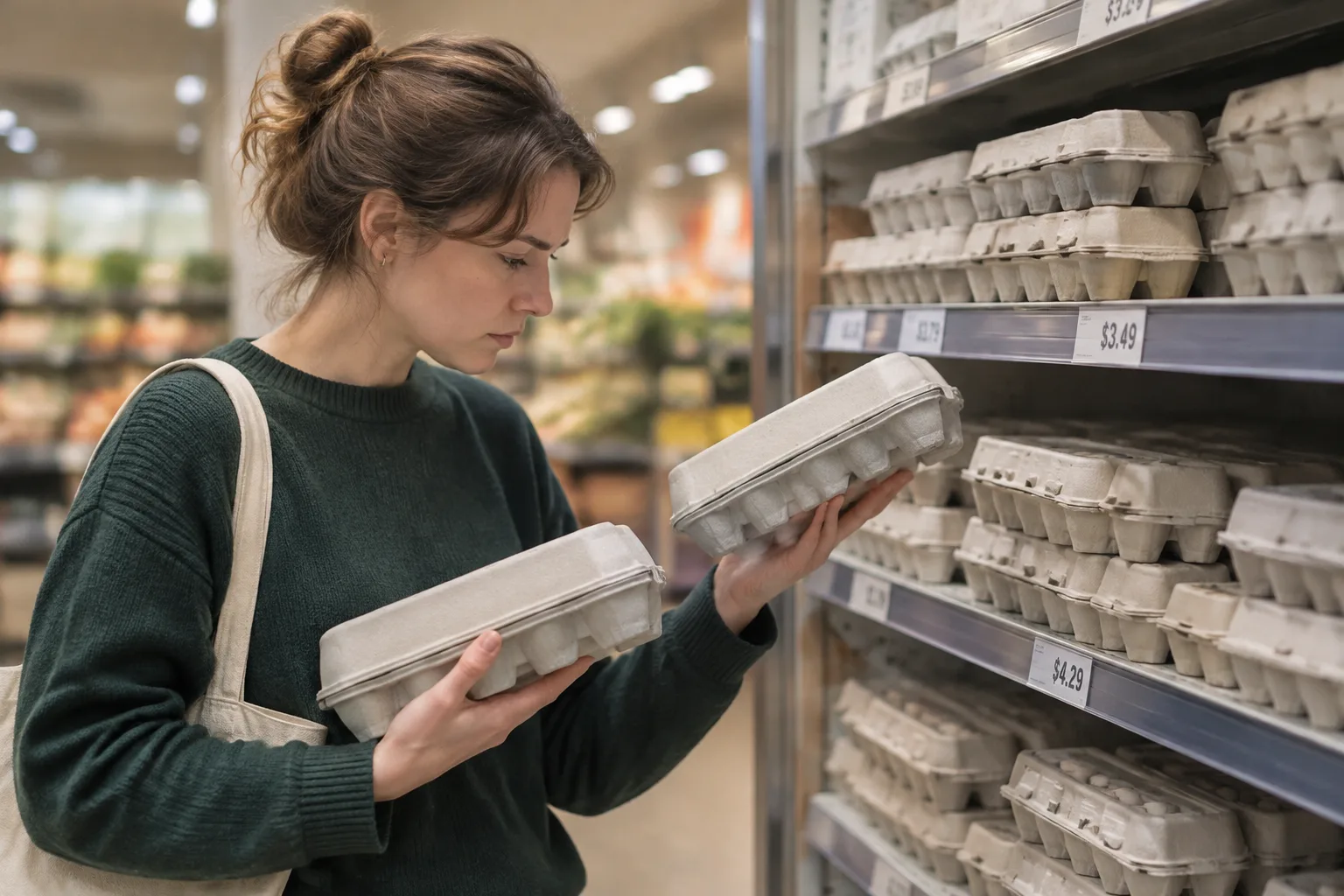
Egg prices change when the supply of laying hens or eggs shifts faster than farms and shops can adjust. Bird flu, feed and energy costs, seasonal demand, transport, and production standards all matter. The country, retailer, carton size, and label also shape the price shoppers see, so a single shelf figure rarely tells the whole story.
Why do egg prices change so sharply?
Egg prices change when the balance between available eggs and customer demand changes. Because laying hens cannot be replaced immediately, a disease outbreak or other disruption can keep supply tight after the initial shock has passed.
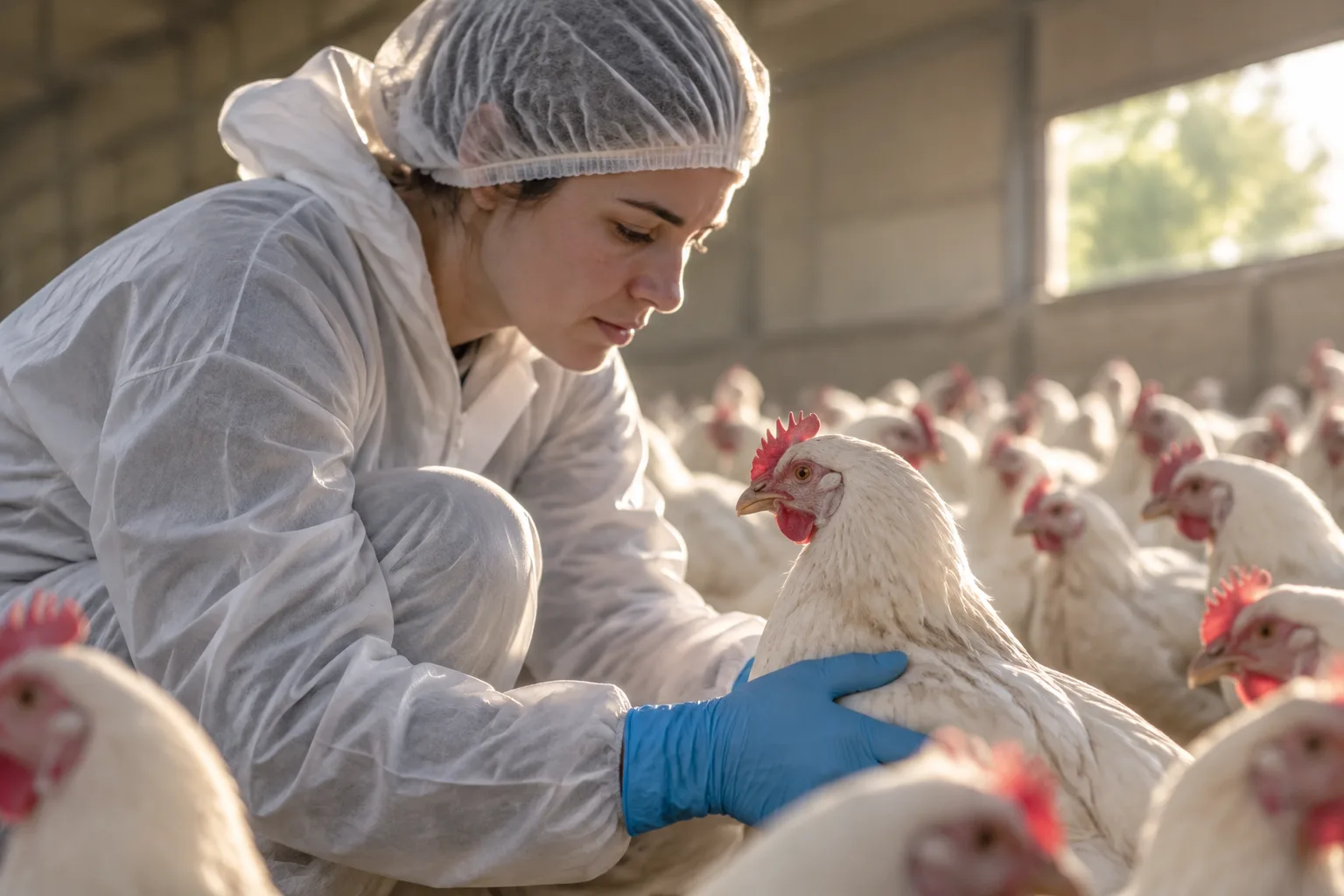
The most dramatic recent US example followed highly pathogenic avian influenza, or bird flu. The outbreak led to the loss of 58.8 million birds across commercial and backyard flocks in the United States during 2022 and 2023 (USDA APHIS, 2023). That total includes poultry beyond laying hens, but the scale of flock losses helps explain why egg supply became vulnerable and retail prices surged.
Disease is not the only cause. Feed, fuel, electricity, labour, veterinary care, cartons, and refrigerated transport all contribute to production and distribution costs. A farm facing more expensive grain may pay more to keep hens fed; a packer facing higher energy bills may pay more to store and grade eggs. Those pressures can reach shoppers at different speeds.
Farmers cannot simply order a replacement flock and restore output overnight. Young birds need months to mature before they lay at commercial levels, leaving a gap between a flock loss and new supply (University of Minnesota Extension, 2023). Retail prices may also lag behind changes in wholesale prices because contracts, inventories, and supermarket promotions work on different schedules.
A useful distinction is between a short-lived supply shock and a sustained cost increase. Bird flu can remove birds quickly; higher feed or energy costs can affect producers over a longer period. Retail prices can move for both reasons at once.
What role do bird flu, costs, and seasons play?
Bird flu can push egg prices up by reducing the number of productive hens, while rising farm and transport costs make each replacement egg more expensive. Seasonal demand adds a separate, often predictable pressure, especially when households and bakeries buy more eggs for celebrations.
| Price driver | How it affects supply or cost | What shoppers may notice |
|---|---|---|
| Bird flu | Flock losses can reduce the number of laying hens and slow replenishment. | Rapid price rises, limits on carton quantities, or temporary gaps in familiar brands. |
| Feed and energy | Grain, electricity, heating, and refrigeration add to farm and distribution costs. | Prices may rise across several brands, not only one production label. |
| Holiday demand | Baking and catering needs can increase around Easter, Thanksgiving, and Christmas. | Promotions may disappear or popular carton sizes may sell out sooner. |
| Welfare standards | More space, outdoor access, or different housing systems can add costs, although premiums vary. | A higher price may accompany a label, but the claim needs checking. |
| Retail and transport | Contracts, packaging, fuel, and store pricing affect the shelf price and timing. | Prices can differ between nearby shops even when farms face similar costs. |
The US Bureau of Labor Statistics recorded a national average of $4.82 for a dozen large Grade A eggs in January 2023, followed by $2.52 in January 2024 and $4.95 in January 2025 (BLS, 2025). These are historical national averages, not a forecast or a promise of what a local shop charges. The rise and fall show how quickly an egg market can move.
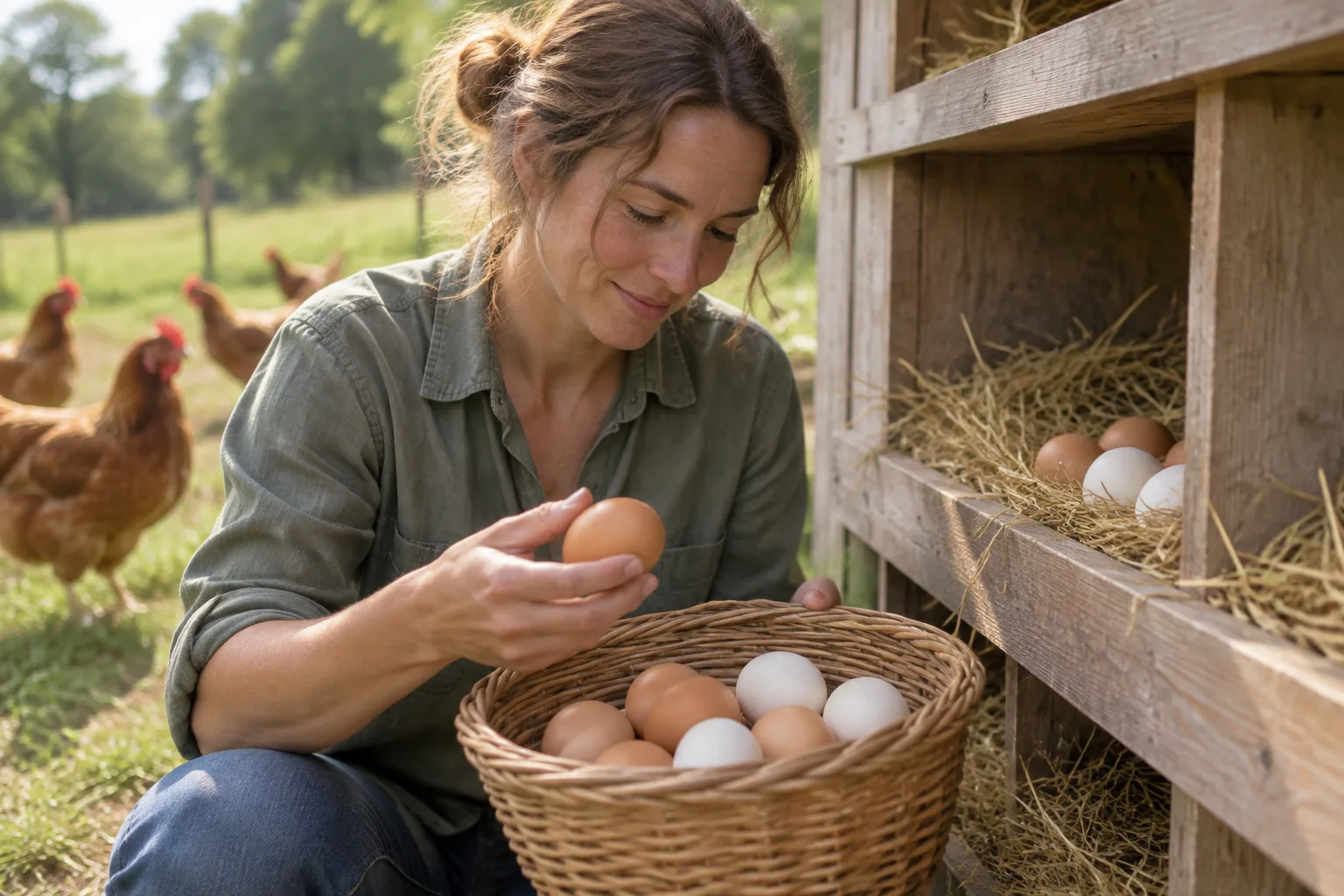
US average retail price for a dozen large eggs in January
How do egg prices and labels differ by country?
Egg prices are shaped by local farming rules, supply chains, currencies, and shopping habits, so international comparisons need context. A dozen in a US supermarket is not directly comparable with a six-pack in Ireland or a tray sold in India.
In the United States, shoppers may see conventional, cage-free, free-range, organic, and private certification claims. Federal rules govern some claims and food-safety practices, while state laws can impose additional sales requirements. USDA grading describes egg quality and size, not a universal guarantee of higher animal-welfare conditions (USDA AMS, 2024).
In the UK and the European Union, conventional barren battery cages are prohibited, but enriched cages remain permitted under current rules. Free-range eggs are a separate claim, with specified access requirements; a label should not be read as proof that every aspect of a hen's life is ideal (European Commission, 2023; UK Government, 2024). In Canada, the national layer-hen Code of Practice sets husbandry requirements and includes a phased transition away from conventional cages (National Farm Animal Care Council, 2023).
Australia's labels and state rules, and India's varied retail channels, add further differences. In India, shoppers may compare prices by egg, ten-pack, or tray, with rates affected by region, transport, feed, and weather. Religious and cultural food practices also shape demand: some households avoid eggs, while others buy them as an everyday protein. No single national price captures those local patterns.
For a fair comparison, convert the price into the local cost per egg: US dollars or Canadian dollars per egg, pounds in the UK, euros in Ireland, Australian dollars in Australia, or rupees in India. Then compare the claim itself. “Cage-free” means hens are not kept in cages; it does not necessarily mean they go outdoors. “Free-range” generally signals outdoor access under the relevant national rules, but standards and enforcement differ.
Welfare labels matter because eggs come from living birds in systems that can differ substantially in crowding, access to nesting areas, and opportunities to move. At the same time, a welfare premium is not a complete account of the production system. Ask whether the claim is independently audited, what standard it follows, and whether it applies to all eggs in the carton.
How can shoppers compare egg prices and welfare claims?
The most useful comparison combines unit price with the production standard and the amount you will actually use. A cheap carton is not automatically the best value if eggs spoil, while a costly welfare label is not meaningful unless its standard is clear.
When prices spike, buying the cheapest available option may feel like the only practical choice. A broader approach is to plan meals around a range of affordable proteins, including beans, lentils, tofu, and chickpeas. These foods work in dishes familiar across the six markets: lentil curry, chickpea stew, baked beans, tofu scramble, and bean chilli. For baking, mashed banana, flaxseed mixed with water, or commercial egg replacers can work in some recipes, though they are not interchangeable in every dish.
A plant-based alternative is not a perfect substitute for every cooking purpose, and households differ in budget, health needs, access, and tradition. The practical goal is flexibility, not judgement. A few reliable meals that do not depend on eggs can help families manage price swings and reduce dependence on a fragile supply chain.
“Eat food. Not too much. Mostly plants.”
That familiar line is a useful prompt rather than a shopping rule: food choices are personal, but a diet with more plant-based meals can reduce demand for intensive animal production. Eggs also have an environmental footprint through feed production, housing, energy, and manure management. A major global food-footprint study found that production impacts vary widely by food and supply chain, making the system behind a product important alongside its price (Poore and Nemecek, Science, 2018).
What does Earth Day have to do with egg prices?
Earth Day connects household food decisions with environmental systems and the people and animals within them. The first Earth Day was held in the United States on April 22, 1970, after Senator Gaylord Nelson and organiser Denis Hayes helped build a national environmental teach-in. In 1990, Earth Day became a global mobilising event, involving an estimated 200 million people in 141 countries (EarthDay.org, 2024).
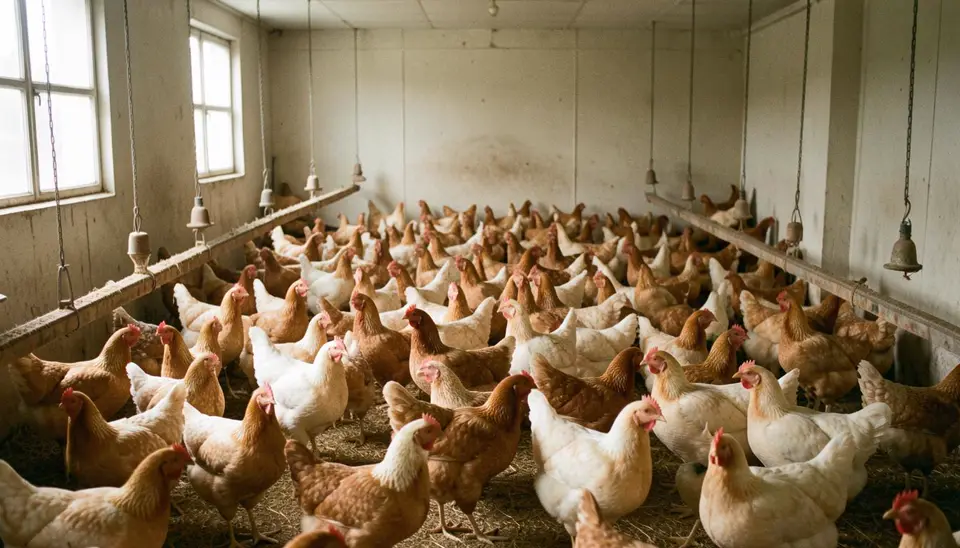
The connection to egg prices is practical. Industrial egg production depends on feed crops, energy, transport, and large flocks concentrated in supply chains. Disease, extreme weather, or a disruption to feed markets can affect both farm costs and the price at the till. The same system raises questions about manure pollution, air quality, worker safety, and the conditions of hens.
An Earth Day response need not turn a grocery bill into a moral test. It can mean learning what a label guarantees, supporting credible improvements in animal welfare, and trying a plant-based meal during Veganuary, Lent, or a regular weeknight. Around Easter, Thanksgiving, and Christmas, planning a menu that uses fewer eggs can also ease last-minute shopping pressure.
Five practical actions to take this Earth Day
- 1
Compare unit prices
Check the price per egg or per 100 grams, not only the carton total. Match carton size and egg size where possible, and note whether a promotion changes the unit price.
- 2
Read the welfare claim
Look up what cage-free, free-range, organic, or certified claims mean in your country. Check the named standard and whether an independent organisation audits compliance.
- 3
Plan for seasonal demand
Before Easter, Thanksgiving, or Christmas baking, estimate how many eggs your recipes need. Shop earlier when practical and avoid panic buying more than your household can use.
- 4
Build an egg-free meal option
Try one familiar dish based on lentils, beans, chickpeas, or tofu. For baking, test a suitable egg replacer in a recipe designed to work with it rather than assuming every substitute behaves alike.
- 5
Ask retailers for transparent sourcing
Contact a supermarket or food service and ask which welfare standard covers its eggs, how claims are checked, and what it is doing to protect supply workers and hens during disease outbreaks.
Frequently asked questions
Why are egg prices so high?+
Egg prices can rise when bird flu reduces laying flocks, feed and energy become more expensive, or seasonal demand increases. Farm replacement takes time, and packing, transport, contracts, and retailer pricing influence how quickly costs reach shoppers. The main cause can differ by country and month, so local price reports are more useful than a global headline.
Does bird flu make eggs more expensive?+
Bird flu can make eggs more expensive when outbreaks lead to the loss or temporary removal of laying hens. Smaller available flocks mean fewer eggs for retailers to sell, while farms need time to raise replacement birds. The effect depends on outbreak size, biosecurity measures, imports, and how quickly production resumes.
Are cage-free eggs worth the extra cost?+
Cage-free eggs come from hens kept outside cages, but the claim does not necessarily promise outdoor access or identical conditions across brands. Whether the premium is worth paying is a personal decision. Check the standard, independent verification, and local definition before comparing prices, and consider supporting stronger welfare rules as well as individual product choices.
How can I compare egg prices fairly?+
Divide each carton price by its number of eggs to find the cost per egg, then compare cartons of similar size and production type. Check the date, grade or size, and welfare claim too. A supermarket promotion, a different pack size, or a free-range label can make two headline prices misleading.
What can I use instead of eggs when prices rise?+
For meals, beans, lentils, chickpeas, and tofu can replace eggs as protein-rich ingredients, depending on the dish. In baking, mashed banana or ground flaxseed mixed with water can work in some recipes, while commercial replacers are formulated for others. Texture and binding vary, so choose a substitute suited to the recipe.