Reading a nutrition panel on a plant-based product is not just about calories or protein; for fenceline BIPOC and low-income communities disproportionately affected by hypertension and diabetes, the most critical numbers are sodium, added sugar, and dietary fibre. A 2023 study in the Journal of the American Heart Association found that plant-based meats can contain up to 600 mg of sodium per serving, equivalent to 25% of the daily limit for individuals with high blood pressure, a condition affecting 40% of Black adults in the U.S. (CDC, 2023). This guide teaches you to scan past marketing claims and focus on the three pillars that directly impact chronic disease prevention and longevity.
Why sodium matters more than protein for fenceline communities
In communities living near industrial facilities, often BIPOC and low-income, rates of hypertension and cardiovascular disease are elevated due to environmental stressors and limited access to fresh foods (Environmental Health Perspectives, 2021). Processed plant-based meats, while free from animal fat, can be sodium bombs. A Beyond Burger patty contains 390 mg of sodium, while an Impossible Burger patty has 370 mg (USDA FoodData Central, 2023). For a person with prehypertension, that's nearly 20% of the recommended daily limit of 2,300 mg. The American Heart Association recommends no more than 1,500 mg for those with hypertension, making a single patty a quarter of the daily allowance. When reading a nutrition panel, always start at the sodium line.
How to spot hidden added sugars in plant-based staples
Plant-based milks and yoghurts are often marketed as healthy, but many contain 10 to 15 grams of added sugar per serving, rivaling soda. A 2022 report from the Center for Science in the Public Interest found that flavoured oat milks averaged 12 g of added sugar per cup. For low-income families managing insulin resistance, which is 50% more prevalent among Black adults (Diabetes Care, 2019), these sugars can disrupt blood glucose control. On the nutrition panel, look for the 'Added Sugars' line; choose products with 0 g or less than 5 g per serving. Unsweetened soy or almond milk is a reliable swap.

| Product | Sodium (mg per serving) | Fibre (g per serving) |
|---|---|---|
| Beyond Burger (4 oz) | 390 | 2 |
| Impossible Burger (4 oz) | 370 | 1 |
| Gardein Chick'n Scallopini (3 oz) | 480 | 1 |
| Tofu, firm (3 oz) | 0 | 0 |
| Black beans, cooked (1/2 cup) | 1 | 8 |
Fibre as a non-negotiable for longevity
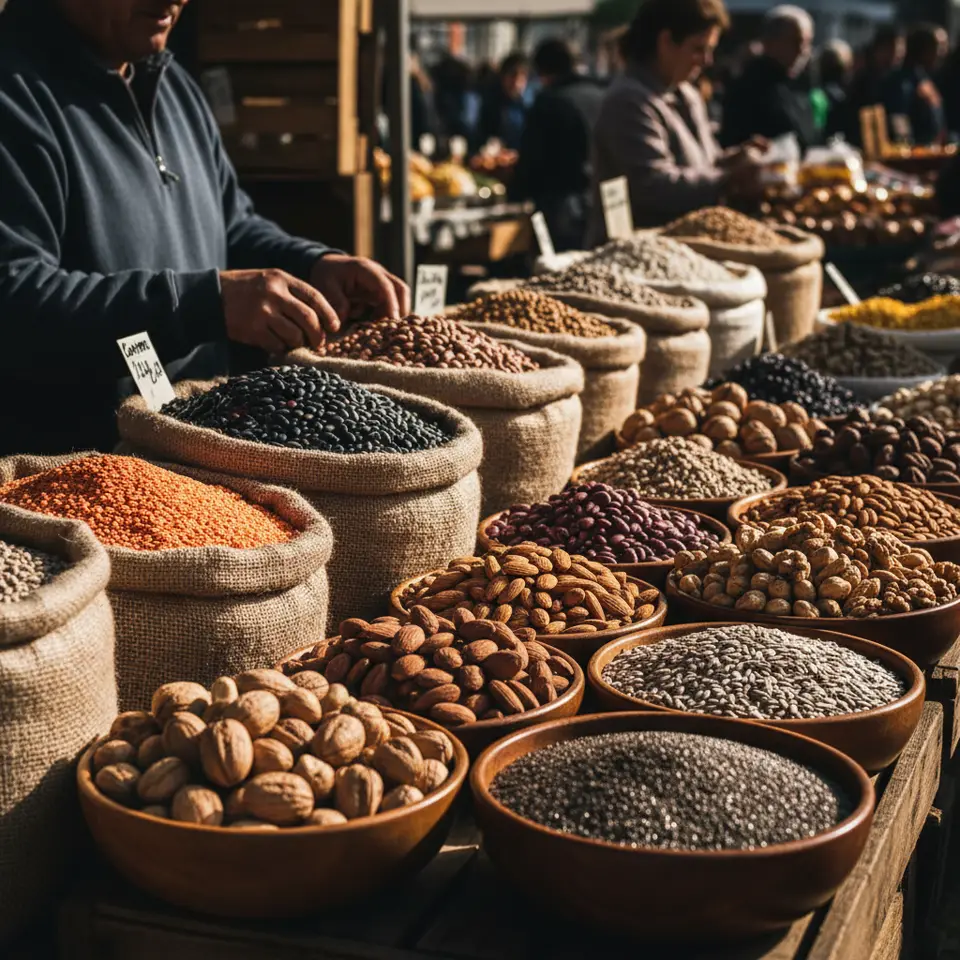
Fibre is the single most underappreciated nutrient in processed plant-based foods. The Dietary Guidelines for Americans recommend 25-30 g per day, yet most adults consume only 15 g. For BIPOC communities with higher rates of colorectal cancer (American Cancer Society, 2023), fibre is a protective factor. When reading a nutrition panel, scan for fibre content: whole-food options like lentils (8 g per half cup) or chickpeas (6 g per half cup) far outperform processed burgers with 1-2 g. A 2019 study in The Lancet found that a high-fibre diet reduced all-cause mortality by 15%.
Average sodium content in plant-based meats vs. whole foods (mg per serving)
Navigating the 'health halo' of plant-based labels
Marketing terms like 'natural', 'wholesome', or 'clean label' are unregulated and often mask high sodium or sugar. A 2024 investigation by the Environmental Working Group found that 60% of plant-based meat products labelled 'natural' had sodium levels exceeding 400 mg per serving. For fenceline communities, where food deserts limit choices, these labels can mislead. The only reliable source is the nutrition panel. Ignore front-of-package claims and flip the product over. Look for the '% Daily Value' column: aim for 5% or less of sodium per serving (low) and 20% or more of fibre (high).
“In our community, we see families choosing plant-based meats thinking they're automatically healthy. But the sodium content can be shocking. I tell my patients to read the panel like a detective, starting with sodium and fibre.”
A printable checklist for the plant-based traveller
Use this checklist when shopping in any store, from corner bodegas to supermarkets, to ensure your plant-based choices support chronic disease prevention. Print it or save it on your phone.
How to read a nutrition panel in 5 steps
- 1
Step 1: Find the serving size
Check the serving size at the top. Often, packages list a small serving (e.g., 2 oz) to make numbers look smaller. Multiply for your actual portion.
- 2
Step 2: Scan sodium first
Look at the 'Sodium' line. Aim for less than 200 mg per serving. If it's 300 mg or more, consider a whole-food alternative like beans or tofu.
- 3
Step 3: Check added sugars
Find 'Added Sugars' under 'Total Sugars'. Choose 0 g. If flavoured milks or yoghurts have more than 5 g, switch to unsweetened.
- 4
Step 4: Maximise fibre
Look at 'Dietary Fiber'. Aim for at least 3 g per serving. Whole foods like lentils or chickpeas often have 5-8 g.
- 5
Step 5: Ignore protein hype
Most plant-based diets exceed protein needs. Skip the 'high protein' marketing and focus on micronutrients like iron or calcium if listed.
Frequently asked questions
What should I look for first on a nutrition panel for plant-based foods?+
Start with sodium content. For fenceline communities at higher risk of hypertension, aim for less than 200 mg per serving. Next, check added sugars (aim for 0 g) and fibre (aim for 3 g or more). These three numbers are more predictive of long-term health than protein or calories.
Are plant-based meats healthier than animal meats for low-income families?+
Not always. Some plant-based meats have sodium levels exceeding 400 mg per serving, similar to processed meats. For low-income families, whole-food options like beans, lentils, or tofu are often cheaper, lower in sodium, and higher in fibre. Always read the nutrition panel rather than relying on marketing.
How can I tell if a plant-based product has too much added sugar?+
Look at the 'Added Sugars' line on the nutrition panel. If it shows 10 g or more, that's about 2.5 teaspoons. For managing diabetes or insulin resistance, choose products with 0 g. Unsweetened plant milks and plain yoghurts are safer bets.
What does 'fenceline community' mean in this context?+
Fenceline communities are neighbourhoods located near industrial facilities, such as factories or oil refineries, often populated by BIPOC and low-income residents. They face higher exposure to pollutants and have limited access to fresh, affordable foods, making nutrition panel reading critical for managing diet-related diseases.
Can I rely on the '% Daily Value' on the label?+
Yes, but with caution. The '% Daily Value' is based on a 2,000-calorie diet. For sodium, 5% or less is low, 20% or more is high. For fibre, aim for 20% or more. However, if you have hypertension, your doctor may recommend lower sodium limits than the standard Daily Value.
Do whole foods like beans need a nutrition panel check?+
Whole foods like dried beans or lentils don't have a nutrition panel, but canned versions do. For canned beans, check the sodium line; choose 'no salt added' or rinse them to reduce sodium by up to 40%. Fresh or frozen vegetables are also excellent low-sodium options.