School and hospital procurement reforms are increasingly driving the elimination of gestation crates from food supply chains, thereby improving animal welfare standards across public institutions. These policies mandate that publicly funded establishments source pork from suppliers who do not confine pregnant sows in restrictive gestation crates, significantly affecting the industrial animal agriculture landscape. Understanding these changes empowers ethical travellers to make informed decisions and support systems that prioritise humane treatment.
Why are Gestation Crates a Critical Animal Welfare Issue?
Gestation crates represent one of the most egregious forms of animal cruelty in industrial agriculture due to the severe restrictions they impose on sows. These confinement systems deny pigs the ability to perform basic natural behaviours like rooting, nesting, or even turning around, leading to chronic stress, lameness, and abnormal repetitive behaviours (stereotypies) (Farm Sanctuary, 2022). The lack of movement also results in muscle atrophy and skeletal degradation, severely impacting the animals' physical health and well-being. For ethical travellers, understanding this suffering is crucial to making informed choices about food and supporting reform efforts.
“The egregious nature of gestation crates epitomises the ethical failings of industrial animal agriculture. Mandating their removal from procurement chains isn't just about animal welfare; it's about embedding compassion into our public institutions.”
How is Public Procurement Driving Gestation Crate-Free Policies?
Public procurement — the buying of goods and services by government bodies and public institutions — plays a powerful role in shaping industry standards, directly impacting gestation crate usage. Many states and localities in the United States, as well as countries within the European Union, are enacting policies mandating that publicly funded schools and hospitals only purchase pork from suppliers that do not use gestation crates (Animal Welfare Institute, 2023). This provides a substantial incentive for producers to transition to more humane farming practices, as losing large institutional contracts can be economically devastating.

For instance, California's Proposition 12, effective January 2024, prohibits the sale of pork from animals confined in a cruel manner, including gestation crates, impacting both in-state and out-of-state producers selling within California (California Department of Food and Agriculture, 2024). Similar legislative efforts in Massachusetts (Question 3) and proposed federal bills demonstrate a growing tide of public and legislative support for animal welfare in procurement. These policies exemplify how consumer demand, channeled through institutional buying power, can reshape an entire industry.
| Region | Policy Type | Implementation Status | Impact on Suppliers |
|---|---|---|---|
| European Union | Directive (2001/88/EC) | Partial Ban (since 2013) | Requires group housing post 4 weeks of gestation |
| California, USA | Prop 12 (Referendum) | Full Ban (effective 2024) | Prohibits sale of pork from crated sows |
| Massachusetts, USA | Question 3 (Ballot Int.) | Full Ban (effective 2022) | Prohibits sale of pork from crated sows |
| New York, USA | Proposed Legislation | Under Review | Aims for crate-free state procurement |
| Canada | Industry Code of Practice | Voluntary Transition | Some provinces have stronger commitments |
Marigold's Journey: A Survivor of the Gestation Crate System
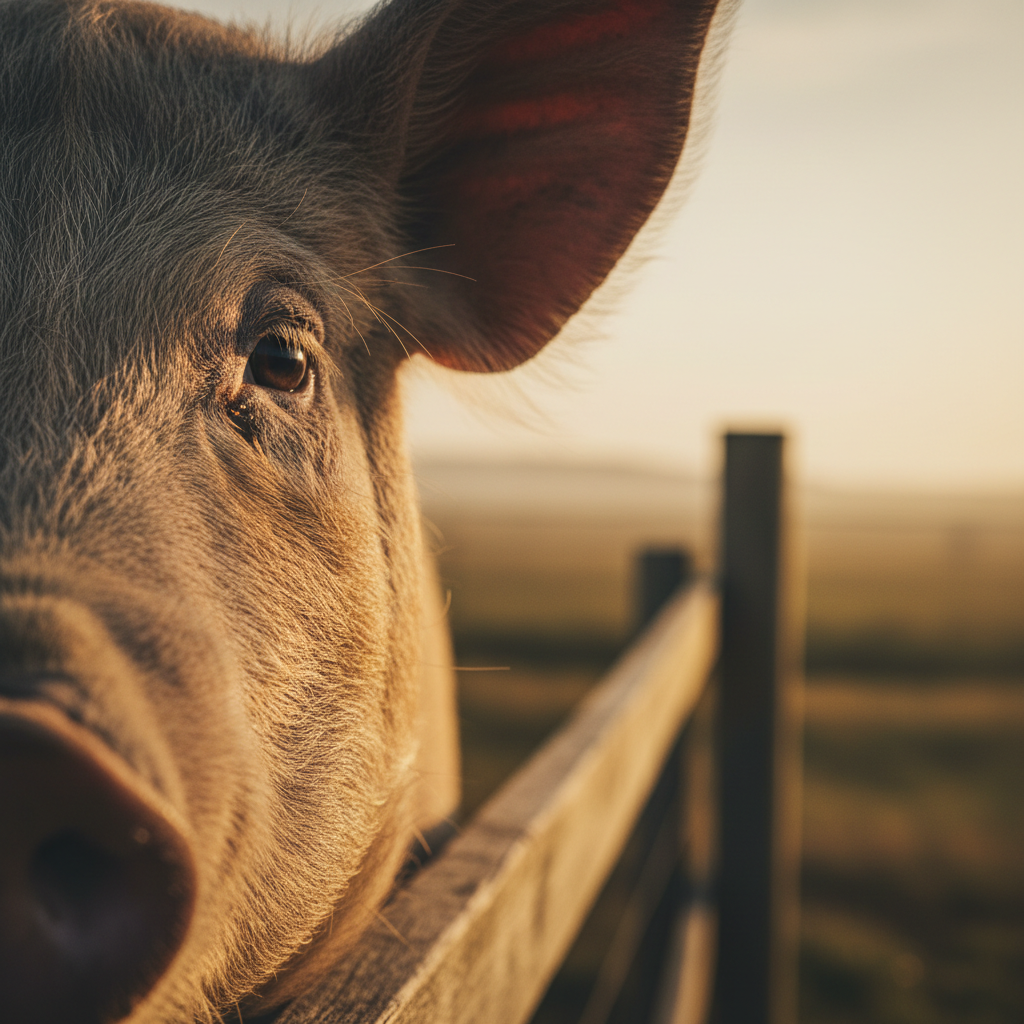
To truly grasp the impact of gestation crates, consider the story of Marigold, a sow rescued from an industrial farming operation. For years, Marigold endured the confines of a gestation crate, her body bearing the scars of forced immobility and her spirit dulled by constant stress. Her muscles atrophied, her joints ached, and she displayed severe stereotypical behaviours, such as bar-biting, a common sign of psychological distress in crated sows (Farm Sanctuary, 2021). When rescued, she was weak, timid, and wary of human contact.
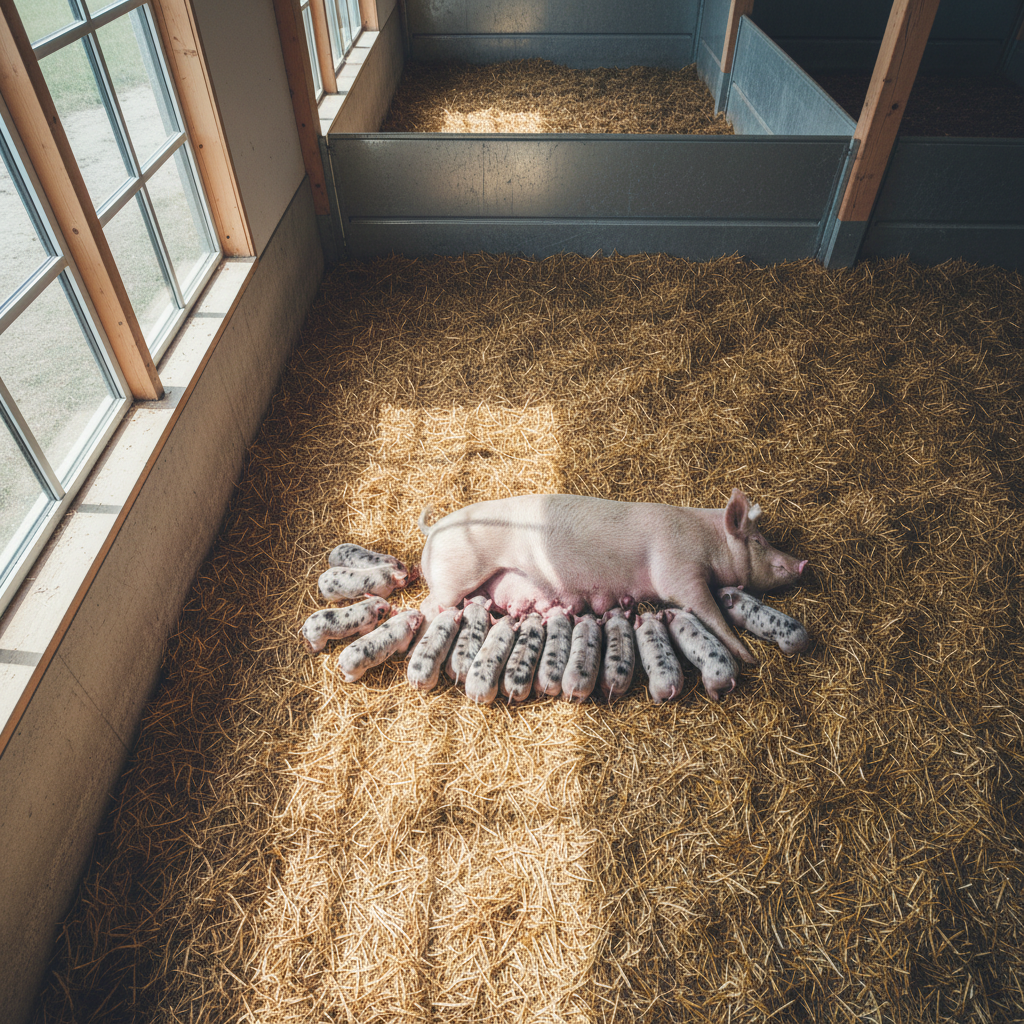
Upon arriving at a sanctuary committed to ethical animal care, Marigold’s transformation was slow but profound. Initially, she struggled to walk properly on soft earth, her hooves unaccustomed to anything but slatted concrete. Over months, with proper nutrition, veterinary care, and the freedom to roam a spacious, straw-filled pasture, her physical health improved dramatically. More importantly, her behavioural patterns began to normalise. She learned to root in the earth, socialise with other rescued pigs, and even enjoy wallowing in mud – behaviours crucial to a pig's well-being that are utterly denied in a gestation crate.
Marigold's journey from a life of extreme confinement to one of relative freedom powerfully illustrates the innate complex needs of these intelligent animals and the profound cruelty inherent in the gestation crate system. Her story underscores why ethical procurement policies are not just bureaucratic necessities but vital steps towards restoring dignity to sentient beings.
An Ethical Traveller's Itinerary: Discovering Gestation Crate-Free Initiatives
For the ethical traveller, a journey can be more than sightseeing; it can be an opportunity to support and witness positive change. This itinerary focuses on regions actively engaged in gestation crate-free procurement and animal welfare advocacy.
The Ethical Traveller's Itinerary for Animal Welfare Advocacy
- 1
Day 1-2: Sanctuaries & Education (California, USA)
Visit Farm Sanctuary in Acton, CA, or Animal Place in Grass Valley, CA, to meet rescued animals like Marigold. Attend educational workshops on industrial farming and the impact of Prop 12. Dine at local farm-to-table restaurants supporting ethical sourcing.
- 2
Day 3-4: Policy & Advocacy (Brussels, Belgium)
Explore Brussels, the heart of EU policy-making. Research the European Citizens' Initiative 'End the Cage Age' and its impact on EU legislation. Visit food markets to find producers adhering to higher welfare standards for pork products.
- 3
Day 5-6: Local Impact & Culinary Exploration (Montreal, Canada)
Investigate Quebec's progress in phasing out gestation crates and local initiatives promoting humane farming. Enjoy Montreal's vibrant culinary scene, seeking out ethical restaurants that highlight their suppliers' animal welfare commitments.
- 4
Day 7: Reflection & Future Action (Home)
Reflect on your experiences. Research local campaigns advocating for gestation crate bans in your own community's public procurement. Consider writing to your representatives or supporting animal welfare charities.
Public Support for Gestation Crate Bans (Selected Surveys)
Frequently Asked Questions
Do gestation crate bans increase food costs for schools and hospitals?+
Initially, transitioning to crate-free systems can involve investments for farmers, potentially leading to slight price increases. However, economies of scale and consumer demand for ethical products often mitigate long-term cost impacts. Many producers find that consumers are willing to pay a marginal premium for humane products (Mercy For Animals, 2022).
Are all 'crate-free' labels genuinely humane?+
Not all 'crate-free' labels are equivalent. While they confirm sows are not in gestation crates, they don't always guarantee high welfare standards. Look for additional certifications like 'Global Animal Partnership (GAP) Certified,' 'Animal Welfare Approved (AWA),' or specific 'pasture-raised' claims for more robust assurances of humane treatment.
What is the difference between gestation crates and farrowing crates?+
Gestation crates confine pregnant sows for nearly their entire pregnancy. Farrowing crates, while also restrictive, are used for a shorter period around the time of farrowing (giving birth) and during lactation. They aim to protect piglets from being crushed by the sow, but still significantly restrict the sow's movement and natural nesting behaviours (Compassion in World Farming, 2023).
How can I advocate for gestation crate-free policies in my community?+
To advocate for gestation crate-free policies, you can contact your local school board or hospital administration to inquire about their procurement policies. Support local and national animal welfare organisations working on these issues, and spread awareness among friends and family about the benefits of ethical food sourcing and the cruelty of gestation crates.