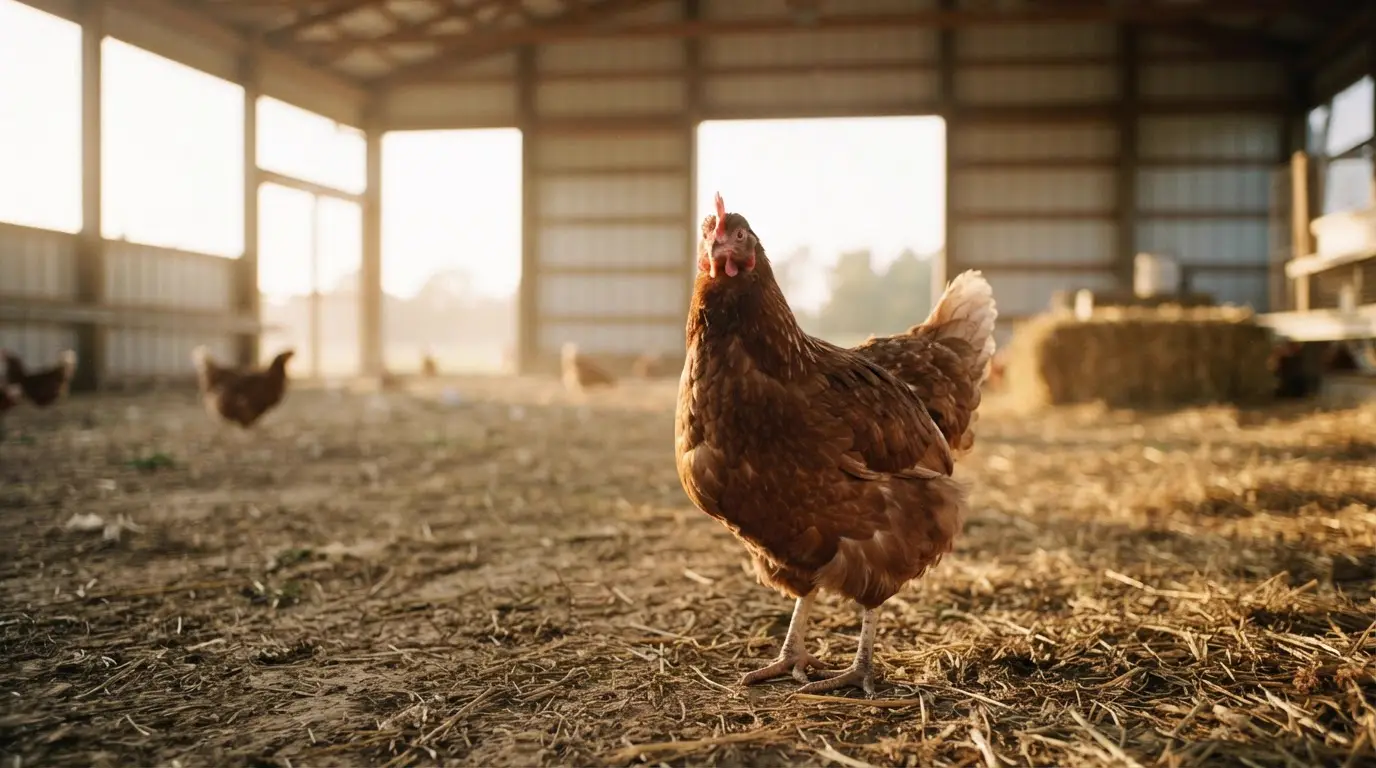
Are battery cages the norm for eggs in your food desert community? You might assume so, but let's separate fact from fiction. This is what you need to know about battery cages, backed by evidence.
Myth 1: Battery cages are the most efficient way to produce eggs.
Fact: Battery cages are efficient only in terms of space, not in terms of animal welfare or environmental impact.

“The confined conditions in battery cages are detrimental to the physical and behavioral well-being of hens. (Dr. Karen Christensen, World Animal Protection, 2021)”
| Housing System | Floor Area per Hen | Perches | Nesting Areas |
|---|---|---|---|
| Battery Cage | 450 cm² | None | None |
| Enriched Cage | 750 cm² | Yes | Yes |
| Cage-Free Barn | 1.2 - 2 m² | Yes | Yes |
Myth 2: Battery cages are affordable for consumers.
Fact: While battery cages may have lower production costs, the true cost to society, including animal welfare and environmental impacts, is not reflected in the price of eggs.
Environmental impact of egg production systems
Alternatives to battery cages.
Alternatives like enriched cages and cage-free systems provide more space, perches, and nesting areas, improving hen welfare and environmental impact.
“Enriched cages and cage-free systems offer significant improvements in hen welfare and can be implemented without substantial increases in production costs. (Dr. David Hughes, Emeritus Professor of Dairy Science, Pennsylvania State University)”
Frequently asked questions
What is the difference between enriched cages and battery cages?+
Enriched cages provide more space, perches, and nesting areas for hens, improving their welfare compared to battery cages.
How does cage-free production impact the environment?+
Cage-free systems generally have a lower environmental impact, with reduced greenhouse gas emissions compared to battery cages.
What can consumers in food deserts do to support better hen welfare?+
Supporting alternative housing systems by choosing cage-free eggs, advocating for better regulations, and encouraging local grocery stores to stock cage-free eggs.