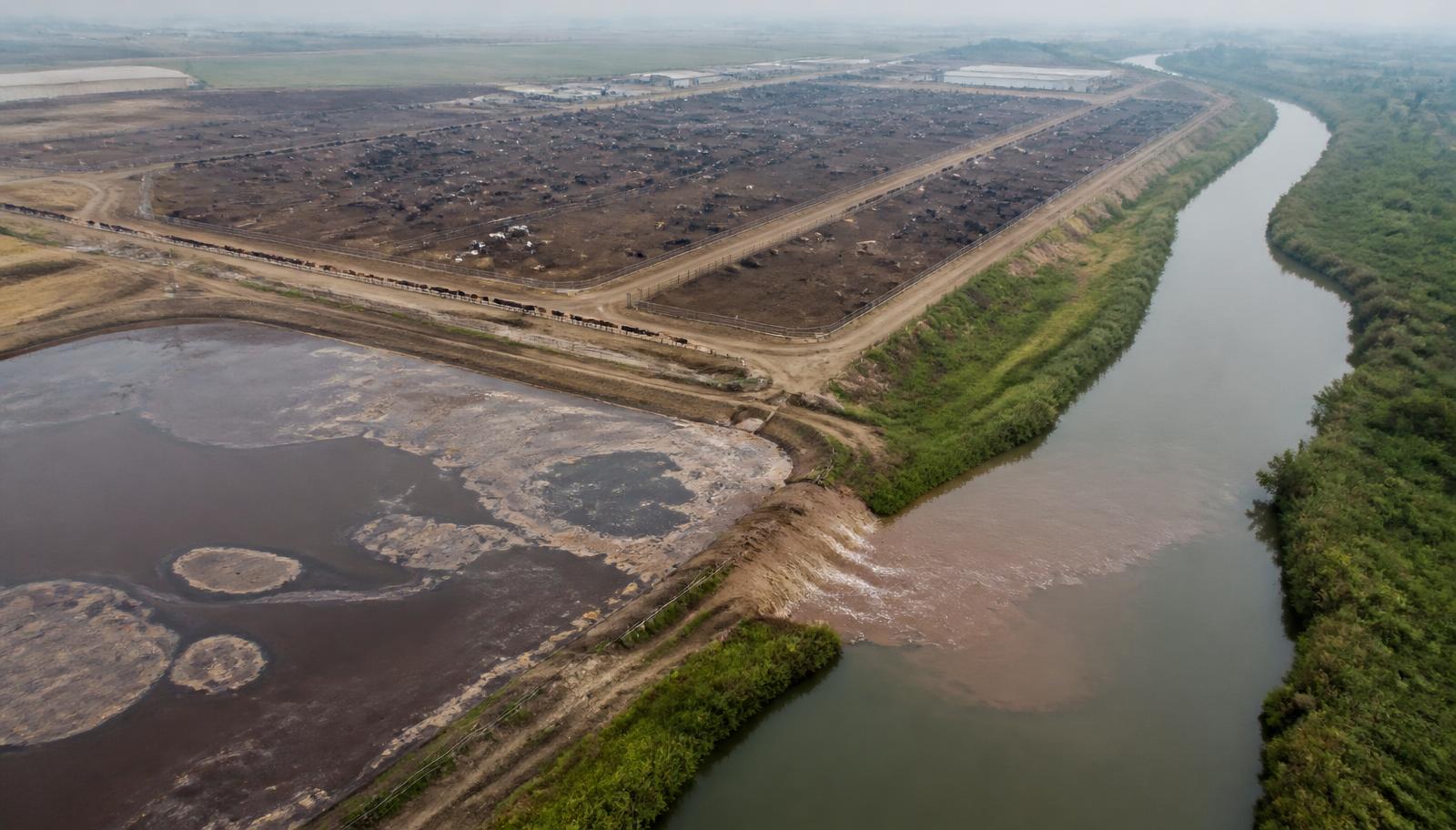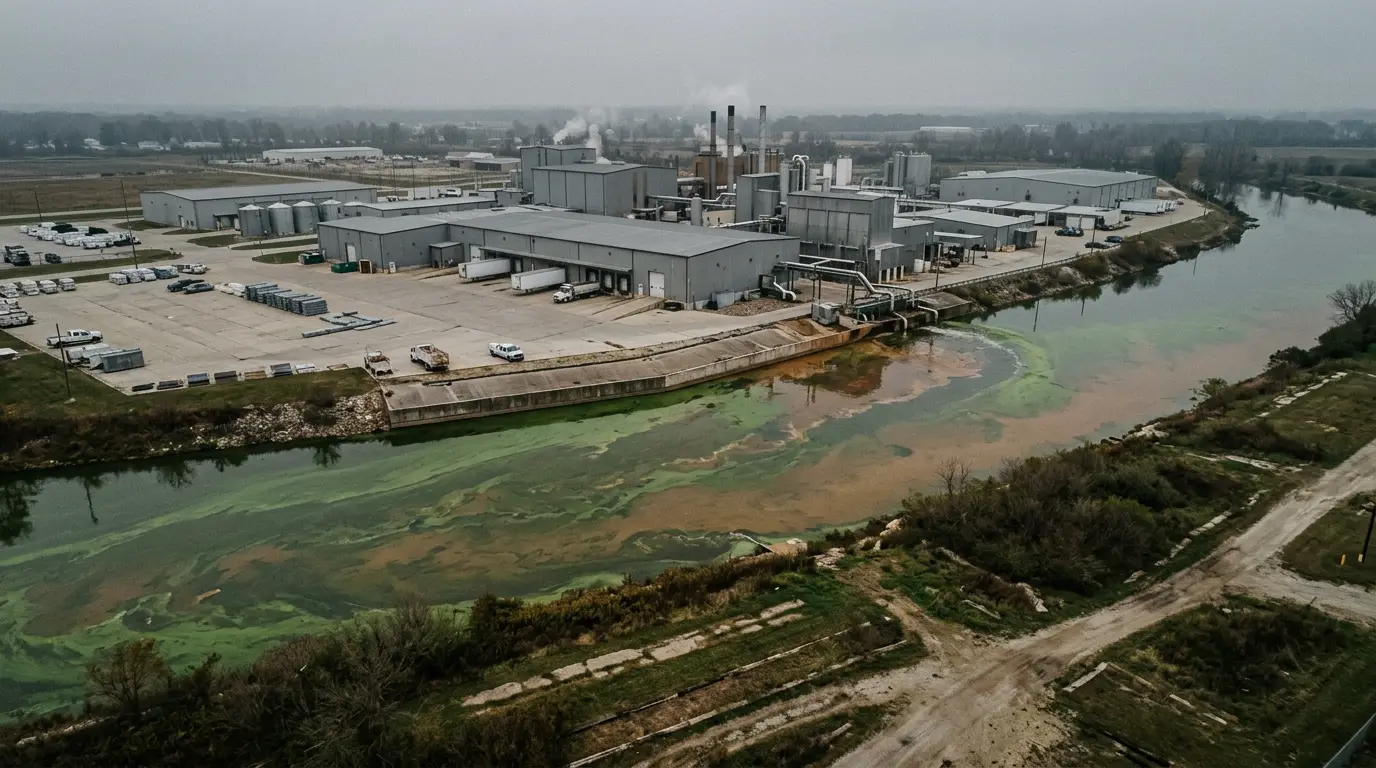
The Elkhorn River, as it meanders through eastern Nebraska, should be a portrait of the American heartland. But on a placid Tuesday afternoon just a few miles downstream from the town of Waterloo, the familiar scent of damp earth and prairie grass is overpowered by something acrid and primal. The water itself, normally a passable murky-green, carries an unnatural, soupy thickness. This isn't a natural phenomenon; it's industrial effluent. A few miles upstream, a sprawling complex processes thousands of cattle per day, and this stretch of river is its undeclared, and under-regulated, sewer.
For decades, the public discourse around factory farming has centered on animal welfare, antibiotic resistance, and greenhouse gas emissions. These are vital concerns. Yet, a more immediate and insidious crisis flows largely unseen and unremarked upon from thousands of slaughterhouses and meat processing plants across the nation: their wastewater. Every day, these facilities discharge billions of gallons of water laden with blood, fat, feces, pathogenic bacteria, and a cocktail of industrial-strength cleaning chemicals into America's rivers, streams, and municipal treatment systems. It is the liquid shadow of our industrial food system, a problem of immense scale that hides in plain sight.
A River of Byproducts
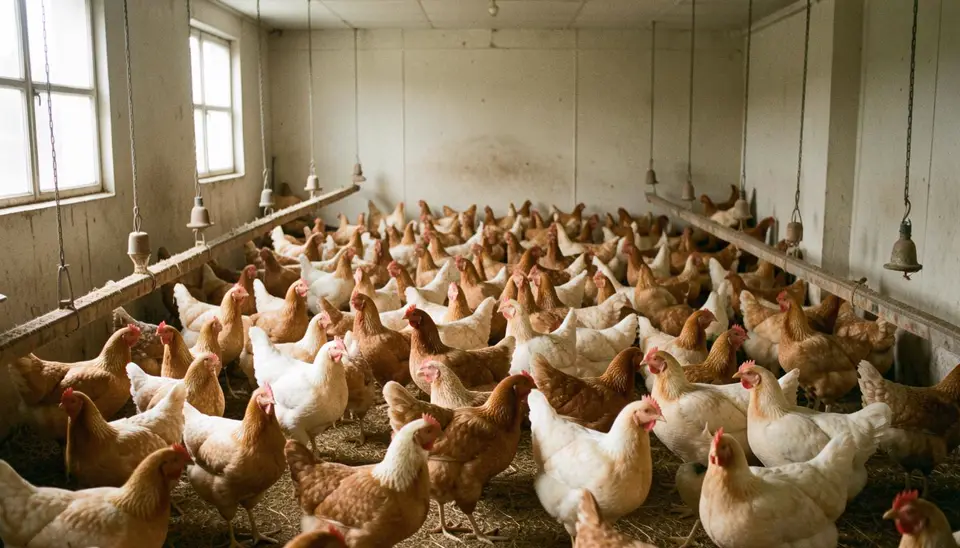
To understand the issue, one must first grasp the sheer volume and concentration of the waste. A large beef processing plant can use up to 1,500 gallons of water per animal, while a poultry plant might use 7 to 10 gallons per bird. When multiplied by the thousands of animals processed daily, a single large facility can generate over a million gallons of wastewater every 24 hours — enough to fill an Olympic-sized swimming pool. Unlike typical municipal sewage, which is primarily diluted human waste, slaughterhouse effluent is an exceptionally potent brew.
The primary contaminants are nutrients, specifically nitrogen and phosphorus, which come from blood, manure, and solubilized tissue. Also present are vast quantities of organic matter, measured by a metric known as Biochemical Oxygen Demand (BOD). This waste is so concentrated that it can be hundreds of times stronger than raw domestic sewage. When this 'high-strength' wastewater enters a natural waterway, it triggers a devastating chain reaction. Microbes feast on the organic matter, and in the process, they consume massive amounts of dissolved oxygen in the water. This rapid deoxygenation creates 'dead zones' where fish and other aquatic life literally suffocate. The excess nitrogen and phosphorus act as a super-fertilizer for algae, leading to the toxic algal blooms that now plague waterways from the Great Lakes to the Gulf of Mexico.
Estimated Daily Wastewater Discharge from a Large Processing Plant
Beyond the nutrient load, this effluent is a potential vector for disease. Pathogens like E. coli and Salmonella, endemic in factory farms, are flushed into the discharge water along with the very antimicrobial agents used to control them. A 2021 study in the journal *Environmental Science & Technology* found that wastewater from meat processing plants contained a high prevalence of antibiotic-resistant genes, which can be transferred to native bacteria in the environment, exacerbating the global public health crisis of antimicrobial resistance.
The Regulatory Sieve
In theory, the 1972 Clean Water Act was designed to prevent exactly this kind of pollution. The Act established the National Pollutant Discharge Elimination System (NPDES), a permitting program that sets limits on what industrial facilities can release into public waters. But for the meat and poultry industry, the system is riddled with holes. The primary issue is that the technology-based standards—the Effluent Limitation Guidelines, or ELGs—that dictate the treatment level required are shockingly out of date. For many types of plants, including most poultry processors, the guidelines have not been updated since the 1970s. For slaughterhouses, the core standards date back to 2004.
This means that plants are often permitted to use treatment technologies that are decades old and incapable of removing the levels of nitrogen and phosphorus that are now understood to be environmentally catastrophic. Modern filtration and nutrient removal systems exist, but the law does not compel most plants to install them. Instead, they are allowed to operate under outdated permits that legalize a level of pollution that is scientifically indefensible.
“The guidelines are from a different era of environmental science,” explains Dr. Anya Sharma, an environmental engineer specializing in industrial water treatment. “We’ve known for thirty years that nitrogen and phosphorus are the key drivers of eutrophication. Yet the rules that govern the single largest industrial source of these pollutants in many watersheds essentially ignore them. It’s a systemic failure.”

Compounding the problem is a common practice known as 'pretreatment and discharge.' Many facilities—particularly those near urban centers—don't discharge directly into a river. Instead, they perform a minimal level of 'pretreatment' on-site and then pipe their highly concentrated waste into the local municipal wastewater system. These Publicly Owned Treatment Works (POTWs) are designed to handle residential sewage, not the super-strength effluent from a slaughterhouse. The sudden influx of high-BOD, high-nutrient waste can overwhelm the municipal system, cause permit violations for the city itself, and result in undertreated waste being discharged into the environment. In effect, the industry offloads its most difficult waste problem onto public infrastructure, with taxpayers often footing the bill for necessary-but-costly upgrades.
| Pollutant | Typical Municipal Sewage (mg/L) | Typical Raw Slaughterhouse Effluent (mg/L) | Magnitude of Difference |
|---|---|---|---|
| BOD (Biochemical Oxygen Demand) | 200 | 2,500 | 12.5x |
| TSS (Total Suspended Solids) | 220 | 1,200 | 5.5x |
| Total Nitrogen | 40 | 200 | 5x |
| Total Phosphorus | 8 | 30 | 3.75x |
| FOG (Fats, Oils, and Grease) | 50 | 500 | 10x |
The Burden on Downstream Communities
The consequences of this regulatory failure are not abstract. They are borne by the communities, often rural and politically marginalized, that live downstream. On the Delmarva Peninsula, a region dense with poultry processing plants, years of nitrogen and phosphorus runoff have created eutrophic 'dead zones' in tributaries that feed the Chesapeake Bay. Residents complain of perennial algal blooms that kill fish, make recreation impossible, and produce noxious odors.
In parts of the Midwest, high nitrate levels in surface water—a direct result of agricultural and industrial runoff—have contaminated the drinking water wells of small towns, forcing them to invest millions in expensive filtration systems. Nitrates are a known public health risk, linked to methemoglobinemia ('blue baby syndrome') in infants and a growing body of research suggests a correlation with certain cancers in adults. The cost of making water safe to drink falls not on the polluters, but on the small communities least able to afford it.
“They put the plant upstream and the discharge pipe just past the town limit. We get the jobs, yes, but we also get their waste. My kids can't swim in the creek I grew up in. Is that a fair trade?”
This pattern constitutes a clear environmental justice issue. A 2022 analysis by the Environmental Integrity Project found that meat processing plants are disproportionately located in communities with higher-than-average rates of poverty and larger minority populations. These communities often lack the political clout and financial resources to challenge powerful corporations or demand stricter enforcement from state environmental agencies, which are often captured by the very industries they are meant to regulate.
A Clearer Path Forward
The situation is not without solutions. The technology to comprehensively treat slaughterhouse wastewater already exists and is in use in other industries and countries. Advanced systems like Membrane Bioreactors (MBRs) and Reverse Osmosis can filter out virtually all solids, pathogens, and nutrients, producing water clean enough for reuse within the plant or safe discharge into the environment. Furthermore, Anaerobic Digestion systems can not only treat high-strength organic waste but also capture the resulting biogas (methane) as a renewable energy source, turning a waste stream into a potential revenue stream.
Some companies have voluntarily invested. JBS, the world's largest meatpacker, invested over $100 million in an upgraded water treatment facility at its Greeley, Colorado beef plant, which includes anaerobic digestion for energy production. Smithfield Foods has made similar investments at its Tar Heel, North Carolina plant, the world's largest hog slaughterhouse. These examples prove that treating waste responsibly is technologically feasible. However, they remain the exception, not the rule. For many operators, the economic calculation is simple: as long as the law allows it, it is cheaper to pollute than to invest in modern treatment.
Meaningful change, therefore, requires regulatory action. Environmental groups have been petitioning the Environmental Protection Agency (EPA) for years to update the obsolete Effluent Limitation Guidelines for the meat and poultry sectors. A successful legal challenge could force the agency to finally create new, science-based rules that mandate modern treatment technologies and set strict limits for nitrogen and phosphorus. This would level the playing field, forcing all companies to internalize the true cost of their waste management rather than externalizing it onto the public.
The crimson tide flowing from our nation's slaughterhouses is a quiet, chronic disaster. It is the consequence of a food system that prioritizes production speed and corporate profit over ecological stewardship and public health. For the people living alongside the Elkhorn River in Nebraska, or the Nanticoke River in Delaware, the cost is measured in contaminated wells, lost livelihoods, and a degraded environment. Their water is carrying a burden it cannot bear. The question is no longer whether we can afford to fix this problem, but whether we can afford not to.
2026: Escalating Crisis in the Chesapeake Bay Watershed
On the Delmarva Peninsula, poultry processing plants discharge over 15 million gallons of wastewater daily into tributaries of the Chesapeake Bay, according to a 2025 report by the Chesapeake Bay Foundation. This influx of phosphorus and nitrogen has accelerated algal blooms, creating a 1,200-square-mile dead zone each summer.
A 2026 study from the University of Maryland found that these blooms are now 30% larger than in 2020, directly linked to increased poultry production. Local oyster harvests have dropped by 60% since 2018, devastating the regional economy and fishing communities.
Regulatory Momentum: EPA Under Renewed Pressure
In March 2026, a coalition of 14 state attorneys general filed a lawsuit against the EPA for failing to update the Clean Water Act's effluent guidelines for slaughterhouses. The suit, led by Minnesota and Maryland, demands new limits on nitrogen, phosphorus, and pathogens by 2028.
The EPA administrator acknowledged the urgency in a June 2026 congressional hearing, pledging to propose revised rules for beef and pork processors within 18 months. However, industry groups argue that compliance costs could exceed $2 billion, potentially raising meat prices.
Frequently Asked Questions: 2026 Update
How does slaughterhouse wastewater affect drinking water in rural areas?+
In regions like the Midwest and Delmarva Peninsula, high nitrate levels from slaughterhouse discharge contaminate groundwater wells. A 2025 study by the Environmental Working Group found that over 200 small towns have nitrate levels exceeding EPA safety limits, forcing costly filtration or bottled water.
What are the current EPA actions on slaughterhouse pollution in 2026?+
The EPA is reviewing petitions from environmental groups, including a 2025 filing by the Waterkeeper Alliance, to update the 1974 effluent guidelines. A proposed rule is expected by late 2026, focusing on nitrogen and phosphorus limits for beef and poultry processors.
Are there successful examples of wastewater treatment in the meat industry?+
Yes. JBS's Greeley, Colorado facility reduced nitrogen discharge by 90% using advanced membrane bioreactors. Similarly, a 2024 pilot in Nebraska by Cargill achieved near-zero phosphorus output, demonstrating that technology can meet stricter standards.