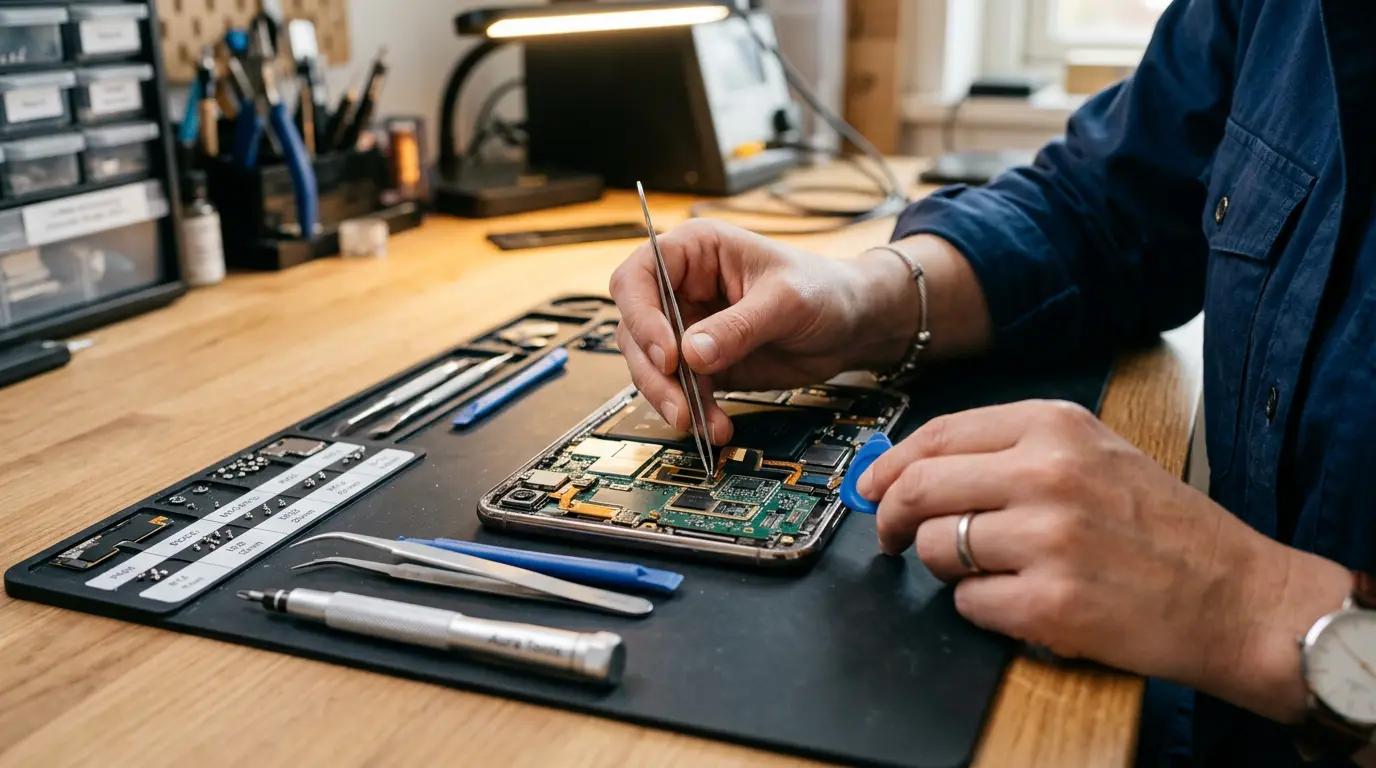
It begins with a flicker. The screen of a two-year-old tablet, suddenly temperamental. Then comes the catastrophic battery drain on a smartphone not yet old enough to have its contract expire. Or perhaps it’s the whirring death rattle of a laptop fan choked with dust, trapped behind a casing sealed with proprietary screws and industrial-strength glue. In these moments of technological betrayal, we are confronted with a modern ritual of frustration: the maddeningly opaque, ruinously expensive, and often futile quest for a simple fix. We are told the device is 'not designed to be opened', that a repair would cost more than a replacement, or that the only sanctioned solution is to surrender it to the original manufacturer for a multi-week odyssey from which it may or may not return.
This experience is not an accident of poor engineering; it is, in many cases, the result of a deliberate business strategy known as planned obsolescence. For decades, manufacturers across multiple industries have profited by designing products with artificially limited lifespans, ensuring a steady stream of repeat customers. While this blueprint for consumption has long been an open secret, its collision with the digital age has created an environmental crisis of unprecedented scale. The sleek, sealed objects we carry in our pockets are built on a bedrock of disposability, and their churn is generating a mountain of toxic electronic waste.
Yet, a powerful counter-movement is taking root in community workshops, legislative chambers, and online forums around the world. It is a rebellion fought not with picket signs, but with spudgers, Torx screwdrivers, and soldering irons. The Right to Repair movement argues for a fundamental shift in our relationship with technology: the right for owners to fix the products they have purchased. This is not merely a crusade for consumer convenience or cost savings. It is one of the most practical and impactful environmental campaigns of our time, challenging the core logic of a throwaway culture that our planet can no longer afford.
The Mountain of Ghost-Tech
To grasp the urgency of repair, one must first visualize the scale of the waste. Globally, we generate a staggering volume of e-waste—a catch-all term for discarded products with a battery or a plug. The United Nations' Global E-waste Monitor reported 53.6 million metric tons were generated in 2019 alone, a figure that is projected to swell to over 74 million tons by 2030. It is the fastest-growing domestic waste stream in the world, a digital ghost fleet of expired gadgets, appliances, and toys.
This torrent of discarded electronics represents two distinct environmental catastrophes. The first is one of toxicity. Circuit boards, batteries, and display panels are laden with hazardous substances like lead, mercury, cadmium, and flame retardants. When improperly disposed of—dumped in landfills or informally processed in developing nations where environmental regulations are lax—these toxins can leach into soil and groundwater, contaminating ecosystems and posing severe health risks to local populations.
Global E-Waste Generation (Projected)
The second disaster is one of resource depletion. Each discarded smartphone is a miniature vault of precious and finite materials. It contains gold, silver, and palladium, as well as critical 'rare earth' elements like neodymium and indium, essential for modern electronics. Mining these materials is an energy-intensive and ecologically destructive process. By locking these resources inside unrepairable devices and then discarding them, we are effectively throwing away materials we will desperately need in the future, only to expend more energy and cause more damage to extract new ones.
The Anatomy of Unrepairability
How, exactly, does a company render a multi-hundred-dollar device unrepairable? The methods are varied and clever, forming a multi-layered defense against tinkerers and independent technicians. The most obvious tactic is physical obstruction. This includes the widespread use of strong adhesives where screws would suffice, permanently bonding components like batteries and screens to the chassis. It also involves the use of proprietary fasteners, such as Apple's infamous pentalobe screw, which require special tools not readily available to the public, creating an initial barrier to even opening a device.
Beyond physical barriers lies the more insidious challenge of software locks. A growing strategy known as 'parts pairing' uses software to serialize components, effectively 'marrying' a specific part, like a camera or screen, to a device's unique logic board. If a user replaces a broken screen with an identical, genuine part, the device's software may reject it, disabling key features like Face ID or True Tone. This practice ensures that even if you can obtain the part, only the original manufacturer can perform an authorized—and expensive—repair by re-validating the new component with their proprietary software tools.

Finally, the ecosystem is choked by a deliberate scarcity of information and materials. Manufacturers often refuse to sell genuine spare parts and diagnostic tools to independent repair shops or the general public. Repair manuals, schematics, and wiring diagrams that are essential for troubleshooting complex electronics are treated as trade secrets. This forces a binary choice upon the consumer: pay the manufacturer's premium for an official fix or consign the device to a drawer, and ultimately, the landfill.
A Rebellion in the Repair Café
The antidote to this manufactured helplessness is being brewed in thousands of community spaces worldwide. Walk into a 'Repair Café'—a concept born in Amsterdam and now a global phenomenon—and you'll find an atmosphere buzzing with quiet concentration and collaborative problem-solving. Here, volunteer experts with a knack for electronics, textiles, or mechanics sit alongside their neighbors, coaching them through the process of diagnosing and fixing a broken toaster, a frayed power cord, or a sluggish laptop.
The goal is not just to fix things, but to demystify technology and transfer skills. It is an act of shared resilience. 'People arrive feeling defeated by an object,' explains Jean-Luc Dubois, a retired engineer who volunteers at a repair event in Lyon. 'They’ve been told it's junk. But when you open it up together, find the faulty capacitor, and replace it for two euros, something magical happens. It's not just a vacuum cleaner that comes back to life; it’s a person’s sense of agency.' This hands-on empowerment directly combats the passivity engendered by disposable culture.
“It's not just a vacuum cleaner that comes back to life; it’s a person’s sense of agency. We are teaching people to see not waste, but potential.”
This grassroots energy is complemented by sophisticated digital activism. Websites like iFixit have become the public libraries of the repair world, offering thousands of free, crowdfourced repair guides for everything from game consoles to espresso machines. They perform 'teardowns' of new devices, scoring them on a repairability scale from 1 to 10, bringing public attention and shame to the worst offenders. This advocacy puts pressure on manufacturers and provides the practical knowledge needed for individuals and independent shops to thrive.
Legislative Wins and the Path Forward
For the movement to succeed, community spirit and online guides are not enough. The ultimate battle is being waged in the legal and regulatory arena. For years, powerful tech lobbyists have fought against Right to Repair legislation, citing concerns over consumer safety, data security, and the protection of intellectual property. They argue that untrained individuals could injure themselves with lithium-ion batteries or that opening up devices could create vulnerabilities for hackers. While some concerns have merit, critics argue they are largely a smokescreen to protect lucrative repair revenues and the cycle of new sales.
Fortunately, the tide is beginning to turn. In 2022, New York passed the Digital Fair Repair Act, a landmark piece of legislation requiring manufacturers of digital electronic equipment to make diagnostic and repair information, as well as parts, available to independent repair providers and consumers. The European Union has also taken significant steps, mandating that manufacturers of appliances like washing machines, dishwashers, and televisions make spare parts available for up to 10 years.
Perhaps the most visible innovation has been France's mandatory repairability index ('indice de réparabilité'). Since 2021, certain categories of electronics, including smartphones and laptops, must display a score from 1 to 10 at the point of sale, informing consumers how easy the product is to fix. The score is based on criteria like the availability of repair documentation, the ease of disassembly, and the availability and price of spare parts. The index is a powerful tool, transforming repairability from an obscure technical detail into a competitive feature that can directly influence a purchasing decision. As the data below illustrates, the financial incentive for choosing repair over replacement is already substantial.
| Device / Fault | Official Manufacturer Repair Cost (€) | Typical Independent Repair Cost (€) | Potential Saving |
|---|---|---|---|
| Premium Smartphone / Screen Replacement | €350 | €180 | 49% |
| Laptop / Battery Replacement | €220 | €90 | 59% |
| Tablet / Charging Port Repair | €150 | €65 | 57% |
| Gaming Console / HDMI Port Repair | €180 | €80 | 56% |
| High-end Headphones / Battery Replacement | Not Offered | €75 | N/A |
The Right to Repair is about more than just technology. It is a fundamental reassertion of ownership in an age of digital feudalism, where we increasingly license, rather than own, the tools that shape our lives. It strengthens local economies by supporting independent repair businesses instead of shipping products and profits across the globe. It fosters technical literacy and problem-solving skills in a world that increasingly encourages passive consumption.
Most critically, it is a direct and effective form of climate action. Every device fixed is one less manufactured and one less thrown away, reducing the demand for virgin materials and shrinking the mountain of toxic waste. It is a philosophy that replaces the fragile, linear path from factory to landfill with a resilient, circular model of maintenance, reuse, and regeneration. Embracing this right is not about rejecting progress; it's about demanding a more sustainable, equitable, and durable definition of it. Sometimes, the most radical tool for changing the world is a simple screwdriver.
Frequently Asked Questions
How does the Right to Repair reduce e-waste specifically?+
By enabling consumers and independent shops to fix broken devices, the Right to Repair extends product lifespans. The Global E-waste Monitor (2024) found that extending a smartphone's life by just one year reduces its annual carbon footprint by 30%. Fewer replacements mean less toxic waste and lower demand for mined resources.
What is parts pairing and why does it block repair?+
Parts pairing is a software practice where manufacturers digitally 'marry' a component (like a battery or screen) to a specific device. Replacing that part with a non-authorized one can trigger warning messages, disable features (e.g., Face ID), or reduce performance. This effectively locks consumers into using expensive official repair services, even for simple swaps.
Which countries have the strongest Right to Repair laws in 2026?+
The European Union leads with its Ecodesign for Sustainable Products Regulation (2025), requiring spare parts availability for up to 10 years. France's repairability index is a model for transparency. In the US, New York, Minnesota, and California have passed laws covering electronics, though federal legislation remains stalled. Australia and India are also advancing similar rules (Consumer Reports, 2025).