The best sustainable fashion brands are those providing verifiable data on their supply chains, material sourcing, and labor practices. Companies like Patagonia, Veja, and Organic Basics lead the industry by moving beyond vague promises to offer radical transparency, publishing factory lists, carbon footprints, and evidence of fair wages for their workers.
Beyond Greenwashing: Why Transparency Is the New Standard
The fashion industry is responsible for a significant share of global environmental degradation. It accounts for up to 8% of global greenhouse gas emissions and 20% of global wastewater (United Nations Environment Programme, 2019). In response, a wave of brands has emerged under the banner of sustainability. However, the term has become diluted by 'greenwashing'—misleading marketing that exaggerates a company's positive environmental impact.
Genuine change requires accountability. This is where transparency comes in. A truly sustainable brand is one that openly shares its entire production process, from the farm where the cotton was grown to the factory where the garment was stitched. This allows consumers, journalists, and advocacy groups to verify their claims and hold them accountable. Without this proof, 'sustainability' is just a word.
1. Patagonia
Patagonia sets the benchmark for corporate responsibility and environmental activism. The California-based outdoor brand is a certified B Corporation and gives 1% of its sales to environmental nonprofits. Their transparency is legendary, mapping out their entire supply chain, including textile mills and farms, and publishing detailed information on the social and environmental performance of each supplier. Their Ironclad Guarantee, offering repairs on any product, is a powerful statement against disposable fashion.
2. Veja
This French sneaker brand proves that style and transparency can coexist. Veja deconstructs the entire cost and process of creating its shoes, from the price paid for Amazonian wild rubber and organic cotton to factory wages and shipping costs. They intentionally spend nothing on traditional advertising, redirecting those funds into a more ethical and sustainable production model. This radical transparency has earned them a cult following among conscious consumers.
“The price of clothing has been decreasing for decades, while the human and environmental costs have grown dramatically.”
3. Organic Basics
As its name suggests, this Danish brand focuses on high-quality, comfortable essentials made from low-impact materials like GOTS-certified organic cotton, TENCEL™ Lyocell, and recycled materials. Organic Basics is a certified B Corp and publishes an annual Impact Report detailing its progress on reducing emissions and water use. They provide a full list of their direct factory partners in Turkey, Austria, and Portugal, ensuring transparency in their labor practices.
4. People Tree
A pioneer in the ethical fashion movement, UK-based People Tree has been creating Fair Trade garments for over 30 years. They were the first fashion company to be awarded the World Fair Trade Organization (WFTO) product label. Their model is built on long-term partnerships with artisans and farmers in the developing world, ensuring fair wages and promoting traditional skills like hand-weaving and block-printing.
| Fiber | Water Usage (Litres/kg textile) | CO2e Emissions (kg/kg textile) | Key Characteristics |
|---|---|---|---|
| Conventional Cotton | ~10,000 | ~15 | High water/pesticide use; versatile but resource-intensive. |
| Organic Cotton | ~1,000 | ~7 | No synthetic pesticides/fertilizers; improves soil health. |
| Recycled Polyester (rPET) | Low | ~5 | Diverts plastic from landfills; can shed microplastics. |
| Linen (from Flax) | Very Low | ~4 | Durable, breathable; grows without significant irrigation or pesticides. |
| TENCEL™ Lyocell | Low | ~6 | Made from wood pulp in a closed-loop system that recycles water. |
5. Allbirds
Allbirds broke into the mainstream by labeling every product with its exact carbon footprint, a practice they call their 'Carbon Number'. This radical transparency puts climate impact front and center for the consumer. The B Corp is known for its use of innovative, natural materials, including ZQ-certified merino wool, FSC-certified eucalyptus tree fiber, and SweetFoam® soles made from carbon-negative sugarcane.
6. Pact
Focused on creating affordable organic basics, Pact demonstrates that sustainability doesn't have to be a luxury. The US-based brand uses almost exclusively GOTS-certified organic cotton, which uses significantly less water than conventional cotton. Critically, all their factories are Fair Trade Certified, ensuring that workers are paid a fair wage and work in safe conditions.
7. tentree
This Canadian brand's mission is built into its name: for every item purchased, they plant ten trees. To date, they have planted over 100 million trees. Their transparency goes beyond a simple promise; each item comes with a code that allows the customer to see where their specific trees are being planted. As a B Corp, they use materials like organic cotton, hemp, and recycled polyester, providing clear impact data on water and CO2 savings for each product.
Estimated Greenhouse Gas Emissions per Kilogram of Textile Fiber
8. Stella McCartney
A lifelong vegetarian, Stella McCartney has built her luxury fashion house on a foundation of cruelty-free principles, refusing to use any leather, feathers, or fur. The brand is a leader in material innovation, pioneering alternatives like Mylo™, a mushroom-based vegan leather, and using recycled materials and organic cotton extensively. They were one of the first luxury brands to publish an annual, detailed Environmental Profit and Loss account, transparently measuring their impact.
9. Nudie Jeans
Swedish brand Nudie Jeans focuses on the full lifecycle of a pair of jeans. They use 100% organic cotton and offer free repairs for life at their global Repair Shops or via mobile repair kits. Their emphasis on longevity is a direct challenge to the fast fashion model. When a pair is truly worn out, customers can trade it in for a discount on a new pair, and the old jeans are either resold as second-hand or recycled into new material.
10. Eileen Fisher
Eileen Fisher has long been a quiet leader in sustainable design, focusing on timeless pieces made from responsible fibers like organic linen and silk. Their commitment to circularity is best exemplified by their 'Renew' program, which takes back used Eileen Fisher garments to be resold or remade into new designs. The company is a B Corp and provides a comprehensive map of its global suppliers, demonstrating a deep commitment to a transparent and ethical supply chain.
11. Armedangels
Based in Cologne, Germany, Armedangels is a GOTS-certified brand dedicated to making fair fashion accessible. They are members of the Fair Wear Foundation, which audits their factories to ensure safe working conditions and fair wages. The brand is also PETA-Approved Vegan, and their transparency extends to openly discussing the challenges of creating a truly sustainable product, fostering a more honest conversation about what 'eco-friendly' really means.
How to Vet a 'Sustainable' Brand in 5 Steps
- 1
Look for Third-Party Certifications
Search for credible, independent labels like GOTS (Global Organic Textile Standard), Fair Trade, B Corporation, or Fair Wear Foundation. These require brands to meet stringent, verifiable standards.
- 2
Read the Transparency Report
Does the brand publish an annual impact report or a public list of its suppliers and factories? A lack of specific, shared information is a major red flag.
- 3
Analyze the Materials List
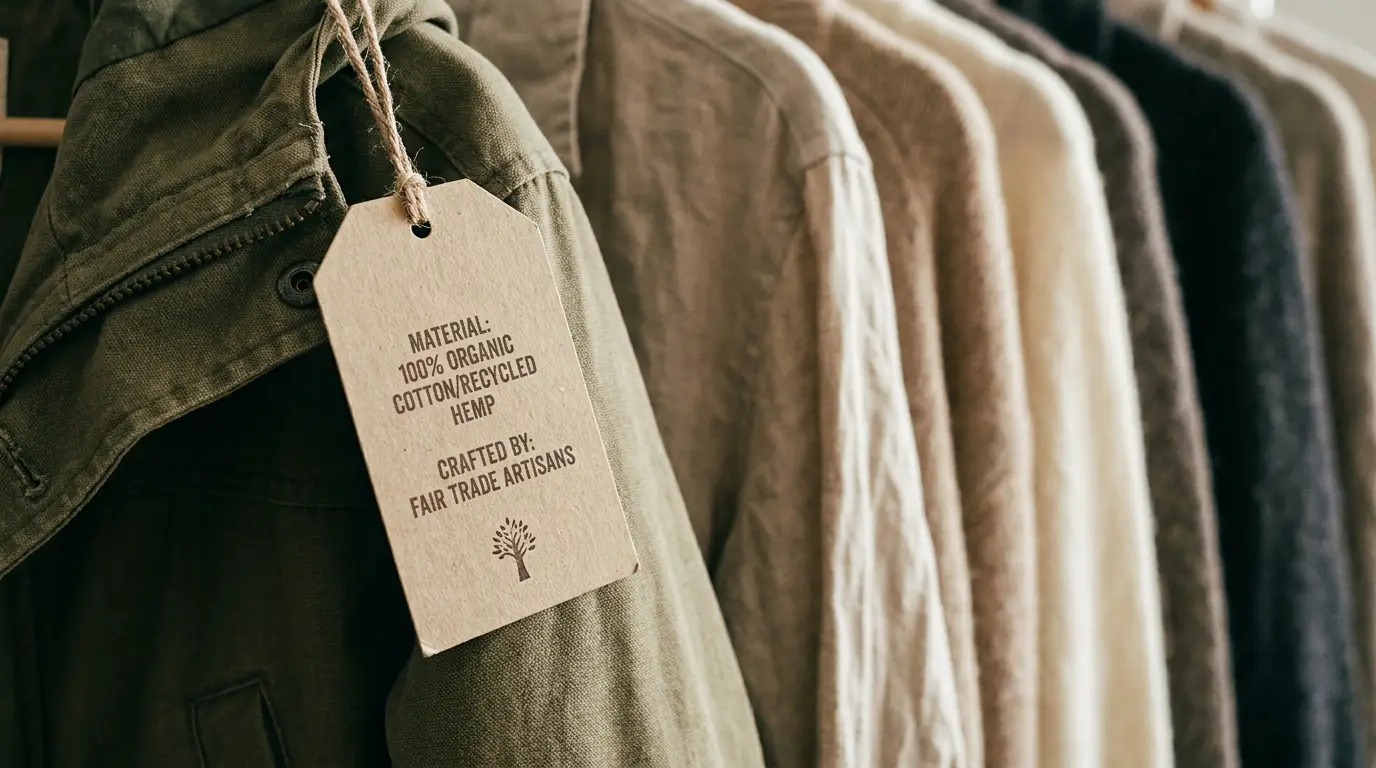
Check product pages for material composition. Prioritize brands that use a high percentage of low-impact materials like organic cotton, linen, hemp, TENCEL™, and recycled fibers across their entire collection.
- 4
Investigate Labor Policies
Go beyond an ethics statement. Look for a public Code of Conduct, evidence of living wage commitments, and partnerships with labor rights organizations.
- 5
Evaluate End-of-Life Options
Does the brand offer repair services, a take-back program for recycling, or guidance on how to properly care for and dispose of the garment? This demonstrates a commitment to a circular economy.
Frequently Asked Questions
How can I tell if a fashion brand is greenwashing?+
Look for vague, unsubstantiated claims like 'eco-friendly' or 'conscious' without any specific data to back them up. Greenwashing often involves highlighting one 'green' collection while the brand's main business model remains unsustainable. True sustainable brands provide transparent data, third-party certifications (like GOTS or Fair Trade), and detailed factory lists.
What is the most eco-friendly clothing material?+
There is no single 'most' eco-friendly material, as impact depends on water usage, energy, chemicals, and land use. However, materials like organic linen, hemp, and recycled fibers like recycled cotton or rPET consistently rank among the best. They generally require far less water, pesticides, and energy to produce than conventional cotton or virgin polyester.
Are expensive sustainable fashion brands worth the price?+
The higher price of sustainable clothing often reflects the true cost of production: paying workers a living wage, using high-quality organic or recycled materials, and investing in cleaner manufacturing processes. While the upfront cost is higher, these garments are often designed for longevity, meaning you may buy fewer items over time, reducing both cost-per-wear and overall environmental impact.
Why is fast fashion so bad for the environment?+
Fast fashion's business model relies on rapid, high-volume production of low-quality clothing. This leads to massive water consumption and pollution from textile dyeing, high carbon emissions from manufacturing and transport, and the use of cheap, synthetic materials derived from fossil fuels. The model also encourages a throwaway culture, with an estimated 92 million tons of textiles wasted each year (Nature Reviews Earth & Environment, 2020).