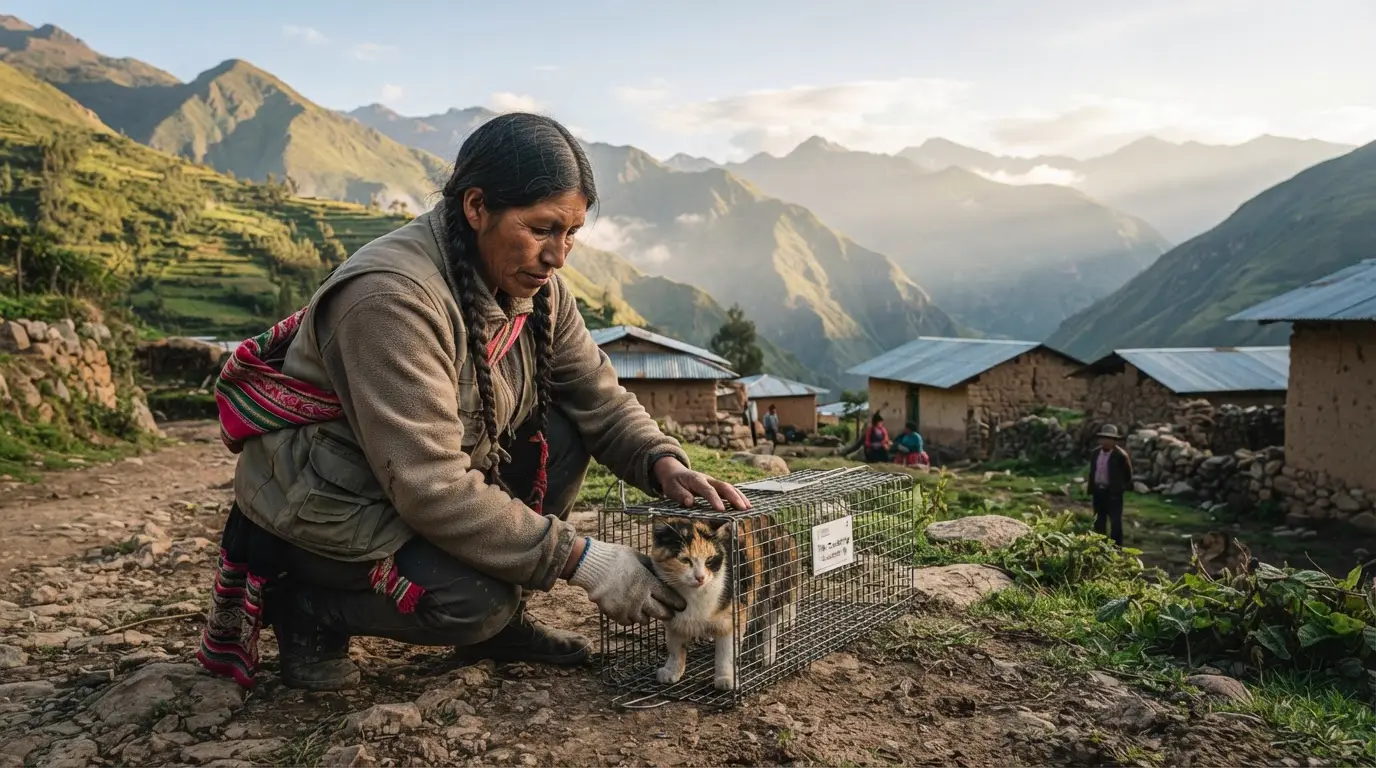
Trap-Neuter-Return (TNR) is a humane and effective strategy for managing community cat populations, involving capturing stray and feral cats, sterilizing them, vaccinating them, and returning them to their original territories. In the unique Andean context, TNR programs face distinct challenges stemming from rugged geography, socio-economic factors, and varying cultural perceptions of companion animals, necessitating highly adaptable and community-driven approaches to achieve success.
What Makes TNR Challenging in the Andean Region?
Implementing Trap-Neuter-Return for community cats in the Andes presents obstacles that transcend those found in urban or lowland environments. The region’s diverse geography, which includes high-altitude plains, remote valleys, and dense cloud forests, complicates logistics significantly. Access to veterinary services is often limited, with many rural areas lacking permanent clinics (Soto-Gómez et al., 2021).
Furthermore, socio-economic factors play a critical role; poverty can limit community resources dedicated to animal welfare, and traditional practices may influence attitudes towards free-roaming animals. These compounded challenges demand highly adaptive and culturally resonant strategies for effective program delivery.
Are High-Altitude Environments Different for TNR Programs?
Yes, high-altitude environments introduce specific physiological and logistical considerations for TNR programs. Cats undergoing surgery at elevations above 2,500 meters (8,200 feet) may require modified anesthetic protocols due to lower atmospheric pressure and reduced oxygen levels (Vet Record, 2018). Furthermore, mountainous terrain makes transportation of traps, supplies, and animals arduous, often requiring specialized vehicles or even pack animals.
Weather extremes, from intense solar radiation to sudden cold fronts, also affect trapping success and post-surgical recovery. Local organizations like 'Gatos Andinos' in Peru have developed mobile surgical units adapted to these conditions, featuring portable oxygen concentrators and insulated recovery areas to minimize risks (Gatos Andinos Annual Report, 2023).
| Challenge Category | Urban TNR Programs | Andean Rural TNR Programs |
|---|---|---|
| Geographical Access | Generally good, paved roads | Rugged, remote, unpaved or no roads |
| Veterinary Infrastructure | Abundant clinics, specialists | Limited clinics, few veterinarians |
| Community Engagement | Social media, local events | Word-of-mouth, traditional gatherings |
| Financial Resources | Donations, grants, municipal funding | Reliance on international aid, small local donations |
| Cultural Context | Varied, but Western influence dominant | Indigenous traditions, varied animal perceptions |
| Logistics (Trapping/Transport) | Public transport, cars | Specialized vehicles, pack animals, walking |
What Role Does Community Engagement Play in Andean TNR Success?
Community engagement is the cornerstone of effective Trap-Neuter-Return initiatives within Andean communities. Successful programs are not top-down directives but rather collaborative efforts, integrating local knowledge and leadership. This approach builds trust and ensures the long-term sustainability of the intervention.
““In our work with Kichwa communities, we’ve learned that sustainability isn't just about sterilizing cats; it's about empowering local people to become stewards of animal welfare. Without their active participation, any program is doomed to fail.””
Organizations frequently invest in training local villagers as 'community animal health workers,' enabling them to assist with trapping, post-operative care, and ongoing monitoring. This not only increases local capacity but also creates a sense of ownership and responsibility for community cat populations (PAHO, 2020).
Andean Community Cat Sterilization Rates (Selected Programs)
How Can You Support TNR Efforts in the Andes?
Supporting Trap-Neuter-Return efforts in the Andean context can take many forms, from direct financial contributions to volunteering and advocacy. Every contribution assists local groups in overcoming the unique challenges associated with operating in these complex environments.
Ways to Contribute to Andean TNR Programs
- 1
Donate Funds
Financial donations directly support veterinary supplies, transport costs for mobile clinics, and educational materials. Many Andean NGOs operate on very limited budgets.
- 2
Volunteer Your Time/Skills
Qualified veterinarians, veterinary technicians, and experienced trappers are often needed on the ground. Non-medical volunteers can assist with logistics, community outreach, or data collection.
- 3
Sponsor a Spay/Neuter
Many organizations offer 'sponsor a surgery' programs, allowing individuals to cover the cost of one cat's sterilization, vaccination, and care.
- 4
Educate Others
Share information about the benefits of TNR and responsible animal care within your own networks to raise awareness and support for global initiatives.
- 5
Advocate for Policy Change
Support organizations working to influence local and national policies in Andean countries to prioritize humane animal population management and public health.
What Are the Key Wins and Losses for TNR in Remote Regions?
Wins in Andean TNR often manifest as stabilized or reduced community cat populations in targeted areas, decreased incidences of feline diseases, and improved public health through rabies vaccination (OIE, 2019). The 'Huancayo Model' in Peru, for example, successfully reduced cat-related nuisance complaints by 60% within five years of implementing a sustained TNR program (Huancayo Municipal Report, 2022).
Losses or setbacks typically include insufficient funding, rapid cat reproduction exceeding sterilization rates in new areas, and resistance from communities unfamiliar with or skeptical of the TNR methodology. The transient nature of some populations, especially in agricultural zones, also poses challenges for long-term monitoring and re-trapping efforts. Sustaining engagement over years remains a hurdle for many initiatives.
Frequently Asked Questions About Andean TNR
Is TNR truly effective in reducing cat populations long-term?+
Yes, extensive scientific evidence demonstrates that consistent, high-intensity TNR programs can significantly reduce and stabilize community cat populations over time by preventing new litters. A meta-analysis by Levy et al. (2014) showed population declines ranging from 66% to 100% in long-term studies where over 75% of the cats were sterilized.
Do community cats spread diseases in the Andes?+
Yes, unmanaged community cat populations can contribute to the spread of zoonotic diseases like rabies and toxoplasmosis. TNR programs significantly mitigate this risk by vaccinating cats against rabies and other common diseases, thereby protecting both animal and human health in the communities. They also improve the overall health of the cat colonies.
What is 'ear-tipping' and why is it done?+
Ear-tipping is the surgical removal of the tip of one ear, typically the left, performed while the cat is under anesthesia for sterilization. It's a quick, painless procedure that serves as a permanent, universally recognized visual indicator that a free-roaming cat has been spayed or neutered and vaccinated, preventing unnecessary re-trapping and repeat surgeries.
How do Andean communities perceive community cats?+
Perceptions vary widely across Andean communities, from viewing cats as helpful rodent control to objects of spiritual significance, or simply as part of the natural environment. Effective TNR programs account for these diverse views, often engaging local elders and community leaders to tailor messaging and gain acceptance for their initiatives.