For years, it has been the plant-based movement’s most persistent punchline: vegan cheese. The litany of complaints is familiar to anyone who has tried the early offerings. It doesn’t melt, it tastes of starch and coconut oil, it has the textural integrity of a crayon. While plant-based milks have achieved mass-market parity and meat alternatives have convinced even ardent carnivores, dairy, particularly cheese, has remained the movement's unconquered Everest. This failure is not for a lack of trying, but a testament to the staggering biochemical complexity of what seems like a simple block of dairy.
But quietly, away from the headline-grabbing burger launches, a profound shift is underway. The key to unlocking dairy’s secrets, it turns out, is not a novel plant protein or a clever blend of oils, but one of humanity’s oldest food technologies: fermentation. This ancient process is now at the heart of a fascinating, two-pronged technological race. On one side are the artisans, who apply traditional cheesemaking wisdom to new plant-based canvases. On the other are the scientists, pioneering a radical technique called precision fermentation to create real dairy proteins, entirely without the cow.
These two philosophies, one rooted in biology and tradition, the other in biochemistry and data, are not just competing to make a better cheddar alternative. They represent fundamentally different visions for the future of food—a future that is rapidly approaching the refrigerated aisle of your local supermarket. The battle for the future of dairy is on, and fermentation is its central arena.
I. The Great Dairy Uncoupling
To understand the solution, one must first appreciate the problem. What makes dairy cheese so unique? The magic lies in two types of proteins found in cow's milk: casein and whey. Casein proteins are particularly crucial; they cluster together in microscopic spheres called micelles. This structure is what gives cheese its signature properties: the ability to melt into a luscious, stretchy pool, the capacity to form a solid curd, and the complex flavours that develop during aging.
Plant-based proteins from soy, almonds, or peas simply do not behave this way. They have different structures and lack the ability to form casein’s intricate micelle network. Early vegan cheeses attempted to mimic the texture with a cocktail of starches, gums, and solidified oils, an approach that addressed the form but utterly failed on function and flavour. It was like trying to build a brick house using only sand. To truly replicate cheese, innovators realised they couldn’t just imitate the protein; they had to either replicate it exactly or find an entirely new biological system that could do the same job.
“We've spent a decade optimising for creaminess with fats and starches. The next decade is about mastering protein functionality through biology. That is the only path to a product that isn't just an 'alternative,' but a true competitor.”
II. The Precision Gambit: Real Dairy, No Cow
The most audacious approach to solving the casein problem is to make it without the animal. This is the world of precision fermentation, a technology that effectively turns microorganisms into tiny protein factories. Companies pioneering this method, such as the American firm Perfect Day and Israel’s Remilk, use genetically engineered microflora—often a specific strain of yeast or fungus.
Scientists insert a snippet of digital DNA, copied from a cow's genetic code, which instructs the microbe to produce a target protein, like beta-lactoglobulin (a type of whey) or one of the four types of casein. These microbes are placed in large steel fermentation tanks, similar to those used in brewing beer, and fed simple plant-based sugars and nutrients. Over a few days, they multiply and secrete vast quantities of pure, nature-identical dairy protein. This protein is then filtered and dried into a powder, ready to be used in food production. The resulting product is biochemically indistinguishable from the protein found in cow's milk.
The potential is staggering. With real casein, food scientists can finally create plant-based cheeses that melt, stretch, and brown correctly. Yogurts can achieve their characteristic creamy tang without gums, and ice creams can be churned to perfect smoothness. However, the path is not without its challenges. The technology is capital-intensive, requiring massive bioreactors to scale. Regulatory approval can be a slow, country-by-country process. And then there's the consumer: will shoppers embrace a product billed as 'animal-free dairy' but made using a process some might perceive as 'unnatural' or 'lab-grown'?

III. An Ancient Art, Reimagined
Running parallel to the high-tech world of bioreactors is a quieter, more artisanal revolution. This approach eschews gene editing and instead looks to the wisdom of traditional cheesemaking, adapting its techniques for plant-based ingredients. Artisans like Miyoko Schinner in the US or the founders of companies like Stockeld Dreamery in Sweden are proving that remarkable complexity can be achieved without ever touching a dairy protein.
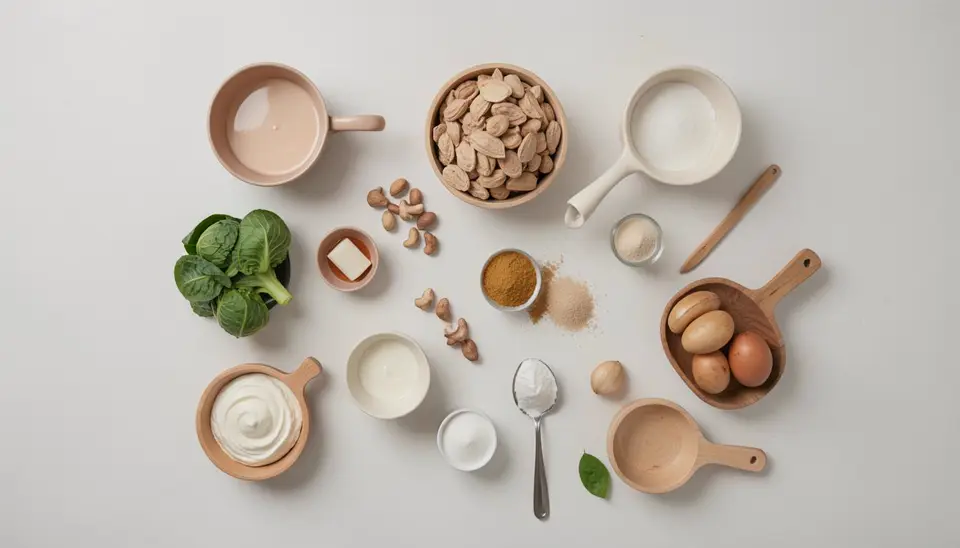
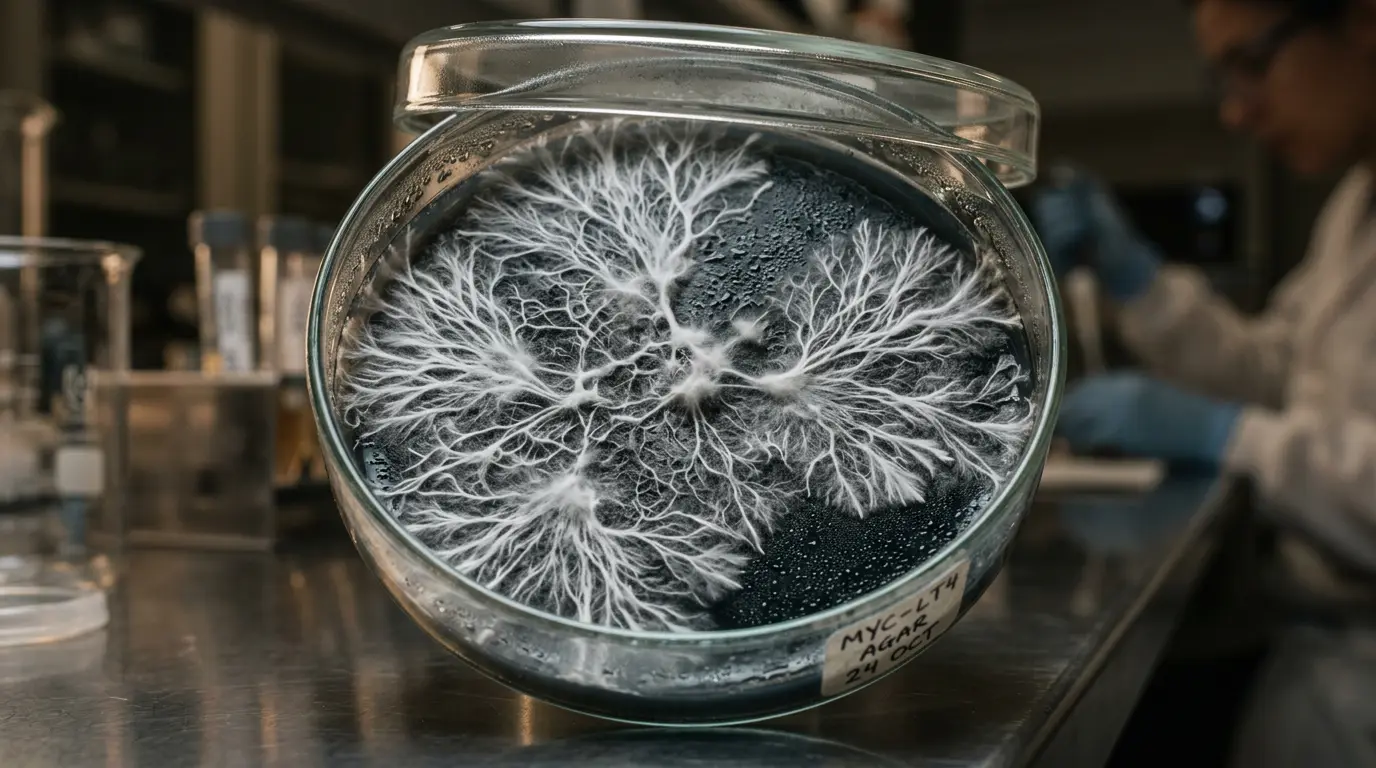
Their process starts with a rich, fatty base, typically from cashews, macadamia nuts, or a blend of plant milks and oils. This 'milk' is then inoculated with the same bacterial cultures and molds used in dairy cheesemaking—*Penicillium roqueforti* for blue cheese, for example. What follows is a patient process of aging that can last for weeks or months. During this time, the microbes go to work, breaking down the fats and proteins in the plant base, creating a cascade of new flavour compounds and transforming the texture.
The result is not an exact replica of dairy cheese, but something entirely new: a complex, flavourful, fermented food in its own right. These cheeses boast tangy, umami-rich profiles and creamy or crumbly textures that far surpass the starch-based products of the past. Their appeal lies in their 'clean label'—the ingredient lists are often short and recognisable—and the narrative of craft and tradition. While they may not melt with the exact gooeyness of a low-moisture mozzarella made with precision-fermented casein, they offer a depth of flavour that can be equally satisfying.
| Attribute | Artisanal Fermentation | Precision Fermentation |
|---|---|---|
| Primary Input | Plant-based substrates (nuts, seeds, legumes) | Simple sugars and engineered microbes |
| Key Process | Aging and transformation with traditional cultures | Bioreactor cultivation to produce specific proteins |
| Resulting Protein | Modified plant proteins | Nature-identical dairy proteins (whey, casein) |
| Scalability | Lower; craft- and time-intensive | High; industrial and efficient at scale |
| Consumer Appeal | Clean-label, traditional, natural | High-performance, functional, tech-forward |
| Regulatory Path | Generally simple (classified as a novel food) | Complex; requires novel food safety approvals |
IV. The Battle for the Fridge
So, which path will prevail? The most likely answer is both. They are not so much direct competitors as they are solutions for different market segments. Precision fermentation is aiming for the mass market, the industrial food service sector, and the consumer who wants a one-to-one replacement for shredded mozzarella on pizza or a cheap, functional slice for a grilled cheese sandwich. Its goal is biomimicry at a global scale, uncoupling dairy protein production from the environmental and ethical costs of animal agriculture.
Artisanal fermented products, on the other hand, will likely colonise the speciality cheese counter. They are for the discerning consumer who values novel flavours, craft, and a story, much like the existing market for artisanal goat or sheep cheeses. They don't seek to replicate; they seek to create a new category of gourmet food that happens to be plant-based. In this scenario, a single cheese board in 2030 might feature a traditionally fermented, aged cashew 'camembert' alongside a sharp 'cheddar' made with precision-fermented casein.
Projected Growth of Fermented Alternative Dairy Market
The rise of these sophisticated fermentation techniques signals the maturation of the plant-based industry. The movement is evolving beyond simple substitution toward deep innovation. It’s a recognition that creating compelling alternatives requires more than just masking unwanted flavours or mimicking textures with gums. It requires a fundamental re-engineering of the food itself, using biology as a tool.
As these technologies scale and products become more widely available, the very definition of 'dairy' will come into question. Is it a product defined by its animal origin, or by its molecular composition and sensory experience? The fermentation pioneers, whether they work in a sterile lab or a climate-controlled aging cave, are betting on the latter. For consumers, the result will be a welcome one: an end to the era of disappointing vegan cheese and the beginning of a diverse, flavourful, and truly revolutionary new chapter in food.