Climate justice is a principle that frames global warming as an ethical and political issue, not just an environmental one. It addresses the climate crisis by confronting its unequal impacts on different communities, emphasizing historical responsibility and demanding systemic change. While often confused with climate equality—which might suggest simply giving everyone the same resources—climate justice argues for equity, distributing resources and solutions based on need and historical disadvantage.
In the lexicon of climate action, words matter. Terms like 'equality' and 'justice' are frequently used interchangeably, yet they represent fundamentally different approaches to solving the climate crisis. While both aim for a fairer world, their diagnoses of the problem and prescriptions for the cure diverge significantly. Understanding this distinction is crucial for crafting policies that not only reduce emissions but also heal deep-seated societal wounds.
What is the Philosophical Divide Between Justice and Equality?
The core difference lies in the concepts of 'sameness' versus 'fairness'. Climate equality would mean treating every person and every nation identically. For example, it might advocate for every country to receive the same amount of funding for climate adaptation. Climate justice, however, argues this is inherently unfair. It operates on the principle of equity, which means providing support based on specific needs and circumstances.
Imagine three people of different heights trying to watch a game over a fence. Equality would give each of them an identical box to stand on. The shortest person might still be unable to see, while the tallest person didn't need a box at all. Justice would give the shortest person two boxes, the middle person one, and the tallest person none, ensuring everyone can see the game. In climate terms, this means channeling greater resources and support to the nations and communities most vulnerable to climate impacts and least equipped to cope.
How Do They Address Historical Responsibility?
Climate justice places immense weight on historical responsibility. It acknowledges that the wealth of industrialized nations in the Global North was built on centuries of fossil fuel-driven industrialization, generating the vast majority of cumulative greenhouse gas emissions. An analysis by Our World in Data shows that North America and Europe are responsible for nearly 50% of all historical CO₂ emissions since 1751, despite representing a small fraction of the global population. In contrast, the entire continent of Africa is responsible for just 3%.
From a justice perspective, this historical imbalance obligates high-emitting countries to take the lead in dramatic emissions cuts and to provide financial and technological support to developing nations. This principle, often termed "Common But Differentiated Responsibilities and Respective Capabilities" (CBDR-RC), is enshrined in the 1992 UN Framework Convention on Climate Change (UNFCCC). A climate equality approach, by contrast, might focus more on current emissions, potentially placing an undue burden on developing countries whose emissions are rising as they build basic infrastructure.
Cumulative CO₂ Emissions by World Region, 1751-2022
What Do Their Proposed Solutions Look Like?
Solutions derived from a climate equality mindset might include things like a uniform global carbon tax, where every ton of emitted CO₂ is priced the same everywhere. While simple on its face, such a policy would disproportionately penalize developing economies and lower-income households, who spend a larger portion of their income on energy and essential goods.
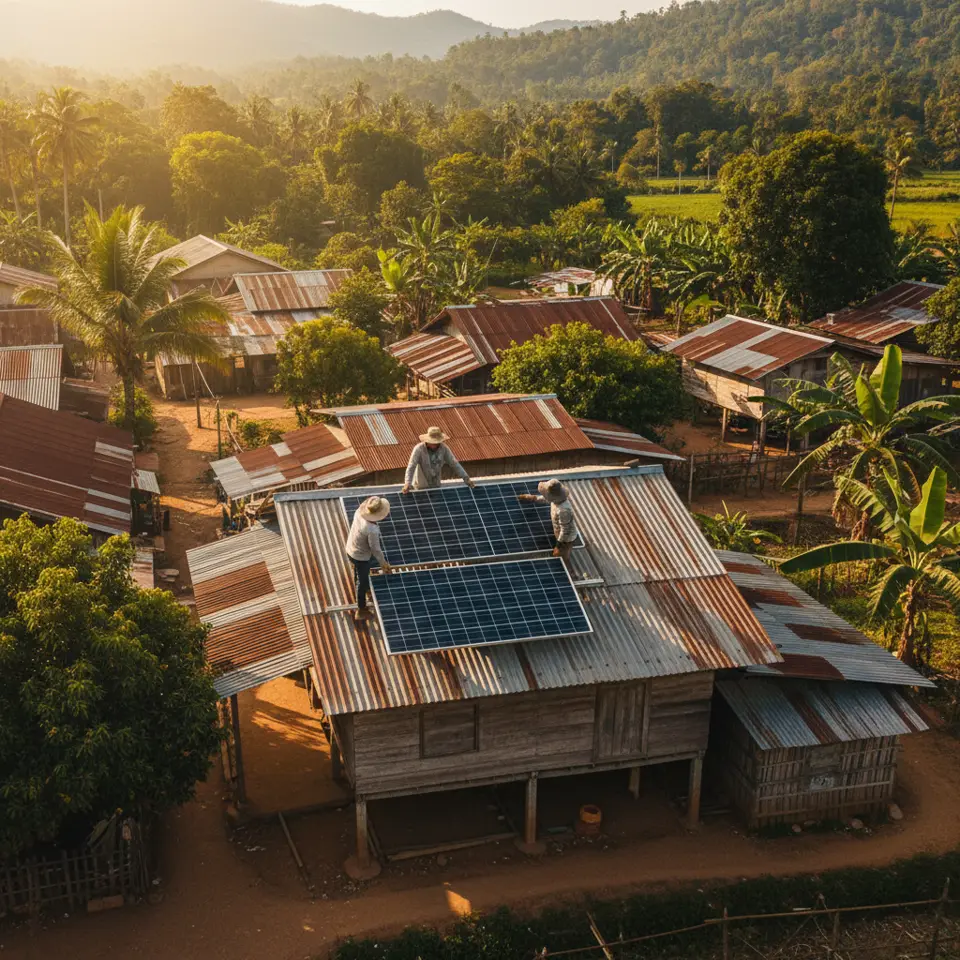
Climate justice advocates for more nuanced and targeted solutions. These include initiatives like the Loss and Damage Fund, established at COP27 to provide financial assistance to vulnerable nations already suffering irreversible climate impacts. Other justice-oriented solutions involve technology transfers to help developing countries build their own renewable energy infrastructure, debt forgiveness to free up fiscal space for climate action, and legal frameworks that hold corporations accountable for their emissions. The focus is reparative and corrective, not merely distributive.
| Criterion | Climate Equality | Climate Justice |
|---|---|---|
| Guiding Principle | Sameness: Everyone gets the same treatment and resources. | Equity: Resources and support are tailored to need and vulnerability. |
| Historical Context | Often ignores or downplays historical emissions, focusing on the present. | Centralizes historical responsibility for emissions from industrialized nations. |
| Approach to Solutions | Favors universal, one-size-fits-all policies (e.g., uniform carbon tax). | Promotes targeted, reparative actions (e.g., Loss and Damage Fund, tech transfer). |
| Distribution of Burden | May place an equal or per-capita burden on all nations, regardless of capacity. | Demands that wealthy, high-emitting nations bear the greatest burden of transition. |
| Inclusion & Voice | Can be top-down, with solutions designed by powerful actors. | Requires a bottom-up approach, centering the voices of frontline communities. |
| Ultimate Goal | Equal distribution of climate-related resources and responsibilities. | A systemic transformation that corrects past harms and ensures a fair, sustainable future for all. |
How Do They Frame the Impact of Our Food System?
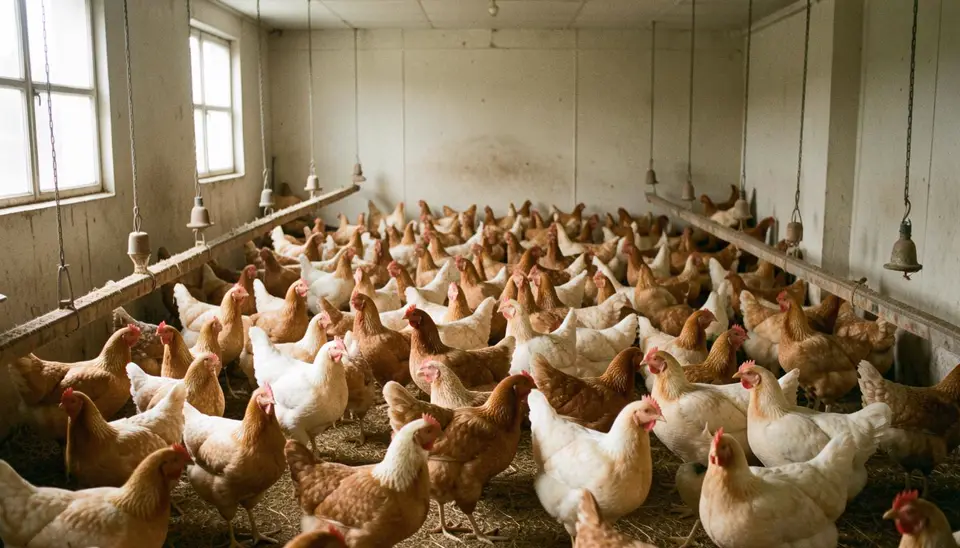
Nowhere is the justice-equality distinction clearer than in conversations about food. The global food system is responsible for roughly one-third of all greenhouse gas emissions (IPCC, 2022). A climate equality lens might simply point to the high emissions from agriculture and suggest a global reduction, perhaps through an equal percentage cut in livestock for every country.
“You cannot have climate justice without recognizing the disproportionate role of industrial animal agriculture, largely driven by the diets of wealthy nations, in displacing communities, degrading land, and polluting water in the Global South.”
Climate justice offers a far more incisive critique. It highlights that the industrial animal agriculture model, driven by consumer demand in the Global North, causes deforestation in places like the Amazon, displaces smallholder farmers, and creates health crises in communities living near factory farms. It also acknowledges that for many pastoralist communities in places like Sub-Saharan Africa, livestock are a source of livelihood and food security, not a commodity for export. A justice-based solution would therefore focus on curbing industrial overproduction and overconsumption in wealthy nations—including promoting plant-based diets—while supporting sustainable, indigenous, and agroecological food systems in the Global South.
Whose Voices Are Centered in Each Approach?
Ultimately, the most profound difference may be procedural. Climate equality can, in practice, reinforce existing power structures. Solutions are often designed in the halls of power in Geneva, New York, or Brussels, and then handed down for global implementation. This top-down model risks ignoring the lived realities and traditional knowledge of people on the ground.
Climate justice, by its very definition, is a grassroots, bottom-up movement. It insists that the people most impacted by the crisis—indigenous communities, small island inhabitants, women in rural economies, and residents of low-income urban neighborhoods—must not just have a seat at the table, but must be centered in the decision-making process. It champions the idea that their knowledge is essential for crafting resilient and sustainable solutions. By elevating and empowering these voices, climate justice aims to dismantle the same systems of extraction and exploitation that caused the climate crisis in the first place, moving beyond simple equality to achieve true, transformative change.
Frequently Asked Questions about Climate Justice
What are some examples of climate injustice?+
Examples include coastal communities in Bangladesh losing their homes to sea-level rise caused by emissions from faraway countries; Indigenous land in the Amazon being cleared for cattle ranching to supply global beef markets; or low-income communities of color in the U.S. facing higher rates of asthma due to the placement of refineries and power plants in their neighborhoods.
Is climate justice the same as environmental justice?+
Climate justice is a specific subset of the broader environmental justice movement. While environmental justice addresses the inequitable distribution of environmental harms of all kinds (like toxic waste sites or water pollution), climate justice focuses specifically on the inequities related to the causes and effects of global warming and the transition to a green economy.
What are climate reparations?+
Climate reparations are a core demand of the climate justice movement. They refer to the idea that historically high-emitting nations and corporations should pay for the harms their pollution has caused in the Global South. This could take the form of direct financial payments, canceling national debts, funding adaptation projects, or transferring green technology to developing nations.
Why is a plant-based food system considered a climate justice issue?+
Industrial animal agriculture is a major driver of deforestation, water use, and methane emissions, with its impacts often outsourced to the Global South. A shift toward plant-based diets, particularly in wealthy nations, reduces this environmental pressure, frees up land for reforestation or more diverse local farming, and can help restore food sovereignty to communities whose land has been used for export-oriented commodity crops.