Circular economy examples are practical applications of an economic model where waste is designed out, materials are kept in use at their highest value, and natural systems are regenerated. Instead of the linear 'take-make-dispose' approach, these initiatives—from fashion rental services to regenerative farms—create closed-loop systems that reduce environmental impact and unlock new economic value.
For generations, our global economy has operated on a simple, but profoundly wasteful, premise: we take resources from the earth, make products from them, and eventually throw them away as waste. This linear model is responsible for immense environmental degradation, from overflowing landfills to the vast greenhouse gas emissions generated by constant extraction and manufacturing. The circular economy offers a compelling alternative—an industrial system that is restorative and regenerative by design.
What Are the Origins of the Circular Economy Concept?
The idea of circularity is not new; it mimics the waste-free cycles of the natural world. However, its formalization as an economic concept began with a handful of visionary thinkers. Swiss architect Walter Stahel, often called one of the fathers of the circular economy, outlined its core tenets in a 1976 research report to the European Commission, co-authored with Geneviève Reday. He described a 'performance economy' focused on selling services rather than products—for example, selling 'lighting services' instead of light bulbs—and advocated for product-life extension, repair, and waste prevention.
The concept gained significant global momentum with the establishment of the Ellen MacArthur Foundation in 2010. After sailor Ellen MacArthur circumnavigated the globe solo, she became acutely aware of the finite nature of the resources on her vessel, a microcosm of our planet. The foundation has since become a leading voice, collaborating with corporations, policymakers, and academia to accelerate the transition to a circular model. Their influential reports and frameworks have made circularity a mainstream topic in boardrooms and government halls worldwide.
What Are Some Real-World Circular Economy Examples?
Theory is one thing, but the power of the circular economy is visible in the growing number of businesses proving its viability. These pioneers are not just tweaking the old system; they are building new models from the ground up across diverse sectors.
In electronics, an industry notorious for planned obsolescence and e-waste, Fairphone stands out. The Dutch social enterprise designs modular smartphones that are easy to repair and upgrade. Users can replace components like the battery, camera, or screen with just a screwdriver, dramatically extending the phone's lifespan. Fairphone also focuses on sourcing materials ethically, such as fair-trade gold and conflict-free tin, addressing the social dimensions of the linear economy.
“The circular economy is a new way to design, make, and use things within planetary boundaries.”
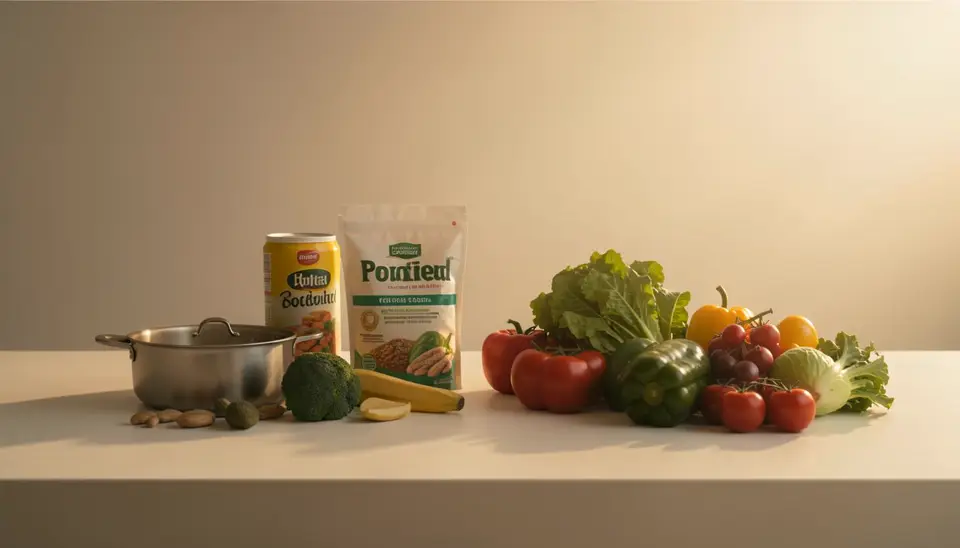
The food system, which accounts for about a third of global greenhouse gas emissions (UN, 2021), is also ripe for circular innovation. The app Too Good To Go connects consumers with restaurants and stores that have surplus, unsold food. For a small fee, users can purchase a 'Magic Bag' of food that would otherwise be thrown away, directly combating the 1.3 billion tonnes of food wasted globally each year. On the production side, regenerative agriculture practices are a cornerstone of a circular food system. Farmers use techniques like no-till farming, cover cropping, and rotational grazing to rebuild soil organic matter, sequester carbon, and enhance biodiversity, turning farms from resource extractors into regenerative ecosystems.
How Do Circular Business Models Differ from Linear Ones?
Transitioning to a circular economy requires a fundamental rethinking of how value is created and delivered. It's not just about what a company produces, but how it operates. Several distinct circular business models have emerged, each challenging the 'take-make-waste' logic in its own way.
| Principle | Linear Economy ('Take-Make-Waste') | Circular Economy ('Reduce-Reuse-Regenerate') |
|---|---|---|
| Resource Flow | Finite resources are extracted, used once, then disposed of. | Resources are cycled continuously. Focus on renewables and biodegradables. |
| Product Design | Designed for single use or planned obsolescence. Difficult to repair. | Designed for durability, repair, disassembly, and remanufacturing. |
| Business Model | Based on selling high volumes of products. | Based on services, sharing platforms, and product-life extension (PaaS). |
| Concept of Waste | Waste is an inevitable and costly final stage. | Waste is designed out. 'Waste' from one process becomes a resource for another. |
| Economic Driver | Scarcity and consumption drive value. | Performance, access, and regeneration drive value. |
One key model is 'Product as a Service' (PaaS). Instead of selling a physical product, a company sells access to its function as a service. For example, Philips sells 'Light as a Service,' where customers pay for illumination, while Philips retains ownership of the fixtures and is responsible for their maintenance, energy efficiency, and end-of-life recycling. This incentivizes Philips to create durable, energy-efficient, and easily repairable products.
What Are the Documented Benefits of a Circular Economy?
The benefits of shifting to a circular model are systemic, touching environmental, economic, and social domains. Environmentally, the impact is immense. Research by the Ellen MacArthur Foundation suggests that applying circular economy strategies in just five key areas (steel, aluminium, cement, plastic, and food) can eliminate almost half (45%) of the emissions from the production of goods—a staggering 9.3 billion tonnes of CO2e by 2050.
The World's Declining Circularity Rate
Economically, the circular economy represents a major opportunity. Accenture estimated it could unlock $4.5 trillion in new economic growth by 2030 by creating new industries in repair, remanufacturing, and nutrient recovery, while reducing businesses' exposure to volatile raw material prices. For cities, circular activities could significantly reduce costs associated with waste management and public health. A study on European cities found that circular interventions in mobility, construction, and food could cut consumption-based emissions by up to 66% (C40 Cities, 2022).
What Are the Criticisms and Challenges Ahead?
Despite its promise, the transition to a circular economy is not without hurdles. One major challenge is scalability. While inspiring examples exist, they remain a small fraction of the global economy. As the chart above shows, the world's overall material circularity has actually decreased in recent years, falling from 9.1% in 2018 to just 7.2% in 2023 (Circle Economy, 2023). This indicates that our linear consumption habits are accelerating faster than circular solutions can keep up.
There is also the risk of the 'rebound effect,' where efficiency gains simply lead to more overall consumption. If a rental service makes it cheaper and easier to access new fashion, for example, it might inadvertently encourage a faster trend cycle rather than a slower one. Furthermore, corporate 'circular-washing' is a real concern, where companies use the language of circularity for marketing without fundamentally changing their linear business models. A truly circular system requires deep, systemic change, supportive government policies, and a cultural shift in how we view materials, ownership, and waste.
Frequently Asked Questions
Is recycling the same as a circular economy?+
No. Recycling is a component of a circular economy, but it's considered a strategy of last resort. The circular model prioritizes upstream solutions like designing out waste in the first place (prevention), followed by extending product life through reuse and repair. Recycling, which is resource-intensive and often downgrades material quality, comes after these more valuable loops have been exhausted.
What are the 3 main principles of a circular economy?+
The three core principles, as defined by the Ellen MacArthur Foundation, are: 1) Eliminate waste and pollution from the outset by changing design and material choices. 2) Circulate products and materials at their highest value through reuse, repair, remanufacturing, and recycling. 3) Regenerate nature by returning biological nutrients to the soil and supporting the health of ecosystems.
How can individuals participate in the circular economy?+
Individuals can have a significant impact by shifting consumption habits. This includes buying fewer, more durable items; prioritizing repair over replacement; supporting second-hand markets like thrift stores and online resale platforms; choosing brands with take-back or repair programs; and reducing food waste through careful planning and composting. Supporting businesses built on circular models also sends a strong market signal.
Why is a circular economy important for fighting climate change?+
The circular economy is crucial for tackling climate change because it addresses the 45% of global greenhouse gas emissions that come from how we make and use products, materials, and food. While the transition to renewable energy is vital for tackling energy-related emissions (55%), a circular model is needed to address the hidden 'embodied' emissions in our goods and agricultural systems.
What is the EU's Right to Repair law and how does it support circularity?+
The EU's Right to Repair directive, effective 2024, requires manufacturers to make spare parts and repair information available for products like smartphones and washing machines for up to 10 years. This directly supports circular economy principles by keeping materials in use longer and reducing e-waste.
How does regenerative agriculture relate to the circular economy?+
Regenerative agriculture rebuilds soil organic matter and biodiversity, mimicking natural cycles. By composting food waste, rotating crops, and integrating livestock, farms like those in the Loire Valley (France) close nutrient loops and sequester carbon, directly supporting the circular economy principle of regenerating natural systems.
What is the current global circularity rate and why does it matter?+
The global circularity rate—measuring the share of materials cycled back into the economy—stood at 7.2% in 2023 (Circle Economy, 2024), down from 9.1% in 2018. This decline shows that despite growing awareness, material consumption is outpacing circular efforts, underscoring the urgency for policies like extended producer responsibility.