Supporting regenerative agriculture involves making conscious consumer choices to fund farming systems that prioritize soil health, biodiversity, and carbon sequestration. Consumers can achieve this by purchasing products with specific certifications, buying directly from local regenerative farms through CSAs or farmers' markets, and prioritizing foods that are staples of regenerative systems.
What Is Regenerative Agriculture and Why Does It Matter?
Regenerative agriculture describes a holistic approach to farming and grazing that aims to reverse climate change by rebuilding soil organic matter and restoring degraded soil biodiversity. Unlike sustainable agriculture, which seeks to maintain the status quo, regenerative practices actively improve the resources they use. The conventional industrial agriculture model has depleted an estimated 30-75% of the original soil organic carbon in cultivated lands globally, transforming a vital carbon sink into a source of emissions (UN Convention to Combat Desertification, 2022).
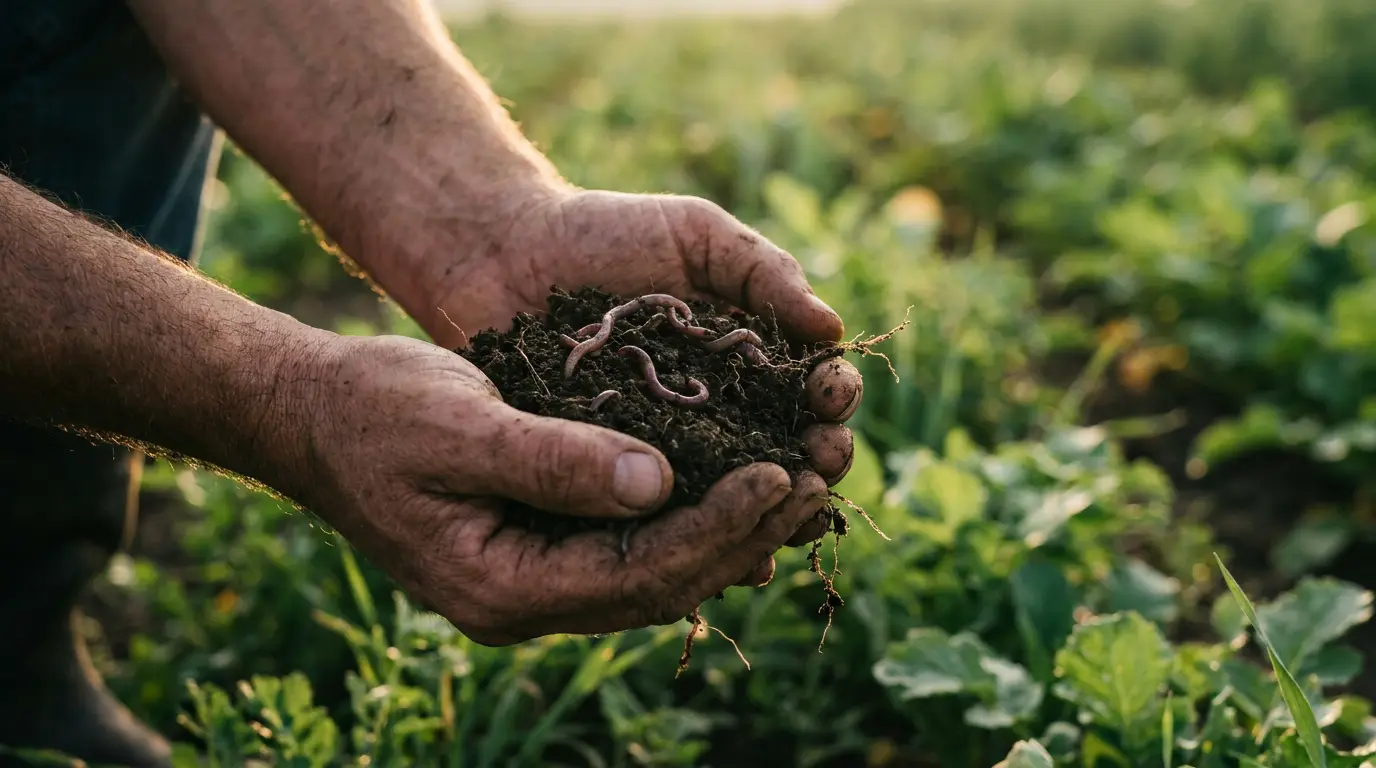
The core principles include minimizing soil disturbance (no-till or low-till), maintaining soil cover with cover crops, fostering plant diversity through crop rotation, and integrating livestock in a managed way to mimic natural grazing patterns. These practices work in concert to create a virtuous cycle: healthier soil grows more nutrient-dense food, requires fewer chemical inputs, holds more water to resist drought, and draws down significant amounts of atmospheric carbon dioxide. Research from the Rodale Institute's 40-year Farming Systems Trial demonstrates that regenerative systems can be more productive and profitable than conventional systems, particularly under environmental stress.
“We're not just managing land; we're managing complexity. The soil is a living organism, a biological community, and our job is to create the conditions for that community to thrive.”
How Can I Identify and Purchase Regenerative Products?
Identifying truly regenerative products requires looking beyond simple 'organic' or 'natural' labels. While these are often steps in the right direction, they don't guarantee the holistic soil-health practices at the core of regenerative agriculture. The most direct method is to look for specific, third-party certifications designed to verify regenerative claims. These labels provide assurance that a farm is adhering to a strict set of standards for soil health, animal welfare, and social fairness.
A 5-Step Guide to Finding Regenerative Foods
- 1
Learn the Key Certifications
Familiarize yourself with labels like Regenerative Organic Certified (ROC), Land to Market (Ecological Outcome Verification), and Certified Humane + Pasture-Raised. These are currently the most robust verification systems available to consumers.
- 2
Shop at Farmers' Markets
Go to local farmers' markets and talk directly to producers. Ask them about their practices: Do they use cover crops? Do they practice no-till? How do they manage their soil?
- 3
Join a CSA Program
A Community Supported Agriculture (CSA) share creates a direct relationship with a farm. Many small-scale farms using regenerative methods rely on CSAs for their financial stability. You get fresh food and they get predictable income.
- 4
Seek Out Grass-Fed and Pasture-Raised
For animal products, look for 100% grass-fed beef and dairy, and pasture-raised poultry and eggs. Well-managed grazing is a cornerstone of many regenerative systems. The American Grassfed Association (AGA) offers a reliable certification.
- 5
Support Brands Committed to the Movement
An increasing number of brands, from Patagonia Provisions to Navitas Organics and Alter Eco, are building their supply chains around regenerative principles. Supporting them sends a powerful market signal.
| Practice | Conventional Agriculture | Organic Agriculture | Regenerative Agriculture |
|---|---|---|---|
| Tillage | Intensive; frequent plowing | Permitted, sometimes intensive | Minimized or eliminated (no-till) |
| Soil Cover | Often left bare between seasons | Cover crops encouraged | Constant cover with cash or cover crops |
| Fertilizers | Synthetic chemical fertilizers | Natural inputs (compost, manure) | On-farm fertility (cover crops, compost, managed grazing) |
| Pest Control | Synthetic chemical pesticides | Natural pesticides, beneficial insects | Integrated pest management, habitat for predators |
| Biodiversity | Low; monocultures are common | Higher than conventional | High; emphasis on crop diversity and integrating animals |
| Primary Goal | Maximize yield | Avoid synthetic inputs | Actively improve ecosystem health and soil |
What Is the Climate Impact of Regenerative Agriculture?
The climatic benefit of regenerative agriculture lies in its capacity to turn agricultural land from a carbon source into a carbon sink. Through photosynthesis, plants draw carbon dioxide from the atmosphere. In regenerative systems, farming practices are designed to transfer as much of that carbon as possible into the soil, where it is stored in a stable form as soil organic matter. This process is known as soil carbon sequestration.
The potential is substantial. A 2020 study in *Nature Sustainability* suggested that adopting regenerative practices on all global croplands and pastures could sequester several gigatons of CO2 per year, significantly contributing to the goals of the Paris Agreement. While exact figures are debated and depend on climate, soil type, and specific practices, the consensus is that restoring soil health represents one of the most immediate and scalable natural climate solutions available.
Potential Soil Carbon Sequestration by Farming System
Beyond carbon, regenerative practices improve water cycles. Healthy soil with high organic matter acts like a sponge, absorbing and holding rainwater far more effectively than degraded soil. This increases drought resilience and reduces soil erosion and nutrient runoff, which pollutes waterways. A study in the U.S. Midwest found that fields under long-term regenerative management could absorb and retain significantly more water during heavy rainfall events compared to conventionally tilled fields (USDA-ARS, 2021).
How Does This Approach Affect Animal Welfare and Biodiversity?
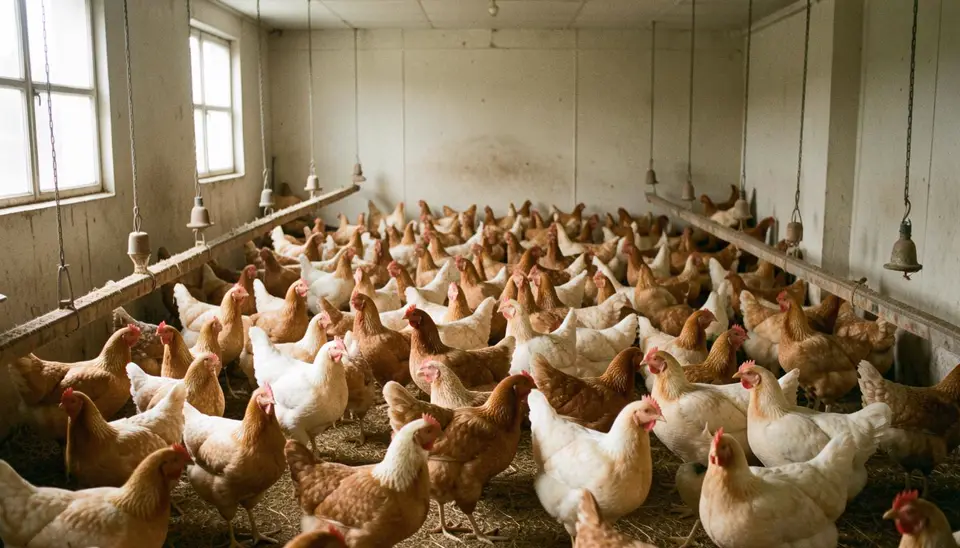
Regenerative agriculture fundamentally re-links animals to the land, moving away from the confinement models of industrial factory farming. In regenerative systems, livestock are not just sources of meat, dairy, or eggs; they are active partners in ecosystem restoration. Well-managed grazing, where animals are moved frequently across pastures, mimics the patterns of wild herbivores. This behavior stimulates plant growth, distributes manure as natural fertilizer, and helps incorporate organic matter into the soil.
This integration directly benefits animal welfare. Instead of living in crowded, unsanitary confined animal feeding operations (CAFOs), animals are raised outdoors on pasture, where they can express natural behaviors like grazing, roaming, and foraging. This environment drastically reduces stress and the need for routine antibiotics. A 2019 review in *The Lancet Planetary Health* linked pasture-based systems with improved animal health outcomes and higher nutritional quality in the resulting meat and dairy products, noting elevated levels of omega-3 fatty acids and antioxidants.
The biodiversity benefits extend far beyond the farm animals themselves. The diversity of plants used as cover crops and in perennial pastures provides habitat and food for pollinators like bees and butterflies, beneficial insects, and birds. Healthy, living soil teems with a vast web of microscopic life—bacteria, fungi, protozoa—that is the foundation of the entire ecosystem. Conventional farming, with its monocultures and heavy chemical use, creates biological deserts; regenerative farming creates thriving, complex habitats both above and below the ground.
What Role Do Policy and Certification Play in Scaling Regenerative Agriculture?
In 2026, government policies are increasingly supporting regenerative agriculture. The U.S. Inflation Reduction Act allocated $19.5 billion for conservation programs, including funding for cover crops and no-till practices that directly align with regenerative principles. Similarly, the European Union's Common Agricultural Policy (CAP) now includes 'eco-schemes' that pay farmers for carbon sequestration and biodiversity enhancement, with countries like France and Germany leading implementation.
Certification systems have also evolved to provide clearer guidance for consumers. The Regenerative Organic Certified (ROC) program, launched by the Rodale Institute, now covers over 10 million acres globally, verifying practices like crop rotation, composting, and animal welfare. Land to Market's Ecological Outcome Verification, used by brands like Patagonia Provisions, measures actual soil health outcomes rather than just practices. These certifications help consumers navigate the market, especially in regions like the U.S. Midwest and Australia where regenerative grazing is expanding rapidly.
Frequently Asked Questions
Is regenerative agriculture the same as organic?+
No, they are different but can be complementary. Organic farming focuses on prohibiting synthetic inputs like pesticides and fertilizers. Regenerative agriculture is a broader, outcome-based approach focused on actively improving soil health, biodiversity, and carbon sequestration. A farm can be Regenerative Organic Certified (ROC), which combines the best of both.
Are food products from regenerative farms more expensive?+
They can be, particularly during a farm's transition period. However, as soil health improves, farms often become more resilient and less reliant on costly external inputs, which can stabilize prices over the long term. Many consumers view the premium as an investment in environmental health, nutrient density, and a more resilient food system.
Can regenerative agriculture work for all types of food?+
The principles of regenerative agriculture—protecting the soil, increasing diversity, and reducing inputs—can be applied to nearly any type of farming, from vegetables and grains to orchards and livestock. The specific practices will vary depending on the crop, climate, and local context, but the underlying philosophy is universally applicable.
How can I support regenerative agriculture if I live in a city with limited options?+
Look for online retailers and subscription boxes that specialize in products from regenerative farms. Many brands that source regeneratively sell their goods nationally. Additionally, you can support organizations like the Rodale Institute, Kiss the Ground, or the Savory Institute, which conduct research, train farmers, and advocate for policy changes that support the movement.
How can I verify regenerative claims on food labels in 2026?+
Look for third-party certifications such as Regenerative Organic Certified (ROC), Land to Market's Ecological Outcome Verification, or Savory Institute's Land to Market program. These require annual audits and measurable outcomes like soil carbon increase and biodiversity improvement, unlike vague 'regenerative' claims without certification.
What are the main challenges for farmers transitioning to regenerative practices?+
Transition often involves a 3-5 year period of lower yields and higher upfront costs for cover crops and no-till equipment. However, programs like the U.S. Department of Agriculture's Conservation Stewardship Program (CSP) and European Union's Common Agricultural Policy (CAP) eco-schemes provide financial support. Consumer demand for regenerative products helps offset these risks.
How does regenerative agriculture benefit water conservation?+
Healthy soil with high organic matter from regenerative practices can absorb up to 20 times its weight in water, reducing runoff and flooding. Studies from the University of California, Davis (2023) show that farms using cover crops and no-till retain 30-50% more rainfall than conventional farms, benefiting drought-prone regions like the U.S. Southwest and Australia.