There is a dissonance familiar to anyone who has stood before a fishmonger's crate of live crabs, their legs and claws bound with thick rubber bands, or watched a chef drop a lobster headfirst into a cauldron of boiling water. We perform these acts, or witness them, with a degree of detachment reserved for beings we assume are little more than automata. They are ingredients, not individuals; things, not subjects. This convenient cognitive partition, however, is beginning to crumble under the weight of scientific evidence, forcing a profound and uncomfortable reassessment of our relationship with some of the planet's most alien minds.
The ground-shifting moment came not with a protest or a viral video, but with the quiet publication of a government-commissioned report. In late 2021, the United Kingdom government, acting on the findings of a comprehensive review by the London School of Economics and Political Science (LSE), officially amended its Animal Welfare (Sentience) Bill. The amendment was radical in its implications: it legally recognised two entire classes of invertebrates—decapod crustaceans (like crabs, lobsters, and prawns) and cephalopod molluscs (like octopuses, squid, and cuttlefish)—as sentient beings.
For the first time in a major Western nation, the law explicitly acknowledged that these animals have the capacity to experience feelings, including pain, distress, and pleasure. This is not a fuzzy, anthropomorphic projection; it is a conclusion based on a rigorous evaluation of over 300 scientific studies. The cultural and industrial practices built on the assumption of their insentience—from fisheries to restaurants to home kitchens—are now facing an unavoidable ethical audit.
I. The Scientific Tide Change
The LSE team, led by philosopher and biologist Professor Jonathan Birch, didn't search for a single, definitive proof of sentience, which remains elusive even in humans. Instead, they developed a framework of eight scientific criteria that, when taken together, build a powerful case. These criteria include possessing a nervous system complex enough to process pain (like opioid receptors, which respond to painkillers), showing adaptive behaviours to avoid injury or threats, and making trade-offs between the risk of pain and the reward of, for example, food.
The evidence for decapod crustaceans was particularly robust. Numerous studies have documented that crabs will consciously avoid locations where they have previously received a small electric shock, even if that location offers a desirable dark shelter. They groom and tend to their wounds. When their shells are chemically irritated, shore crabs will forsaken their protective shells—a highly risky behaviour—indicating a powerful negative feeling rather than a simple reflex. In essence, they demonstrate not just nociception (the simple detection of a harmful stimulus) but a subjective, negative experience of it—the very core of pain.
These findings systematically dismantle the old argument that such creatures are merely reacting with involuntary twitches. The complexity of their behaviour indicates a centralised processing of information and a motivation to avoid future harm, a hallmark of sentient experience. The LSE report concluded that there was 'strong evidence' for sentience in octopods and 'very strong' evidence in crabs. The implication is stark: practices like boiling alive, which can take several minutes to kill a lobster, likely inflict prolonged and extreme suffering.
“The evidence was so strong. We were looking at it and thinking, 'My gosh, how can anyone deny this?' The sheer weight of it, from so many different angles, points to one conclusion.”
II. Inside the Octopus's Garden
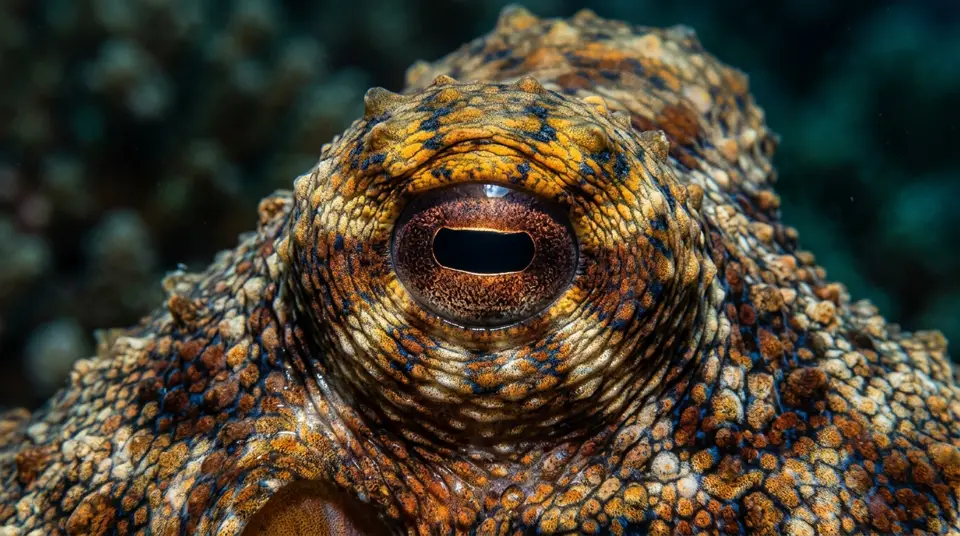
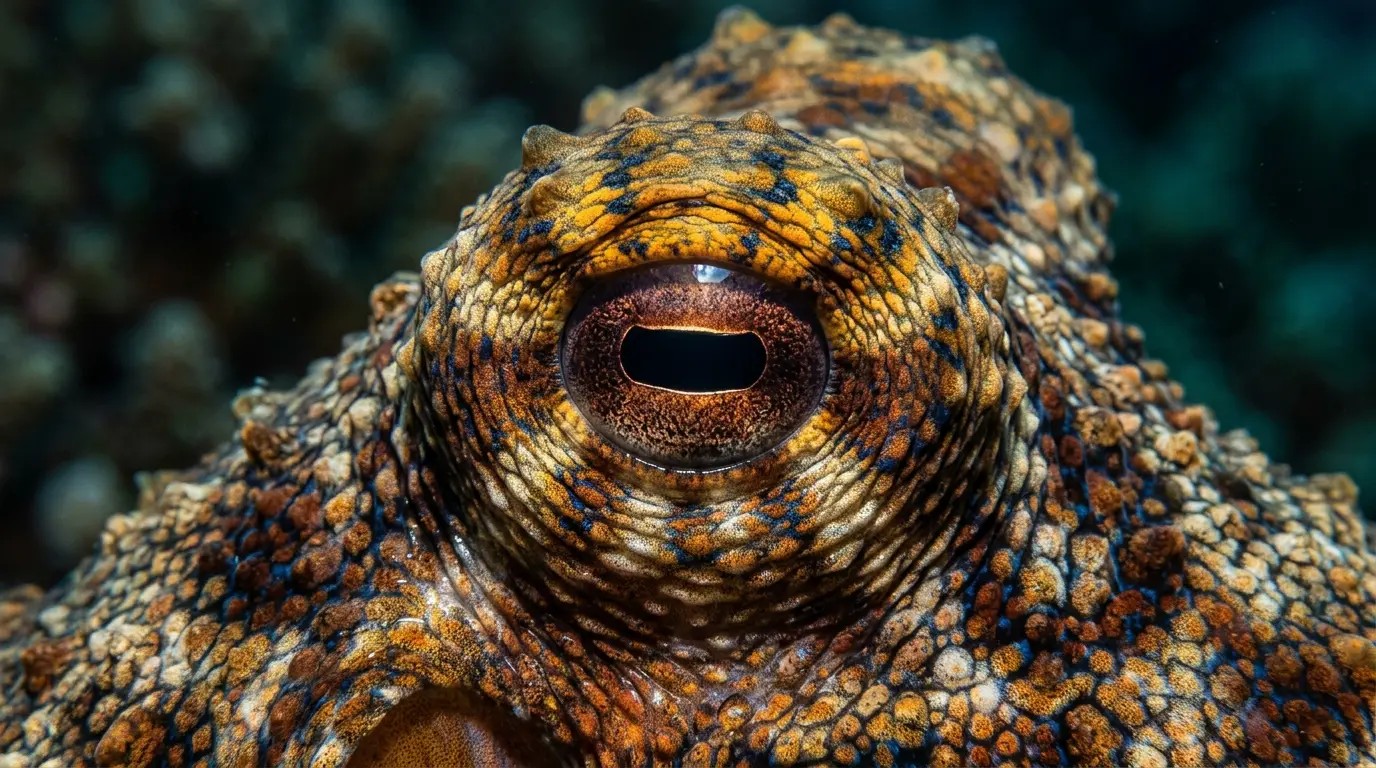
While crabs and lobsters compel a re-evaluation of pain, cephalopods, particularly octopuses, challenge our very notions of intelligence and consciousness. With a large, complex brain and a nervous system where two-thirds of the neurons reside in their arms, an octopus is less a single entity and more a distributed intelligence. Each arm can independently taste, touch, and act, yet all are coordinated by a central command.
Their cognitive prowess is the stuff of legend in marine biology labs and public aquariums. They are master escape artists, known to unscrew jar lids from the inside, manipulate latches, and even squirt water to short out inconveniently placed lights. They exhibit distinct personalities, with some individuals being bold and playful while others are shy and reserved. They have been observed using tools, such as carrying coconut shells to use as portable shelters, and they appear to engage in playful activities, like repeatedly ‘bouncing’ a plastic bottle against a jet of water.
This behavioural sophistication is linked directly to the question of sentience. A 2021 study showed that octopuses, like crabs, learn to avoid places associated with pain (in this case, an injection of acetic acid) and seek out chambers where a pain-relieving anaesthetic is available. This reveals not only that they feel pain but that they remember it and take active steps to soothe it. Such complex emotional and cognitive lives make the recent push for industrial-scale octopus farming particularly alarming for welfare advocates. Cramming these solitary, intelligent creatures into barren underwater pens is a recipe for immense psychological distress.
III. An Industry on Trial
The scale of our impact on these newly recognised sentient beings is staggering. Global fisheries and aquaculture harvest hundreds of billions of them annually. Unlike vertebrate livestock, their deaths are almost entirely unregulated, subject to methods chosen for efficiency and tradition rather than animal welfare. The recognition of sentience effectively places an entire global industry on moral—and potentially legal—trial.
Common practices across the supply chain are now cast in a horrific new light. Live crabs and lobsters are often packed tightly and stored on ice for days, a process that doesn't numb them but rather induces a slow, stressful death from cold and oxygen deprivation. Declawing crabs and throwing them back, a common practice in some fisheries, is now understood as a painful mutilation. The endpoint for most is equally brutal: being dismembered, boiled, or grilled while fully conscious.
| Species Group | Wild Catch (Metric Tonnes) | Aquaculture (Metric Tonnes) | Primary Consumers |
|---|---|---|---|
| Swimming Crabs (Portunidae) | 1,500,000 | 300,000 | East Asia, USA |
| Lobsters (Nephropidae & Palinuridae) | 300,000 | 5,000 | North America, Europe, East Asia |
| Octopuses (Octopoda) | 380,000 | 100 | Mediterranean, East Asia, Mexico |
| Squid & Cuttlefish (Teuthida & Sepiida) | 3,700,000 | 10,000 | Globally |
The economic inertia of these industries is immense. From the lobster boats of Maine to the octopus fisheries of Galicia, livelihoods depend on the current mode of operation. Yet, change is not impossible. The challenge is not to end these industries overnight but to revolutionise their practices. This requires investment in research and development for humane slaughter methods and a willingness to absorb the costs associated with ethical treatment.
Public Support for Including Decapods & Cephalopods in Animal Welfare Laws
IV. The Path from Recognition to Regulation
The UK's legal recognition is a monumental first step, but it is just that—a recognition. It does not yet ban boiling lobsters alive. Instead, it creates a Sentience Committee tasked with evaluating government policy for its impact on animal feeling. The real work of translating this principle into practice, through specific regulations on handling, transport, and slaughter, is just beginning. Other jurisdictions, including Switzerland, New Zealand, and Norway, have already enacted specific protections, such as banning the boiling of live, un-stunned crustaceans.
So what does humane treatment look like? For slaughter, the consensus is moving towards methods that render the animal instantly unconscious. Electrical stunning devices, like the UK-developed Crustastun, pass a current through the animal's central nervous system, destroying its function in less than a second. While the upfront cost is a barrier for many small businesses, its adoption by high-end retailers and restaurants shows that a market for humane practice exists.
For consumers, the shift may be more personal. It means asking questions at the fish counter. It means choosing frozen products that may have been dispatched more humanely at the point of processing. It could mean abandoning certain dishes altogether. It forces us to confront the boundary of our moral circle, which has been slowly expanding over centuries from our immediate tribe to encompass all of humanity and, more recently, vertebrate animals.
The evidence now strongly suggests this circle must expand further, down into the alien depths of the ocean and across the sands of the seafloor. This is not about sentimentality; it is about scientific integrity and ethical consistency. We stand at a precipice, armed with new knowledge. The question is no longer whether they can feel. The question is how we will choose to act now that we know they do.