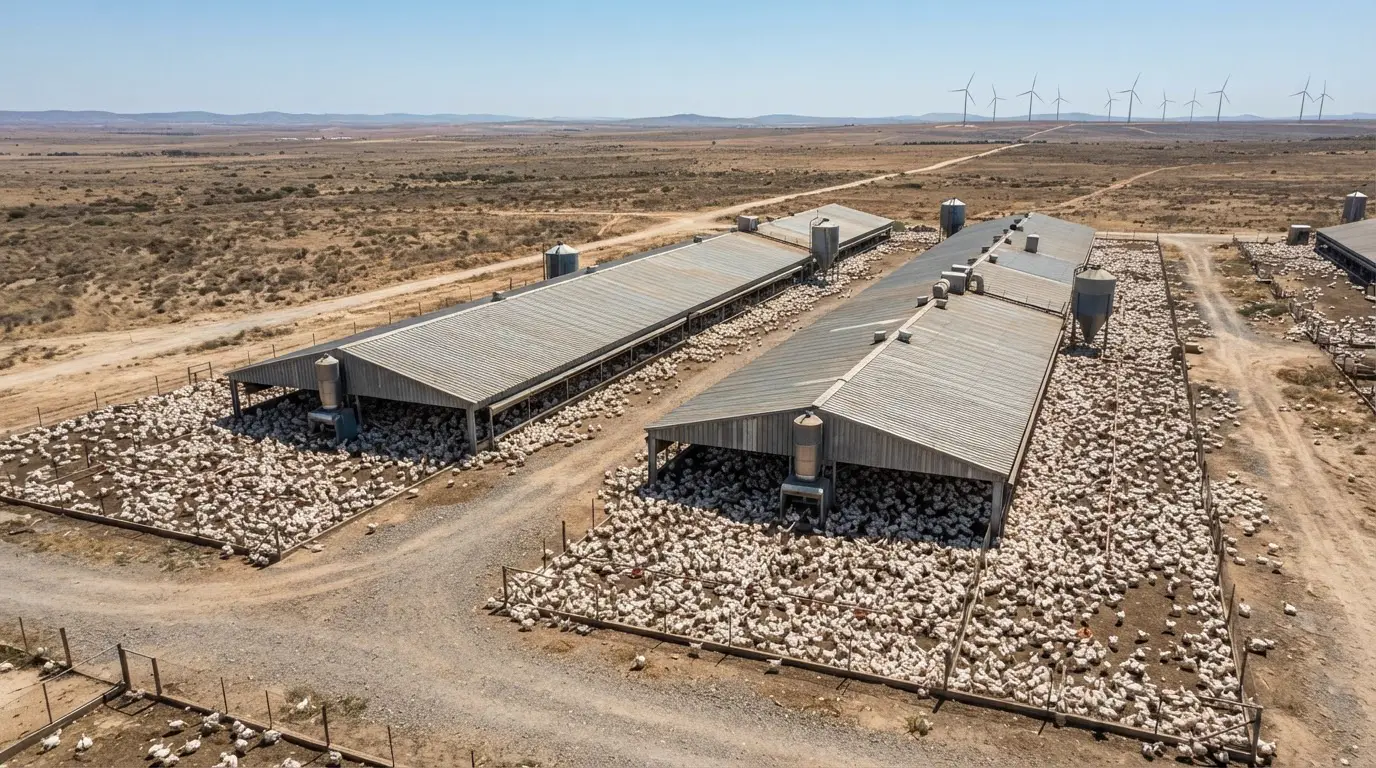
Major food corporations bear significant responsibility for animal welfare, especially concerning broiler stocking density, particularly in drought-prone regions. Our investigation reveals that many brands fall short in implementing stringent welfare standards that account for the environmental strain of intensive agriculture in water-stressed areas, impacting both animal suffering and ecological sustainability (Humane Foundation Analysis, 2024).
What is Broiler Stocking Density and Why Does it Matter in Dry Regions?
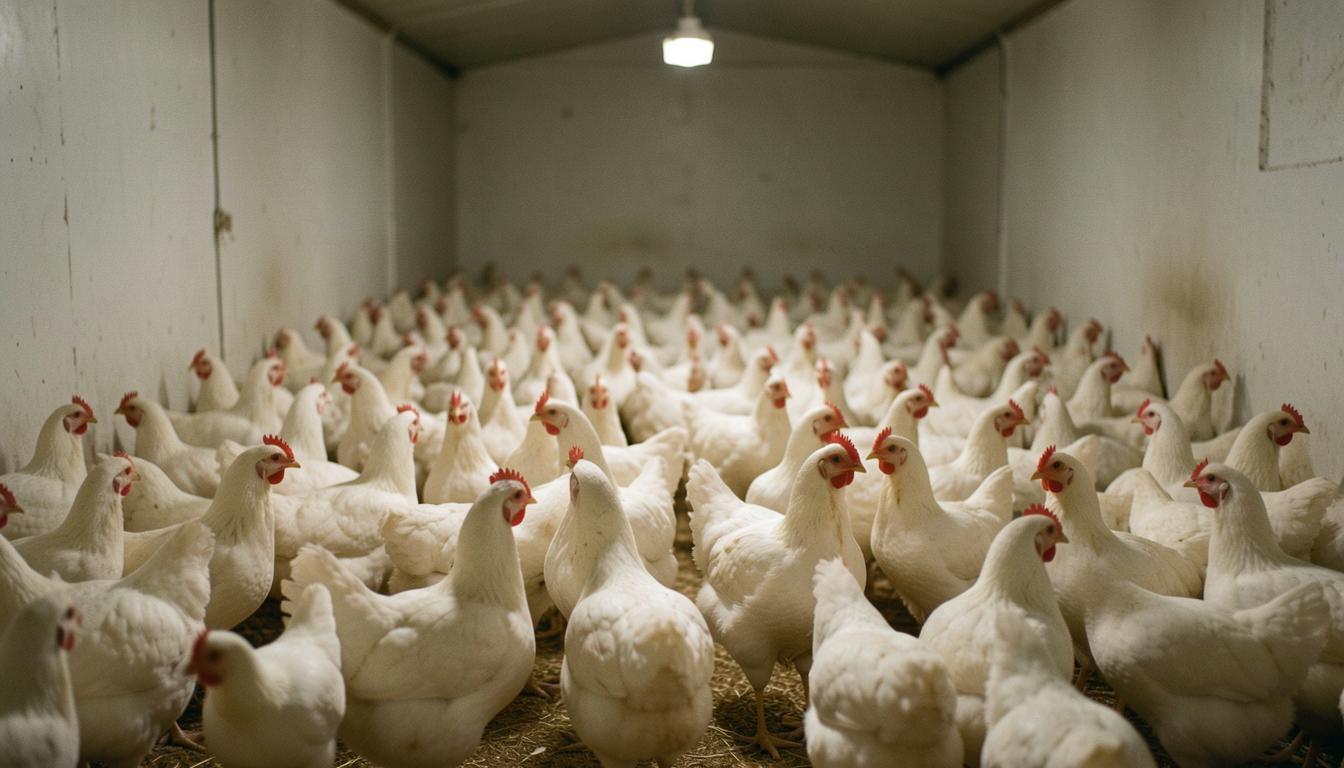
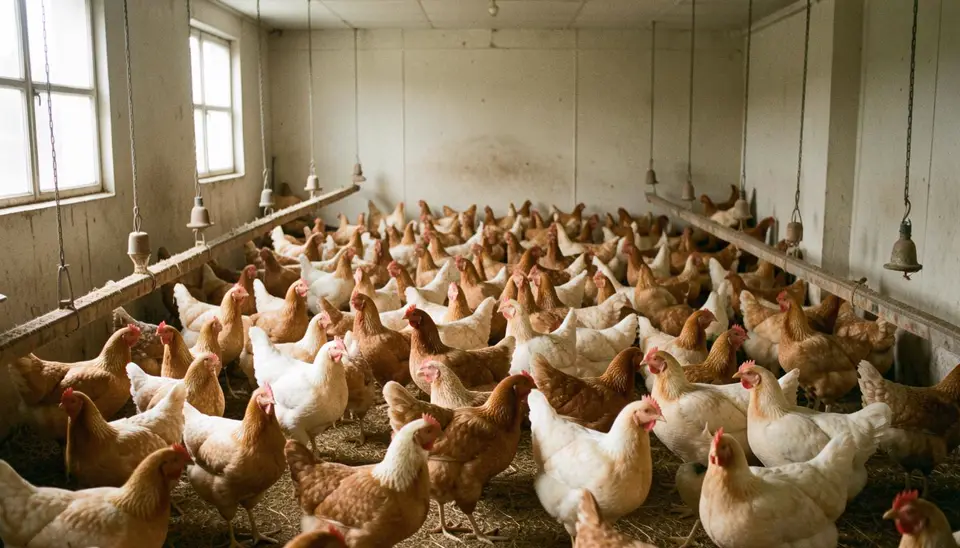
Broiler stocking density refers to the number of birds housed per unit of floor area in poultry production, typically measured in kilograms of bird weight per square meter (kg/m²). It directly impacts animal welfare, influencing chickens' ability to move, access resources, and express natural behaviors (European Food Safety Authority, 2017). In dry, drought-prone regions, higher densities also intensify water consumption needed for hydration, cooling, and sanitation, straining already scarce local resources (Water Footprint Network, 2021).
The environmental footprint of intensive broiler farming, particularly its water usage, is magnified in regions facing chronic water scarcity. A single broiler chicken requires approximately 4 liters of water throughout its lifecycle (Mekonnen & Hoekstra, 2012). Multiply this by the billions of chickens raised annually, and the impact becomes substantial, especially in countries like Brazil, the U.S. (California, Texas), and Spain, where poultry production is high and water resources are constrained.
Our Methodology: Scoring Corporate Accountability
Our scorecard assesses major global food brands on their broiler welfare commitments, specifically focusing on stocking density and its implications for drought-prone regions. We evaluated public disclosures, supply chain policies, and third-party certifications over the past two years (2022-2024). Brands were graded A-F based on four key criteria:
Our Scoring Criteria for Broiler Welfare
- 1
Public Commitment to Reduced Stocking Density
Assessing if brands have explicit, time-bound targets (e.g., <30 kg/m²) for all broiler suppliers, globally.
- 2
Consideration of Regional Water Scarcity
Evaluating if policies differentiate or prioritize suppliers in drought-affected areas (e.g., mandates for water-saving technologies, lower densities).
- 3
Transparency and Reporting
Reviewing the availability and clarity of reporting on compliance, audit results, and progress towards welfare goals. Does the company provide verifiable data?
- 4
Third-Party Certification and Verification
Examining adherence to recognized higher welfare schemes (e.g., Global Animal Partnership Step 2+, Better Chicken Commitment) that include stocking density.
- 5
Investment in Alternative Protein or Sustainable Practices
Acknowledging brands exploring or investing in plant-based alternatives or genuinely sustainable, regenerative animal agriculture.
Corporate Accountability Scorecard: Broiler Stocking Density & Drought Regions
| Brand | Stocking Density Commitment | Water Scarcity Consideration | Transparency & Reporting | Overall Grade |
|---|---|---|---|---|
| Tesco (UK) | Good (30 kg/m² by 2025) | Moderate (supplier engagement) | High | B+ |
| McDonald's (Global) | Fair (varying by region) | Limited | Moderate | C |
| KFC (Global) | Poor (no specific public target) | Minimal | Low | D- |
| Nestlé (Global) | Good (Better Chicken Commitment) | Moderate (global water stewardship) | High | B |
| Walmart (US) | Fair (supplier guidelines) | Limited | Moderate | C+ |
| Whole Foods Market (US) | Excellent (GAP Step 3+ required) | High (regional sourcing focus) | High | A- |
The scores highlight a spectrum of commitment. While some European retailers like Tesco are moving towards stricter density limits, global fast-food giants like KFC continue to lag. Whole Foods Market stands out for its comprehensive adoption of higher welfare standards, which inherently address stocking density, even if not explicitly framed in terms of drought resilience (Whole Foods Market, 2023).
The 'Best Of' and 'Worst Of' in Broiler Welfare & Drought Resilience
Average Broiler Density (kg/m²) by Company Type (Global)
The 'Best Of' category includes companies that not only commit to lower stocking densities but also demonstrate a holistic approach to animal welfare and environmental impact. For instance, brands adhering to the Better Chicken Commitment (BCC) typically aim for a maximum density of 30 kg/m², coupled with better breeds, natural light, and enriched environments (Open Wing Alliance, 2024). These standards indirectly mitigate some regional impacts by promoting systems less reliant on intensive resource inputs.
“The future of responsible food production must integrate animal welfare with environmental stewardship. Ignoring broiler stocking density in water-stressed regions is a critical blind spot for many corporate giants.”
Conversely, the 'Worst Of' are those brands that either have no public commitments or whose policies remain vague and unverified. Such companies often source from industrial farms where broiler stocking density remains high, exacerbating welfare issues and contributing to higher water footprints in areas already struggling with drought (Compassion in World Farming, 2023). This lack of transparency and commitment signals a disregard for both animal suffering and ecological responsibility.
What are the Economic and Ethical Imperatives for Change?
The economic case for improved broiler welfare, including reduced stocking density, is becoming clearer. Consumer demand for ethically produced food is growing, with an estimated 37% of global consumers willing to pay more for sustainable products (NielsenIQ, 2023). Companies that proactively embrace higher standards mitigate reputational risks and can tap into this expanding market segment. Ethically, the argument is non-negotiable: sentient beings deserve lives free from undue suffering (Dawkins, 2012).
Furthermore, the long-term economic viability of intensive farming in drought-prone regions is questionable. Water scarcity leads to increased operational costs, potential water usage restrictions, and social license to operate challenges. Investing in more resilient and humane systems is not just an ethical choice but a strategic business imperative (Deloitte, 2022).
Frequently asked questions
How does broiler stocking density affect bird welfare?+
High broiler stocking density restricts movement, increases lameness, causes skin lesions, hinders access to feed and water, and elevates stress levels. It also contributes to higher ammonia concentrations in sheds, leading to respiratory issues and footpad dermatitis, severely compromising the birds' quality of life (European Food Safety Authority, 2017).
Which regions are most impacted by intensive broiler farming and drought?+
Regions globally that combine high poultry production with significant water stress include parts of Brazil, the American Southwest (e.g., California, Texas), Northern China, India, and large swathes of Southern Europe (FAO Aquastat, 2023). Intensive broiler operations in these areas amplify water scarcity challenges.
Can consumers really influence corporate broiler welfare policies?+
Yes, consumer demand is a powerful driver of corporate change. By choosing products from brands with transparent, high broiler welfare standards and supporting animal advocacy campaigns, consumers signal their priorities. This market pressure often prompts companies to revise their sourcing and animal welfare policies (World Animal Protection, 2022).
What is the 'Better Chicken Commitment' and how does it relate to stocking density?+
The Better Chicken Commitment (BCC) is a set of higher welfare standards adopted by numerous companies. It mandates key improvements, including a maximum broiler stocking density of 30 kg/m² (down from typical industrial densities of 38-42 kg/m²), slower-growing breeds, enriched environments, and improved stunning methods (Open Wing Alliance, 2024). Many major food corporations have pledged to adopt these standards.