Index
Sujets
Une vie végétale pour les humains, les animaux et la planète.
- Sujets
- 516
- Articles étiquetés
- 551
- Rubriques
- 8
- Langues
- 22
Dans cette rubrique
À la une
À lire aussi
- bien-être animal9
- industrie avicole4
- éthique animale4
- impact environnemental4
- souffrance animale3
- durabilité3
- droits des animaux3
- sentience animale3
- conditions de travail2
- petits déjeuners végétaliens faciles2
- protéines végétales petit déjeuner2
- bien-être animal législation2
- succès de conservation2
- animal welfare2
- régime végétalien2
- coûts cachés2
- 20242
- agriculture régénérative2
- agriculture sous contrat1
- sharecroppers modernes1
- shackle lines1
- élevage canadien1
- normes de bien-être animal1
- petit déjeuner vegan rapide1
- idées petit déjeuner végétalien1
- recettes vegan matin1
- manger vegan le matin1
- petit déjeuner à base de plantes1
- petit déjeuner sain et végétal1
- comment faire un petit déjeuner vegan équilibré ?1
- quel petit déjeuner vegan pour la musculation ?1
- remplacer les œufs au petit déjeuner1
- overnight oats vegan1
- alimentation végétale et diabète de type 21
- régime à base de plantes pour le diabète1
- prévention du diabète de type 21
- nutrition végétalienne diabète1
- gérer le diabète naturellement1
- glycémie et régime végétal1
- inverser le diabète de type 21
- comment un régime végétal affecte-t-il la glycémie ?1
- quels sont les bienfaits d'un régime végétal pour un diabétique ?1
- arguments pour les droits des animaux1
- spécisme1
- pourquoi les animaux devraient avoir des droits1
- législation animale France1
- différence bien-être et droits des animaux1
- philosophie droits des animaux1
- nutrition végétalienne enfance1
- parenting à base de plantes1
- alimentation végétalienne enfants1
- régimes végétaliens pédiatriques1
- science vs marketing alimentation végétale1
- suppléments vitamine B12 enfants1
- protéines végétales enfants1
- comment équilibrer un régime végétalien pour les enfants?1
- séparation veau laitier éthique1
- élevage laitier arctique1
- bien-être animal vaches laitières1
- alternatives séparation veaux1
- conflit mère-veau élevage1
- impact stress veaux arctique1
- régulations bien-être veaux1
- quelles alternatives séparation veaux?1
- personnalité grands singes1
- Nonhuman Rights Project1
- qu'est-ce que l'habeas corpus animal1
- pourquoi les grands singes sont-ils spéciaux1
- comment les lois évoluent pour les animaux1
- usines à chiots1
- interdictions animaux de compagnie1
- achats publics animaux1
- cantines scolaires éthique1
- comment arrêter les usines à chiots1
- refuges pour animaux de compagnie1
- pet-shop bans impact1
- fermentation de tempeh maison1
- tempeh fait maison1
- filiation tempeh1
- nutrition tempeh1
- avantages tempeh1
- comment faire du tempeh à la maison1
- coût tempeh maison1
- tempeh maison ou acheter1
- densité de suralimentation poulets de chair1
- résistance aux antibiotiques1
- bien-être animal volaille1
- antibiotiques en élevage1
- normes d'élevage poulets1
- étiquettes viande de poulet1
- santé publique antibiotiques1
- élevage intensif maladies1
- impact de la densité de logement sur les poulets de chair1
- comment la densité de surpopulation des poulets affecte-t-elle la santé1
- heures de service des camionneurs1
- transport bétail bien-être1
- traditions abattage religieux1
- abattage casher halal jhatka1
- stress animal transport1
- règlementation transport animaux vivants1
- impact culturel abattage1
- comment les heures de service affectent le bétail?1
- cognition porcine1
- comportement social du porc1
- bien-être animal porcin1
- travailleurs de nuit1
- horaires irréguliers1
- recherche sur les porcs intelligents1
- vie émotionnelle des porcs1
- comprendre les porcs1
- intelligence animale1
- droits des animaux porcins1
- bijoux éthiques méditerranée1
- joaillerie durable1
- or recyclé méditerranée1
- perles éthiques1
- traçabilité bijoux1
- impact environnemental joaillerie1
- minéraux responsables1
- où acheter des bijoux éthiques?1
- théologie végétalienne chrétienne1
- éthique animale christianisme1
- veganisme et foi chrétienne1
- intendance chrétienne environnement1
- droits des animaux Église1
- comment le christianisme aborde le végétalisme1
- pourquoi les chrétiens deviennent-ils végétaliens1
- quelle est la position de la Bible sur l'alimentation végétale1
- recettes végétaliennes simples1
- alimentation végétale rurale1
- alternatives végétaliennes accessibles1
- manger végétalien en petite ville1
- petit déjeuner vegan pas cher1
- comment manger végétalien avec un accès limité1
- personnes morales1
- lois sur les animaux1
- reconnaissance des animaux1
- génétique poulet croissance rapide1
- subventions élevage volailles1
- lobbying agro-alimentaire1
- bien-être animal poulets1
- réglementation avicole1
- impact économique génétique poulets1
- pourquoi les poulets de chair sont-ils si gros1
- quels sont les coûts cachés des poulets à croissance rapide1
- émissions d'ammoniac CAFOs Australie1
- élevage intensif Queensland1
- pollution agricole ammoniac1
- porcheries industrielles impact environnemental1
- résistance aux antibiotiques élevage1
- conditions de travail CAFOs1
- chaînes d'approvisionnement viande australienne1
- réglementation émissions ammoniac Australie1
- comment les CAFOs affectent l'air1
- quelles sont les solutions pour réduire l'ammoniac agricole1
- couches lavables1
- couches jetables écologiques1
- voyage durable bébé1
- parentalité éco-responsable1
- Lyon familles éthiques1
- empreinte carbone couches1
- guide voyage bébé1
- où acheter couches écologiques Lyon1
- engagements bien-être poulet (BCC) en Asie de l'Est1
- classement bien-être animal marques Asie1
- politiques de bien-être des poulets de chair1
- Better Chicken Commitment Asie1
- marques fast-food bien-être poulet1
- super marchés bien-être animal Asie1
- certification poulet élevé au sol Asie1
- lois bien-être poulet Asie de l'Est1
- transparence chaîne d'approvisionnement poulet1
- quelles marques respectent le BCC1
- travailleurs postés1
- rewilding nocturne1
- biodiversité urbaine1
- conservation accessible1
- refuges faune 24h/241
- projets de conservation 20241
- engagement écologique horaires décalés1
- comment participer à la conservation en travaillant de nuit1
- meilleurs projets de conservation pour horaires atypiques1
- élevage de poulpes1
- réglementation1
- enquête sous couverture1
- terres nécessaires pour produire de la viande1
- impact environnemental de la viande1
- sources de protéines animales1
- alternatives à la viande1
- ruminants1
- volailles1
- protéines végétales1
- cultivées in vitro1
- élagage dentaire1
- durabilité environnementale1
- élevage sans élagage dentaire1
- réglementation sur l'élagage dentaire1
- élevage de jardin1
- sauvetage animal1
- justice raciale1
- éleveur amateur1
- backyard breeding1
- intersectionnalité élevage1
- élevage canin et races1
- sauvetage animalier et inégalités1
- qu'est-ce qu'un élevage de jardin1
- vaches downer Kenya1
- enquête sous couverture abattoir Kenya1
- abattage d'urgence bovin1
- bien-être animal Afrique1
- réglementation abattoirs Kenya1
- pratiques d'abattage cruelles1
- industrie de la viande Kenya1
- vaches incapables de se lever1
- loi sur l'abattage au Kenya1
- comment les vaches downer sont traitées1
- douleur des poissons1
- conscience des poissons1
- réglementation américaine bien-être animal1
- sentience des poissons études scientifiques1
- Fish Pain US Law 20251
- poissons ressentent-ils la douleur1
- régulation élevage piscicole États-Unis1
- droits des animaux aquatiques1
- zero-grazing dairies1
- dairy workers' rights1
- policy reform1
- humane dairy industry1
- slaughterhouse workers1
- farm workers1
- dairy farming1
- animal rights1
- dairy policy1
- risque zoonotique cheval1
- viande cheval santé1
- résistance antibiotiques cheval1
- maladies cardiovasculaires viande cheval1
- alternatives végétaliennes étudiants1
- PMS Hospital Food Reform1
- Pork Hospital Food Reform1
- Animal-Based Protein Hospital Food1
- Patient Health Hospital Food1
- Hospital Menu Nutrition1
- arrachage de becs1
- poulets de chair1
- actionnaires1
- maison partagée écologique1
- système thinking1
- checklist verde 20241
- Actions concrètes pour une maison partagée plus durable1
- macération des poussins1
- mythe et réalité1
- implications culturelles1
- subventions agricoles1
- cholestérol des œufs1
- cruauté cachée1
- alternatives végétales1
- santé cardiaque1
- fact-checking œufs1
- lipides sanguins1
- nutrition préventive1
- œufs vs alternatives végétales1
- bison d'Europe1
- réintroduction1
- projet de conservation1
- critères de sélection1
- meilleurs choix1
- prix1
- drapeaux rouges1
- arbre de décision1
- comportement des visons en élevage1
- justice raciale dans l'industrie des fourrures1
- travail en élevage de visons1
- élevage de visons vs comportements naturels1
- industrie des fourrures en 20241
- mises en garde viandes transformées Canada1
- enquête sous couverture alimentaire1
- industrie alimentaire communication1
- santé publique viandes transformées1
- viandes transformées santé1
- plats éthiopiens vegans1
- cuisine éthiopienne vegan1
- recettes éthiopiennes sans produits animaux1
- ingrédients vegans éthiopiens1
- santé et cuisine éthiopienne1
- eau bouillante électrique abattage animaux1
- mythes et réalité abattage animaux1
- outils essentiels abattage animaux1
- temporisation abattage animaux1
- abattage animaux eau bouillante électrique1
- créatine végétalienne1
- mythes créatine1
- performance sportive1
- santé végétalienne1
- créatine végétale1
- supplementation créatine1
- créatine animaux1
- créatine végétarienne1
- créatine et diète1
- coûts cachés essentiels de salle de bain1
- salle de bain à faible impact1
- consommation durable1
- coûts environnementaux1
- santé et éthique1
- brosse à dents en bambou1
- cycle de vie durable1
- environnement1
- impact écologique1
- emballage1
- déchets1
- recyclage1
- biodégradable1
- plastique1
- sustainable living1
- techniques de réparation visible1
- sashiko1
- boro1
- durabilité alimentaire1
- industries agricoles1
- déchets alimentaires1
- production alimentaire responsable1
- moteurs à essence1
- moteurs électriques1
- tondeuses à gazon1
- comparaison1
- entretien de pelouse1
- coûts1
- zero déchet1
- paysage urbain1
- alimentation forcée de canards1
- lois foie gras1
- travailleurs abattoirs1
- santé mentale travail1
- éthique production foie gras1
- égalité traitement travailleurs1
- réglementation alimentation forcée1
- droits travailleurs abattoirs1
- Wool Mulesing 20271
- Marques Against Mulesing1
- Engagement des marques laine1
- Mulesing en 20271
- Responsabilité des marques1
- forced moulting1
- workplace cafeteria1
- shareholder pressure1
- menu defaults1
- sustainable food choices1
- vegan workplace1
- corporate responsibility1
- shareholder activism1
- how to tackle forced moulting1
- poules moins chères1
- production d'œufs bon marché1
- élevage industriel1
- mythe sur les animaux1
- science de la sentience1
- animaux capables de souffrir1
- animaux intelligents1
- dévoiler les mythe1
- poules en filières1
- œufs bon marché1
- éthique avicole1
- industrielle avicole1
- environnement avicole1
- poaching elephants, elephant trafficking, ivory trade, wildlife laws, conservation, endangered species, undercover investigation1
- duck down plucking1
- santé mentale travailleurs abattoir1
- sauvetage canard sanctuaire1
- plumage à vif souffrance animale1
- traumatisme psychologique abattoir1
- éthique du duvet1
- loi bien-être animal France 20241
- conditions de travail abattoir canard1
- comment est produit le duvet1
- sanctuaire pour canards sauvetage1
- pays interdisant les cages1
- interdiction des cages1
- élevage sans cage1
- fin des cages europe1
- poules pondeuses en cage1
- transition agricole1
- quels pays interdisent les cages d'élevage1
- l'élevage sans cage est-il plus cher1
- loi bien-être animal france1
- end the cage age1
- impact environnemental de l'élevage industriel1
- bœuf vs poulet environnement1
- empreinte carbone viande de bœuf1
- impact écologique poulet1
- gaz à effet de serre élevage1
- consommation eau agriculture1
- déforestation élevage bovin1
- élevage intensif conséquences1
- quelle est la viande la plus polluante ?1
- impact de la production de viande1
- stérilisation-capture-retour1
- SCR chats communauté1
- gestion chats errants1
- TNR personnes seules1
- bien-être animal urbain1
- éthique chats de rue1
- programmes TNR France1
- impact TNR sur les populations félines1
- bénéfices TNR1
- vitamine B12 végétalienne1
- sources B12 neurodivergents1
- alimentation végétale B121
- suppléments B12 végan1
- TDAH régime végétalien B121
- autisme nutrition B121
- santé neurologique B121
- comment obtenir B12 en étant végétalien ?1
- B12 et besoins sensoriels1
- vitamine B12 carence symptômes1
- protéines végétaliens1
- besoins protéiques végétaux1
- alimentation végétale protéines1
- carences protéines végétaliennes1
- sources protéines végétales1
- apport protéique végétal1
- combien de protéines végétalien1
- optimiser protéines végétales1
- coupage des dents 20301
- bien-être porcelets1
- enquêtes sous couverture animaux1
- éthique animale avenir1
- droits des animaux adolescents1
- fin du coupage des dents1
- pratiques d'élevage porc1
- impact des investigations1
- régime végétal vieillissement sain1
- alimentation végétale et immigration1
- cultures alimentaires et santé1
- bien vieillir en alimentation végétale1
- nutrition plant-based et héritage1
- comment manger végétal et respecter sa culture?1
- quels sont les défis des immigrants pour une alimentation saine?1
- est-ce que l'alimentation végétale favorise la longévité?1
- régime cétogène végétalien1
- alimentation faible en glucides végétale1
- céto végétalien1
- bien-être végétalien1
- santé végétale1
- comment débuter régime céto végétalien1
- aliments cétogènes végétaux1
- bénéfices régime céto végétalien1
- castration sans analgésie1
- lacunes juridiques élevage1
- bien-être animal nocturne1
- conditions de travail abattoirs1
- réglementation agricole européenne1
- castration porcine sans douleur1
- comment signaler maltraitance animale1
- droits des animaux de ferme1
- débecquage poules1
- bien-être animal élevage1
- labels trompeurs volaille1
- élevage intensif Asie1
- aviculture industrielle Moyen-Orient1
- bien-être des volatiles1
- grippe aviaire1
- santé des volatiles1
- campagne de bien-être animal1
- normes de ventilation1
- fermes industrielles1
- tourisme photo animaux sauvages Afrique australe1
- selfie avec lionceau Afrique1
- baignade avec dauphin éthique1
- sanctuaire d'éléphants Afrique australe1
- tourisme animalier responsable1
- interaction avec animaux sauvages1
- comment choisir un sanctuaire animalier1
- tourisme éthique Afrique australe1
- Hétérocycliques vs. Polycycliques1
- viande grillée Ande1
- impacts sur la santé1
- choisir une alimentation saine1
- risques alimentaires en Ande1
- méthodes de restauration des récifs coralliens1
- Asie centrale1
- biodiversité marine1
- réhabilitation des récifs coralliens1
- méthodes de restoration des récifs1
- caisses de veaux1
- réformes alimentaires1
- engagements corporate1
- hospital1
- prison1
- chaîne d'approvisionnement1
- viandes réformées1
- droit des animaux1
- jardinage respectueux de l'environnement1
- décarbonation du jardinage1
- économie circulaire1
- zéro déchet dans le jardin1
- utilisation de l'eau et des terres1
- consommation éthique1
- jardinage climato-responsable1
- bokashi compostage1
- compostage éthique1
- méthodes de compostage1
- zéro déchet1
- conservation de semences1
- économie sur l'épicerie1
- crise du coût des aliments1
- jardinage économique1
- autonomie alimentaire1
- semences potagères1
- comment conserver les graines1
- réduire facture alimentaire1
- jardinage pour débutants1
- plan de jardinage 30 jours1
- dortoir étudiant écologique1
- 20271
- conseils pratiques1
- astuces1
Un point de départ utile · index
Comprendre l’ensemble du sujet
Un bon journalisme environnemental aide à s’orienter, à vérifier une affirmation et à choisir la suite. Nous réunissons preuves, contexte et pistes concrètes sans réduire les sujets complexes à des slogans.
Preuves
Fondé sur la recherche
Contexte
Relié
Prochaine étape
Concret
Comment utiliser cette section
| Commencer par | Vous trouverez | Pour |
|---|---|---|
| The overview | A clear answer and the essential terms | First-time readers |
| The evidence | Sources, comparisons and reported context | Checking a claim |
| The pathways | Related topics, tools and further reading | Going deeper |
Questions fréquentes
Is this information opinion or reporting?
We separate evidence, interpretation and practical guidance. Claims should be traceable to research, public records or clearly identified editorial analysis.
Can one choice solve these problems?
No. Food systems, animal welfare and climate are connected systems. Individual choices matter, and so do policy, business and collective action.
Where should I continue?
Use the related topics, topic hubs and calculators on this page to move from a quick answer to the primary context behind it.
Contexte approfondi
Les preuves derrière le système alimentaire
Animal agriculture sits at the intersection of climate, land use, water, public health and animal welfare. These reference points recur across our reporting, so we keep them in one place: the numbers most often cited, the way we read a claim, the myths that survive longest, and the vocabulary you need to follow the debate in any language.
Repères chiffrés
- ~80 billion
- land animals farmed and slaughtered each year worldwide
- ~14.5%
- share of global greenhouse gas emissions linked to livestock supply chains
- ~77%
- of agricultural land used for grazing and feed production
- ~70%
- of freshwater withdrawals worldwide go to agriculture
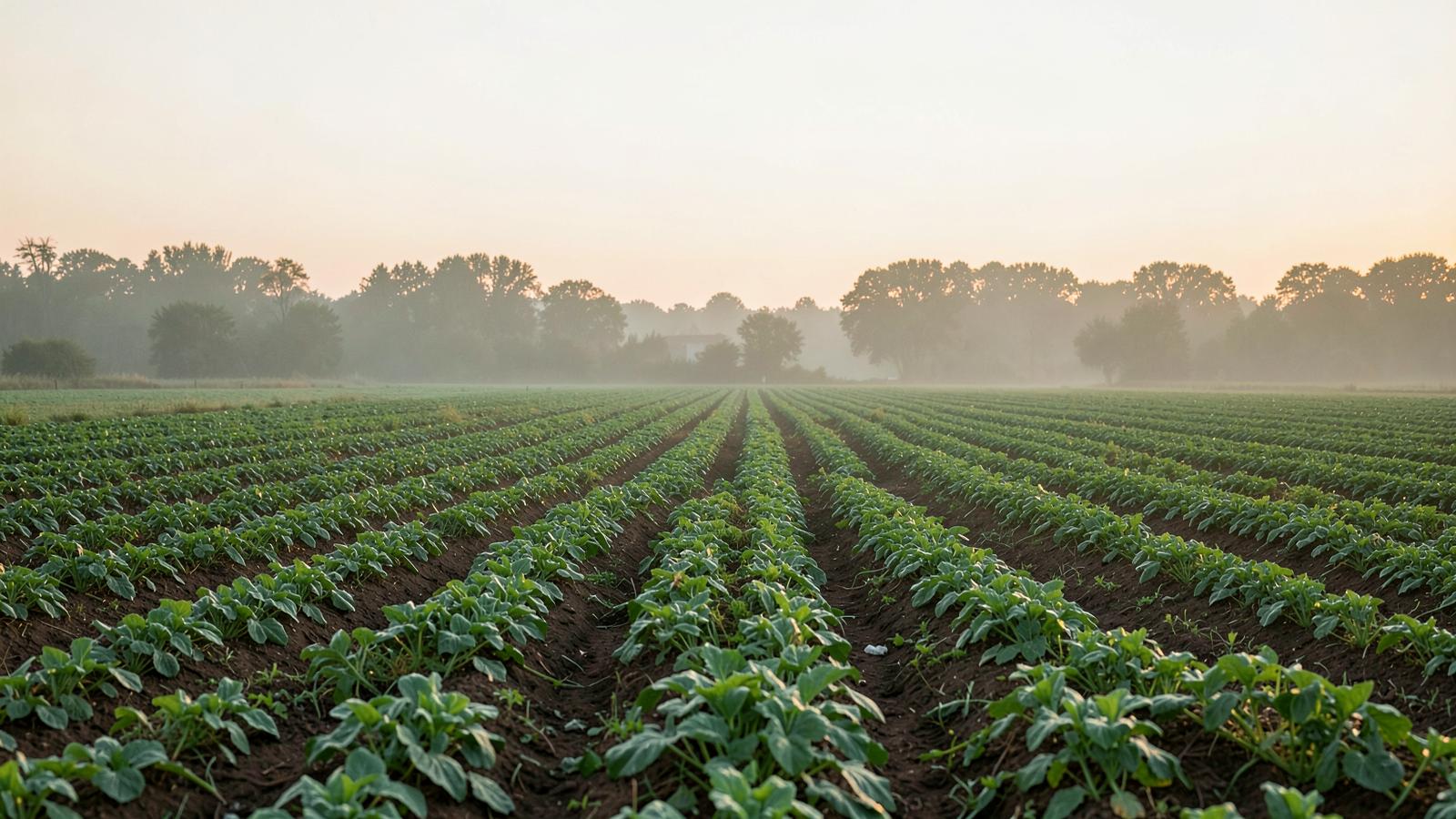
La terre est le pivot
Roughly three quarters of global farmland is used for livestock, yet it supplies a minority of the world's calories. Shifting even part of that land back to crops, forest or wetland is the single largest lever most countries hold.
Lire une affirmation en cinq étapes
- 01Find the original sourceTrace the figure back to a study, dataset or public record rather than a headline restating it.
- 02Check the boundaryAsk what the number counts: farm gate only, or land use, feed, transport and processing too.
- 03Compare like with likePer kilogram, per gram of protein and per calorie can point in different directions.
- 04Look for the rangeCredible estimates come with uncertainty; a single precise-sounding figure often hides it.
- 05Ask who is affectedAnimals, workers, neighbouring communities and future readers all carry part of the cost.
Mythe et preuves
| Affirmation courante | Ce que montrent les données | Pourquoi c’est important |
|---|---|---|
| Local food is always the lowest-carbon choice | Transport is a small share of most food footprints; what is produced matters more than how far it travelled. | It redirects effort towards the choices with real leverage. |
| Plant-based eating cannot meet protein needs | Legumes, grains, soy foods, nuts and seeds cover protein and amino-acid needs in well-planned diets at every life stage. | Nutrition myths keep people from a change they were open to. |
| Higher-welfare labels mean animals are not harmed | Label standards vary widely and many permit routine practices readers would not expect. | Informed choices depend on knowing what a label actually certifies. |
| Individual choices are irrelevant next to policy | Demand shifts change what is produced, funded and legislated; the two move together. | It replaces fatalism with something you can act on this week. |
Le vocabulaire du débat
- Factory farming
- Intensive confinement systems that maximise output per animal and per unit of space.
- Life-cycle assessment
- A method that totals environmental impact across every stage of a product's life.
- Sentience
- The capacity to feel, perceive and experience — the basis of most animal-welfare law.
- Land-use change
- Conversion of forest, grassland or wetland into farmland, and the emissions it releases.
- Food-system resilience
- How well supply survives drought, disease and price shocks.
- Just transition
- Policy that protects farmers and workers while production shifts.
Des preuves aux choix quotidiens
À quoi cela ressemble dans l’assiette
Numbers describe the system; meals, votes and purchases are how most people meet it. This field guide turns the reporting into concrete swaps, a four-week plan and the signals worth watching, so a page of research becomes something you can act on this week without pretending the hard parts are simple.
Les substitutions les plus efficaces
| Au lieu de | Essayez | Pourquoi c’est important |
|---|---|---|
| Beef mince | Lentils, beans or soy mince | Beef carries by far the highest emissions and land use per gram of protein. |
| Dairy milk | Soy or pea milk | Comparable protein with a fraction of the land, water and emissions. |
| Cheese in daily meals | Nut or seed-based spreads, cashew cheese | Cheese is the most resource-intensive dairy product per kilogram. |
| Chicken and eggs | Tofu, tempeh, chickpeas | Removes the welfare cost of the most intensively farmed animals. |
| Farmed shrimp and salmon | Beans, jackfruit, seaweed-seasoned dishes | Avoids mangrove loss, bycatch and wild fish used as feed. |
| Butter | Olive or rapeseed oil | Lower emissions per kilogram and better cardiovascular profile. |
Un plan de quatre semaines qui tient
Most people who change their diet permanently do it gradually, one meal slot at a time, keeping the food they already like at the centre.
- 01Week 1 — breakfastChange the meal with the fewest variables: swap milk, add fruit, keep everything else identical.
- 02Week 2 — three dinnersCook three plant-based dinners you already know how to make well, rather than new recipes.
- 03Week 3 — restockRebuild the cupboard around pulses, grains, tinned tomatoes, nuts and frozen vegetables.
- 04Week 4 — eating outFind two reliable options near work or home, so social meals never become the failure point.
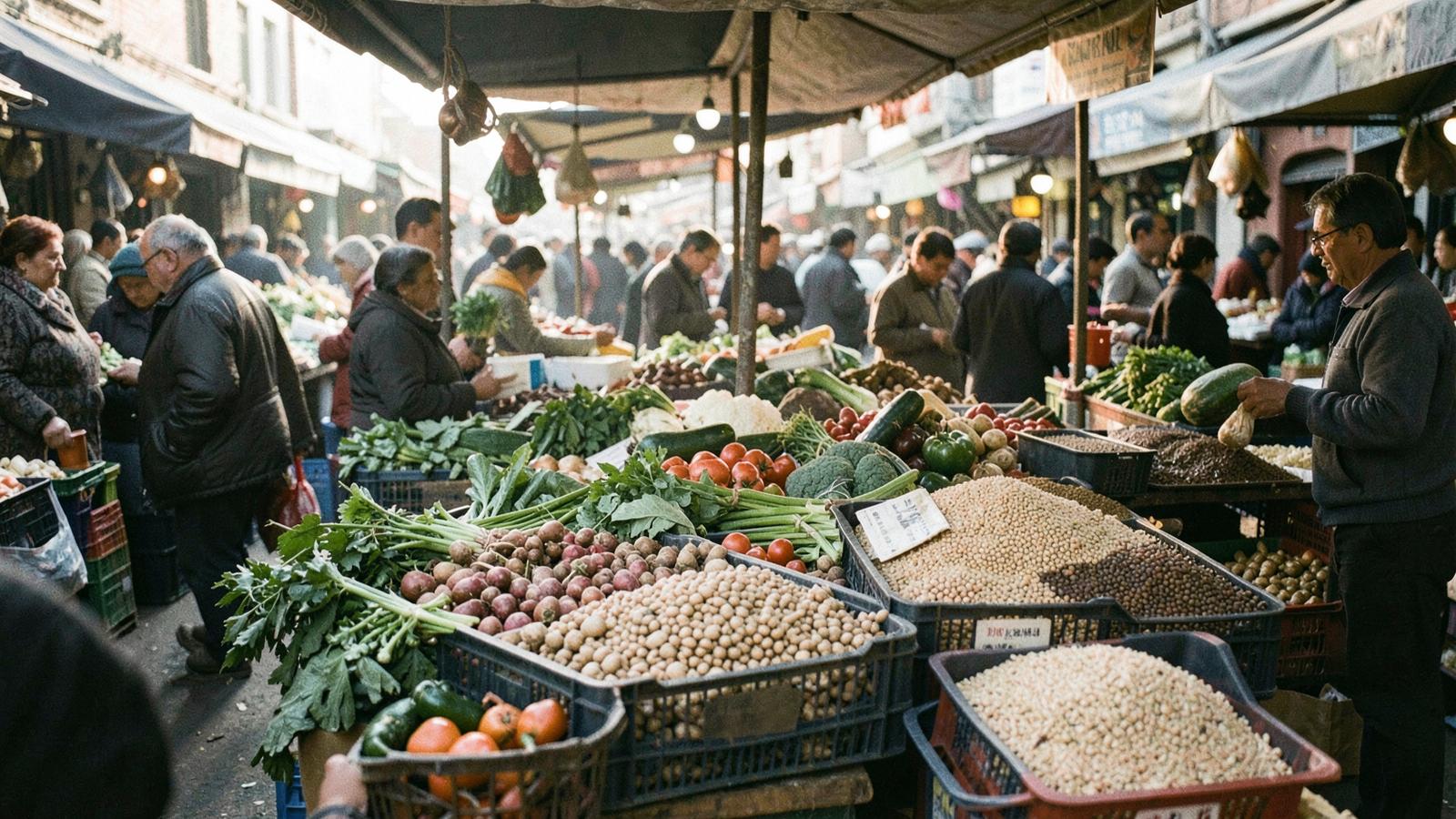
Là où le changement devient visible
Markets are the clearest place to watch demand shift: as pulses, grains and vegetables take more shelf space, producers, buyers and policy follow the money rather than the argument.
Signaux à surveiller
- Retail shelf shareHow much space plant-based products hold is a better indicator than launch announcements.
- Cage and crate bansLegislation on confinement moves faster than diet change and affects billions of animals.
- Feed-crop areaLand planted for animal feed shows whether production is actually shifting.
- Institutional menusSchools, hospitals and canteens change the default meal for millions at once.
- Price parityWhen plant-based costs the same or less, adoption stops depending on conviction.
- Transparency rulesLabelling and inspection records determine what the public can even see.
Questions pratiques
- Do I have to change everything at once?
- No. Reducing the most resource-intensive foods most often — beef, cheese and farmed fish — produces most of the measurable effect, and partial changes maintained for years outperform strict changes abandoned in a month.
- Is plant-based eating more expensive?
- Staples such as lentils, beans, rice, oats, seasonal vegetables and tofu are among the cheapest sources of protein and calories. Cost rises mainly with processed meat substitutes, which are optional.
- What about nutrients like B12, iron and omega-3?
- A B12 supplement is standard advice for anyone eating mostly or entirely plant-based. Iron comes from legumes, tofu and greens, absorbed better with vitamin C; omega-3 from flax, walnuts, chia or an algae supplement.
- Does any of this reach the animals themselves?
- Demand determines how many animals are bred, and legislation determines how they are kept. Reporting tracks both because neither works alone.
Comment le système fonctionne vraiment
Une carte du système alimentaire que nous couvrons
Most coverage of animals, diets and climate arrives as isolated stories: a slaughterhouse investigation, a methane figure, a supermarket launch. They belong to one system with a small number of decision points. This map sets out that system stage by stage — who owns each step, where animals enter it, what the public can see, and which levers have historically moved it — so every article on this site can be read in context rather than as an isolated shock.
Étape par étape, du champ à l’assiette
Animal agriculture is a chain of separate businesses. Pressure applied at one link rarely stays there; it moves upstream to feed and land, or downstream to retail and price.
| Étape | Ce qui se passe | Où se situe le levier |
|---|---|---|
| Land and feed | Soy, maize and grass are grown to feed animals, using roughly three quarters of agricultural land worldwide. | Deforestation rules, feed-import standards, and any fall in demand for animal products. |
| Breeding | Genetics companies supply fast-growing birds and high-yield dairy lines used across most of the industry. | Growth-rate standards; welfare commitments that specify breed, not just space. |
| Rearing | Animals are housed at density, typically indoors, with confinement systems that vary by species and country. | Cage, crate and stocking-density law — the fastest-moving area of animal legislation. |
| Transport and slaughter | Live animals move to centralised plants; a small number of companies process most of the volume. | Journey-time limits, CCTV and inspection rules, stunning requirements. |
| Processing and brands | Meat and dairy become branded products, with margins concentrated in processing rather than farming. | Labelling law, marketing claims, and corporate sourcing commitments. |
| Retail and food service | Supermarkets, canteens and restaurants set the default meal for most people most days. | Shelf share, menu defaults, procurement contracts and price parity. |
| The plate | Households choose within the range and prices the previous stages allow. | Repeat purchases, which retailers track far more closely than surveys. |
Qui décide réellement
Individual choices matter, but they are amplified or blunted by a handful of institutions that set defaults for millions of meals at a time.
- Supermarket buyersA handful of buyers decide what fills the shelves of an entire country, and their sourcing standards travel back up the chain to farms.
- Public procurementSchools, hospitals, prisons and armed forces buy meals in bulk; changing the default menu shifts millions of meals without asking anyone to change their mind.
- Regulators and inspectorsWhat can be documented determines what can be enforced. Inspection frequency and CCTV rules decide whether standards exist on paper or in practice.
- Subsidy designAgricultural support still flows mainly to animal products and feed crops, keeping prices below what the resource use would otherwise imply.
- Investors and lendersFinancing terms for new sheds, expansions and processing capacity set the size of the industry a decade ahead.
- Courts and citizen initiativesReferenda, lawsuits and ballot measures have repeatedly delivered confinement bans that legislatures would not pass on their own.
La terre est la variable silencieuse
Most farmland on earth feeds animals rather than people directly. That single fact explains why diet, deforestation, wildlife loss and climate keep turning up in the same story.
Le même système, d’autres points de pression
| Région | Ce qui détermine les résultats |
|---|---|
| European Union | Confinement law and labelling lead globally; the unresolved question is imported animal products produced to lower standards. |
| United States | State ballot measures drive welfare change while federal rules lag; litigation over interstate sales is the recurring battleground. |
| Brazil and South America | Feed-crop expansion and cattle ranching sit at the interface with forest loss, making land use the decisive issue. |
| China and East Asia | Rapid growth in intensive production alongside fast-growing plant-based and cultivated protein investment. |
| India and South Asia | The world's largest dairy sector, where welfare questions centre on cattle, transport and the fate of male calves. |
| Sub-Saharan Africa | Smallholder systems dominate today; whether intensive models are imported is still an open decision. |
Ce qui a déjà changé
Change in this system is slow, then sudden. These are the shifts that repeat across countries once they start.
- 01Battery cagesBans moved from single countries to whole blocs, then to corporate commitments covering supply chains beyond the law.
- 02Sow stalls and veal cratesRestricted in a growing list of jurisdictions once footage made routine confinement visible to voters.
- 03Plant-based milkMoved from specialty shelf to standard option in cafés and supermarkets within roughly a decade.
- 04Slaughterhouse CCTVIntroduced after undercover footage, converting sporadic scandal into continuous documentation.
- 05Deforestation-linked feedImport rules now require supply-chain evidence, tying European diets to land use elsewhere.
- 06Institutional menusCities and universities adopting plant-based defaults have produced the largest single-decision emissions cuts in catering.
Comment lire une affirmation sur l’élevage ou les régimes
Most disputes come down to a handful of recurring tricks. Running a claim through these questions resolves the majority of them.
- Per what?Impacts per kilogram, per gram of protein and per calorie tell different stories. Ask which one is being used and why.
- Whose average?A best-case farm is not a national average, and a national average is not the global one behind imported products.
- Who funded it?Industry-funded studies are not automatically wrong, but disclosure changes how much weight a single result deserves.
- Legal or actual?A practice being legal says nothing about how common it is; enforcement records are the better source.
- Is the comparison fair?Comparing a processed substitute to a raw ingredient, or a farm to a factory, usually smuggles in the conclusion.
- What would change your mind?Claims that no evidence could falsify are advocacy, from any direction, and should be read as such.
Questions sur le système
- Is factory farming the exception or the norm?
- It is the norm. The large majority of farmed land animals worldwide are raised in intensive systems; extensive and pasture-based farming accounts for a small share of total production, even where it dominates the imagery used to sell it.
- Why does land use matter so much?
- Around three quarters of agricultural land supports animal products that supply a minority of global calories and protein. Land is therefore the link between diets, deforestation, wildlife decline and climate targets.
- Do welfare reforms slow down bigger change?
- The evidence does not support that trade-off. Jurisdictions that banned confinement systems have generally also seen the fastest growth in plant-based alternatives, because both follow the same shift in public attention.
- Can individual choices matter in a system this large?
- Individually they are small; in aggregate they are the demand signal every other stage responds to. The measurable effects come from sustained changes across many people, and from the institutions that set default meals.
- Where does this newsroom get its figures?
- From peer-reviewed research, government inspection and production data, and named organisations. Where estimates are contested, articles say so and give the range rather than the most striking number.