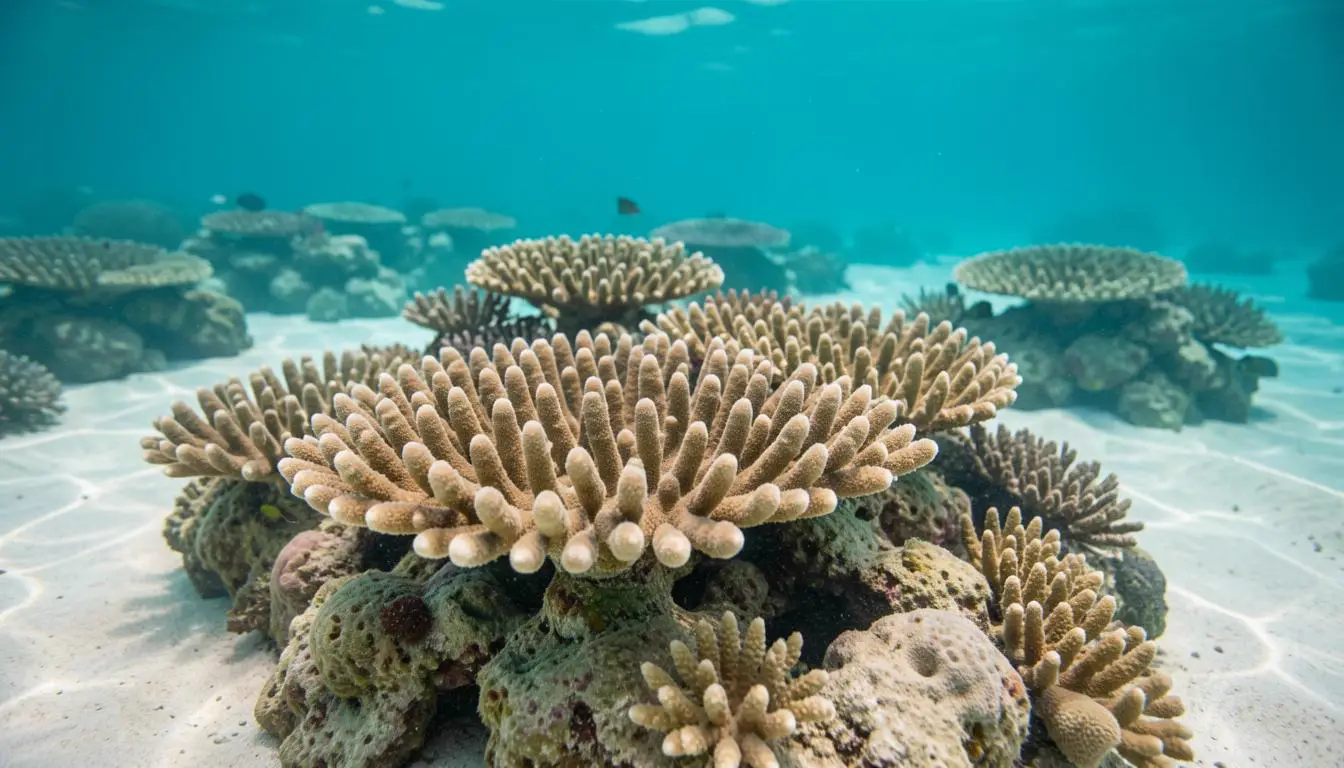
প্রবাল ব্লিচিং, উষ্ণ সমুদ্রের তাপমাত্রার কারণে সৃষ্ট একটি দুঃখজনক ঘটনা, ক্যারিবীয় প্রবাল প্রাচীরের উপর ধ্বংসযজ্ঞ চালিয়ে যাচ্ছে, পিছনে ফেলে যাচ্ছে ভুতুড়ে সাদা 'কবরস্থানের' বিশাল এলাকা। এই অনুসন্ধানে, আমরা এই পরিবেশগত সংকট চালিত সরবরাহ শৃঙ্খল এবং কর্পোরেট পদচিহ্ন উন্মোচন করি এবং এই গুরুত্বপূর্ণ বাস্তুতন্ত্র রক্ষার জন্য কী পরিবর্তন প্রয়োজন তা অন্বেষণ করি।
ক্যারিবীয় অঞ্চলের প্রবাল ব্লিচিং হটস্পটগুলি কোথায়?
ক্যারিবীয় অঞ্চলে প্রবাল ব্লিচিং হটস্পটগুলি জনপ্রিয় পর্যটন গন্তব্য এবং উপকূলীয় উন্নয়নের আশেপাশে কেন্দ্রীভূত। NOAA করাল রিফ কনজারভেশন প্রোগ্রাম (২০২০) এর একটি গবেষণা সবচেয়ে ঝুঁকিপূর্ণ এলাকা হিসেবে ফ্লোরিডা রিফ ট্র্যাক্ট, মেক্সিকান ক্যারিবীয় এবং মেসোআমেরিকান রিফ চিহ্নিত করেছে, যা মেক্সিকো থেকে হন্ডুরাস পর্যন্ত বিস্তৃত।
| অবস্থান | প্রবাল আচ্ছাদন হ্রাস (%) | ব্লিচিং ঘটনা |
|---|---|---|
| ফ্লোরিডা রিফ ট্র্যাক্ট | 50-90 | 3 |
| মেক্সিকান ক্যারিবীয় | 60-80 | 3 |
| মেসোআমেরিকান রিফ | 40-70 | 3 |
প্রবাল ব্লিচিং চালিত সরবরাহ শৃঙ্খল
প্রবাল ব্লিচিংয়ে অবদান রাখা সরবরাহ শৃঙ্খল জটিল এবং এতে বেশ কয়েকটি আন্তঃসংযুক্ত কারণ জড়িত। এই সমস্যার কেন্দ্রে রয়েছে অস্থিতিশীল পর্যটন শিল্প, যা উপকূলীয় উন্নয়নকে জ্বালানি দেয় এবং জলবায়ু পরিবর্তনের প্রভাবকে বাড়িয়ে তোলে।
কর্পোরেশন এবং স্থানীয় সরকারের ভূমিকা
কর্পোরেশন এবং স্থানীয় সরকারগুলি প্রবাল ব্লিচিংয়ে অবদান রাখা সরবরাহ শৃঙ্খল চালনায় গুরুত্বপূর্ণ ভূমিকা পালন করে। অস্থিতিশীল পর্যটন অনুশীলন, যেমন বড় আকারের উন্নয়ন এবং অপর্যাপ্ত বর্জ্য ব্যবস্থাপনা, উপকূলীয় বাস্তুতন্ত্রের উপর প্রচণ্ড চাপ সৃষ্টি করে। অন্যদিকে, স্থানীয় সরকারগুলির প্রায়শই কঠোর নিয়মাবলী প্রয়োগ করার সক্ষমতা বা রাজনৈতিক ইচ্ছার অভাব থাকে।
“ক্যারিবীয় অঞ্চলে পরিবেশগত নিয়মাবলী প্রয়োগের অভাব উদ্বেগজনক। কর্পোরেশন এবং স্থানীয় সরকারের জন্য এই গুরুত্বপূর্ণ বাস্তুতন্ত্রের উপর তাদের প্রভাবের দায়িত্ব নেওয়ার সময় এসেছে।”
কী পরিবর্তন দরকার?
ক্যারিবীয় প্রবাল প্রাচীর বাঁচাতে, আমাদের প্রবাল ব্লিচিং চালিত সরবরাহ শৃঙ্খল মোকাবেলা করতে হবে। এর জন্য একটি বহুমুখী পদ্ধতির প্রয়োজন যার মধ্যে রয়েছে টেকসই পর্যটন অনুশীলন, উপকূলীয় উন্নয়নে কঠোর নিয়মাবলী এবং উচ্চাকাঙ্ক্ষী জলবায়ু পদক্ষেপ। কর্পোরেশন এবং স্থানীয় সরকারগুলিকে তাদের প্রভাবের দায়িত্ব নিতে হবে এবং এই গুরুত্বপূর্ণ বাস্তুতন্ত্র রক্ষায় একসাথে কাজ করতে হবে।
সচরাচর জিজ্ঞাসিত প্রশ্ন
ক্যারিবীয় প্রবাল প্রাচীর রক্ষায় আমি কী করতে পারি?+
টেকসই পর্যটন সমর্থন করুন, উপকূলীয় উন্নয়নে কঠোর নিয়মাবলীর পক্ষে ওকালতি করুন এবং আপনার সরকারের কাছ থেকে উচ্চাকাঙ্ক্ষী জলবায়ু পদক্ষেপ দাবি করুন।
পর্যটন কীভাবে প্রবাল ব্লিচিংয়ে অবদান রাখে?+
পর্যটন উপকূলীয় উন্নয়ন চালায়, যা দূষণ, পলি জমা এবং প্রবাল প্রাচীরের শারীরিক ক্ষতি বৃদ্ধি করে। অতিরিক্তভাবে, পর্যটন শিল্পের কার্বন পদচিহ্ন জলবায়ু পরিবর্তনে অবদান রাখে, যা সমুদ্রের উষ্ণতা এবং প্রবাল ব্লিচিংকে আরও বাড়িয়ে তোলে।
কিছু টেকসই পর্যটন অনুশীলন কী কী?+
পরিবেশবান্ধব বাসস্থান, দায়িত্বশীল স্নরকেলিং এবং ডাইভিং অনুশীলন, সঠিক বর্জ্য ব্যবস্থাপনা এবং স্থানীয়, টেকসই ব্যবসা সমর্থন করা পর্যটনের পরিবেশগত প্রভাব কমাতে সাহায্য করতে পারে।