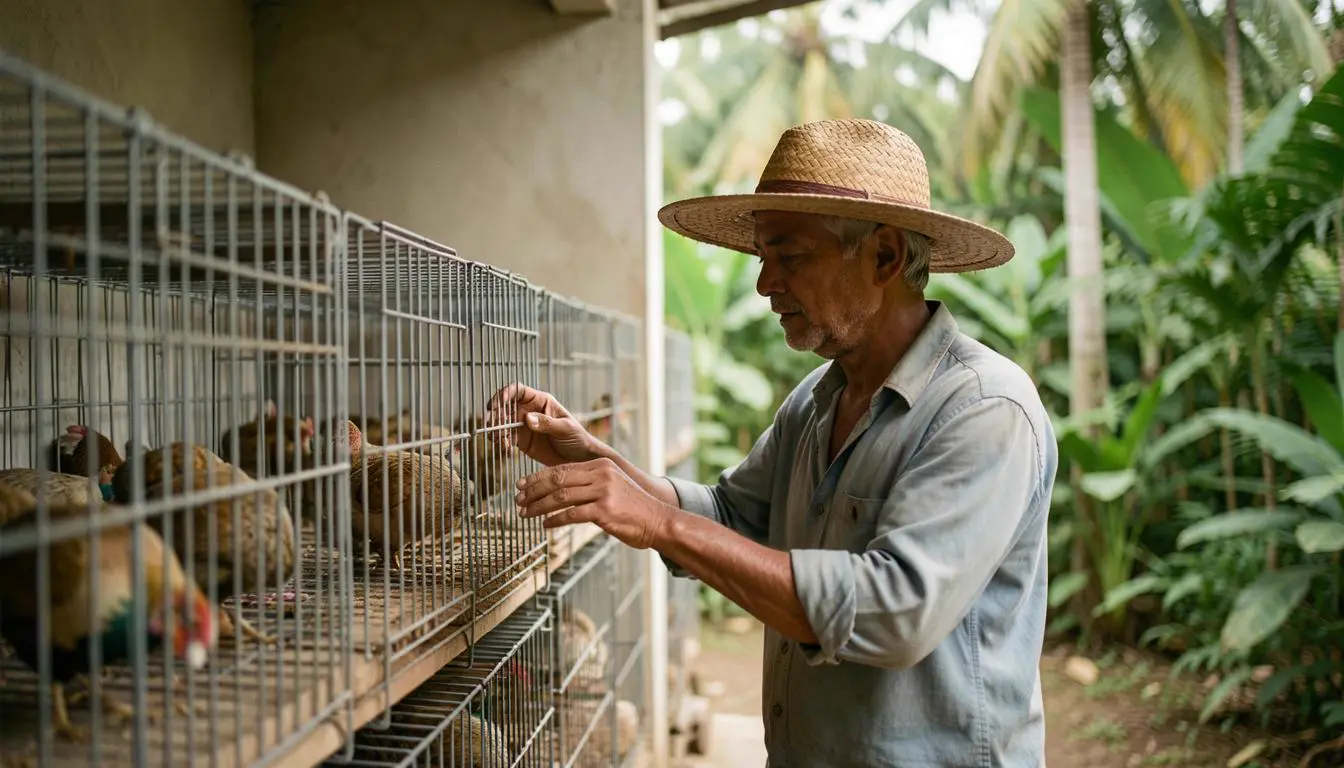
Battery cages in tropical climates are a contentious issue in poultry farming, balancing productivity and animal welfare concerns. This review explores the science behind cages, productivity, welfare, and regulations.
Productivity in tropical climates
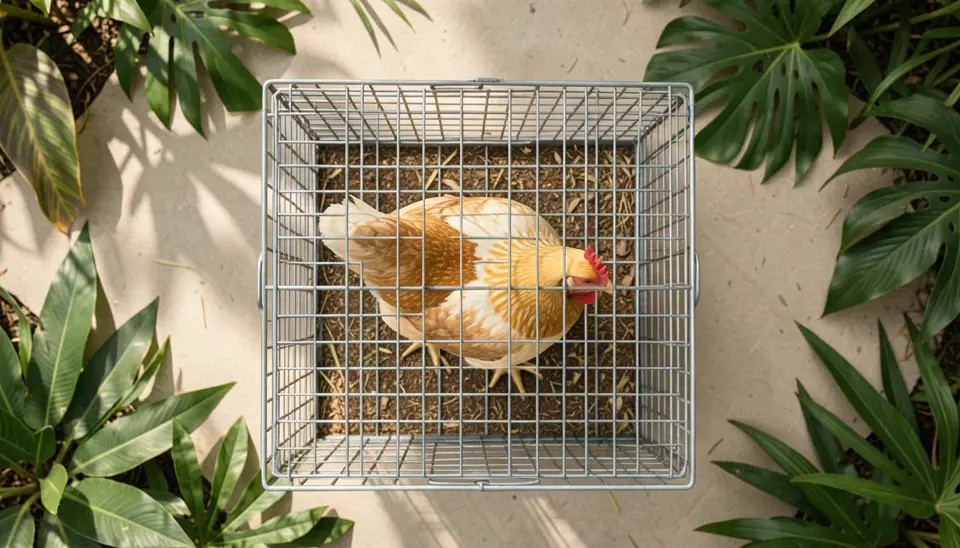
Productivity in battery cage systems in tropical climates varies, with factors like heat stress, humidity, and feed quality impacting egg production and quality.
Egg production in tropical climates
Welfare concerns in tropical climates
Tropical climates exacerbate welfare issues in battery cages, with high temperatures and humidity causing heat stress, reduced feed intake, and increased mortality.
“Heat stress is a significant welfare concern in tropical climates, with hens exhibiting panting, reduced activity, and increased mortality.”
Global standards and regulations
Global organizations like the World Organisation for Animal Health (OIE) and the European Union (EU) have set standards for cage sizes and enrichment to improve hen welfare.
| Region | Cage Size (cm²/bird) | Perch (cm/bird) |
|---|---|---|
| European Union | 750 | 15 |
| United States | 450-670 | 0 |
| OIE Recommendation | 550 | 12 |
Tips for improving welfare in tropical climates
Frequently asked questions
What are the most common welfare issues in battery cages in tropical climates?+
Heat stress, cage size, lack of enrichment, and high stocking densities are the most common welfare issues.
What are the global standards for battery cage sizes?+
The OIE recommends at least 550 cm² of space per hen and 12 cm of perch space per hen, while the EU mandates 750 cm² per hen.