Faharasa
Mada
Maisha ya mimea kwa watu, wanyama na sayari.
- Mada
- 485
- Makala zenye lebo
- 507
- Sehemu
- 8
- Lugha
- 22
Katika sehemu hii
Makala Maalum
Soma Pia
- ustawi wa wanyama6
- vizimba vya uzazi4
- haki za wanyama4
- ustawi wa kuku4
- animal welfare3
- kilimo cha viwanda2
- kilimo cha viwandani2
- ustawi wa nguruwe2
- afya ya umma na nguruwe2
- athari za kilimo cha samaki2
- mabanda ya kuku ya betri2
- jinsi ya kupunguza nyayo za kaboni1
- kupunguza alama ya kaboni1
- athari za kaboni1
- maisha endelevu tanzania1
- kupunguza hewa chafu1
- mazingira na mabadiliko ya tabianchi1
- vidokezo vya kuokoa nishati1
- chakula na mazingira1
- jinsi ya kupunguza matumizi ya plastiki1
- usafiri endelevu afrika mashariki1
- nyayo za kaboni ni nini1
- kupunguza kiwango cha kaboni1
- alama ya kaboni1
- maisha endelevu1
- kupunguza gesi chafu1
- athari za mazingira1
- utunzaji wa mazingira Tanzania1
- jinsi ya kupunguza hewa ukaa1
- mabadiliko ya tabianchi1
- jinsi ya kupunguza alama ya kaboni nyumbani1
- vyakula vyenye kiwango kidogo cha kaboni1
- uchumi wa mzunguko1
- utalii endelevu1
- safari rafiki kwa mazingira1
- kusafiri kwa kuwajibika1
- utalii wa ikolojia ni nini1
- athari za utalii kwa mazingira1
- vidokezo vya kusafiri kijani1
- kupunguza nyayo za kaboni safarini1
- jinsi ya kuwa mtalii anayejali1
- maana ya utalii endelevu1
- greenwashing katika utalii1
- jinsi ya kusaidia wanyamapori nyumbani1
- bustani rafiki kwa wanyamapori1
- kulisha ndege kwa usahihi1
- makazi ya wadudu1
- kulinda bioanuwai nyumbani1
- jinsi ya kuvutia ndege kwenye bustani1
- mimea ya asili kwa wanyamapori Afrika Mashariki1
- hatari za kulisha wanyamapori1
- kuunda makazi kwa wadudu wachavushaji1
- jinsi kuku wa nyama wanavyofugwa1
- ufugaji wa kuku wa kisasa1
- kuku aina ya broiler1
- madhara ya ufugaji wa kuku1
- ustawi wa wanyama kwenye mashamba1
- usugu wa antibiotiki na kuku1
- maisha ya kuku wa nyama1
- kuku wa nyama huishi muda gani1
- nyama ya kuku inazalishwaje1
- vyanzo vya vegan vya iron1
- B12 kwa vegan1
- omega-3 mimea1
- kalsiamu vegan1
- lishe ya mimea yenye afya1
- protini za mimea1
- virutubisho vya vegan1
- faida za kiafya za vegan1
- Mifugo na ukataji miti wa Amazon1
- athari za mifugo Amazon1
- ukataji miti wa Amazon Brazil1
- kilimo cha nyama na misitu1
- ufugaji wa ng'ombe Amazon1
- mifumo ya chakula endelevu1
- nini husababisha ukataji miti Amazon?1
- je, mifugo inachangiaje ukataji miti?1
- mlo wa mimea na chunusi za homoni1
- chakula cha mimea chunusi1
- chunusi za homoni Afrika1
- lishe mimea ukame1
- chunusi tiba asili1
- athari za homoni kwenye ngozi1
- jinsi ya kupunguza chunusi kwa chakula1
- mlo wa mimea unapunguza chunusi?1
- kilimo cha pweza1
- kefalopodi Asia Mashariki1
- ufugaji wa pweza kibiashara1
- mazingira ya bahari1
- kilimo cha viwandani cha pweza1
- athari za kilimo cha pweza1
- biashara ya pweza1
- kilimo cha kamba1
- uharibifu wa mikoko1
- kamba endelevu1
- mazingira ya pwani1
- ufugaji wa kamba1
- athari za kilimo cha kamba1
- kupika kamba nyumbani1
- kamba rafiki kwa mazingira1
- jinsi ya kuchagua kamba endelevu1
- nini uharibifu wa mikoko1
- wanyama kwenye filamu1
- uzalishaji wa TV1
- maadili ya wanyama1
- mgogoro wa chakula1
- gharama za chakula1
- teknolojia ya CGI1
- matumizi ya wanyama burudani1
- je, wanyama wanateseka kwenye filamu?1
- je, kuna njia mbadala kuwapa chakula wanyama?1
- vinu vya watoto wa mbwa Uingereza1
- marufuku ya maduka ya wanyama1
- sheria za ustawi wa wanyama UK1
- kukomesha vinu vya mbwa1
- kununua watoto wa mbwa kimaadili1
- ni nini madhara ya vinu vya watoto wa mbwa?1
- je, Uingereza imepiga marufuku vinu vya watoto wa mbwa?1
- kwanini maduka ya wanyama yanauza watoto wa mbwa?1
- mbadala wa jeli inayotokana na mimea1
- jeli isiyo ya wanyama1
- agar-agar kilimo1
- pectin na wakulima wadogo1
- vyakula vya mimea1
- athari za soko la jeli1
- wanamikia uhamiaji wa mimea1
- ni nini agar-agar1
- je, gellan gum ni salama1
- faida za pectini1
- sentience ya kamba Nigeria1
- ulinzi wa kamba kisheria1
- sheria za ustawi wa wanyama Nigeria1
- maadili ya ustawi wa wanyama baharini1
- haki za kamba Afrika1
- kanuni za ufugaji wa kamba1
- je kamba wana hisia?1
- ulinzi wa wanyama wa baharini Nigeria1
- mifumo ya uzazi nguruwe1
- afya ya umma Tanzania1
- jeraha la wafanyakazi mifugo1
- nguruwe Tanzania1
- usalama kazini mifugo1
- athari za vizimba vya nguruwe1
- azimio la wanahisa ustawi wa wanyama1
- haki za wanyama Pasifiki1
- ushiriki wa wanahisa ustawi1
- maadili ya kampuni Pasifiki1
- kilimo endelevu Pasifiki1
- mashirika ya haki za wanyama1
- azimio la wanahisa ni nini1
- jinsi azimio la wanahisa linavyofanya kazi1
- kampeni za mashirika1
- sheria za wanyama1
- utetezi wa wanyama1
- mabadiliko ya kimfumo1
- kampeni za mabadiliko ya sera1
- utetezi wa biashara1
- shauri la kisiasa1
- mifumo ya nguruwe1
- ustawi wa wanyama nguruwe1
- sheria za kilimo cha nguruwe1
- marufuku ya vizimba vya uzazi1
- uzalishaji wa nguruwe endelevu1
- nchi zenye marufuku vizimba1
- athari za vizimba vya uzazi kwa wazazi1
- kupunguza vifaranga1
- mnyororo wa ugavi wa kuku1
- shinikizo la wanahisa1
- upinzani dhidi ya viuavijasumu1
- hali za wafanyakazi katika nyama1
- gharama ya chakula inaathiri vipi1
- vyakula dhidi ya kuvimba kwa mwili matokeo ya ustawi1
- mlo wa mimea ustawi wa wanyama1
- kuzuia magonjwa sugu lishe1
- maisha marefu na vyakula vya mimea1
- afya ya utumbo mimea1
- jinsi kilimo cha kiwandani kinavyoathiri afya1
- ufugaji wa kuku na kuvimba1
- athari za lishe ya mimea kwa ustawi wa wanyama1
- vyakula vya kuzuia kuvimba1
- ustawi wa mbweha Australia1
- haki za wanyama Australia1
- lebo za ustawi wa mbweha1
- ulinzi wa mbweha1
- mageuzi ya ustawi wa mbweha1
- kilimo cha mbweha Australia1
- ushawishi wa wanyama Australia1
- Je, lebo za ustawi wa mbweha zinaaminika?1
- Ni nini kifanyike kuboresha ustawi wa mbweha Australia?1
- kukomboa nguruwe1
- visiwa vya Pasifiki1
- kukomboa nguruwe kisheria1
- mifumo ya uzazi1
- je, vizimba vya uzazi vimepigwa marufuku?1
- mgogoro wa kutoweka kwa amfibia1
- upinzani dhidi ya vimelea1
- amfibia na dawa1
- upotevu wa bayoanuwai1
- afya ya kimataifa1
- kwanini amfibia wanatoweka1
- athari za kupoteza amfibia1
- uhifadhi wa amfibia Tanzania1
- foie gras1
- uzalishaji wa foie gras1
- kantini za shule1
- ununuzi wa umma1
- sheria za foie gras1
- je, foie gras ina nafasi shuleni?1
- athari za foie gras1
- vizimba vya uzazi policy reform1
- farrowing crates Afrika1
- ustaarabishaji wa wanyama nguruwe1
- kilimo endelevu Afrika1
- maadili ya chakula1
- gharama za chakula Tanzania1
- Jinsi gani naweza kusaidia vizimba vya uzazi?1
- Ni nchi gani zimepiga marufuku vizimba vya uzazi?1
- kukutana na mapenzi bila nyama1
- kukutana bila nyama mitandaoni1
- uchumbianaji wa vyakula vya mimea1
- lifestyle ya mimea1
- maisha ya mimea na mapenzi1
- kupata mpenzi bila nyama1
- je, ni rahisi kupata mpenzi wa mboga?1
- je, single za mboga hupatana vipi?1
- mlo wa mimea na kolesteroli1
- kolesteroli Uingereza1
- afya ya moyo mimea1
- lishe ya mimea1
- kupunguza kolesteroli1
- vyakula vya mimea UK1
- mlo usio na nyama1
- faida za mlo wa mimea UK1
- kuzuia magonjwa ya moyo1
- Ufuatiliaji wa homa ya nguruwe1
- maadili ya kilimo cha nguruwe1
- ustawi wa wanyama kiwandani1
- kilimo cha nguruwe kibiashara1
- ushiriki wa raia1
- data ya magonjwa ya wanyama1
- je, ufuatiliaji ni wa maadili?1
- bata mashamba viwandani1
- ustawi wa bata1
- maisha asilia ya bata1
- kilimo cha bata1
- mazingira ya bata kiwandani1
- kilimo cha viwanda dhidi ya asili1
- je, bata hustawi shambani?1
- athari za kilimo cha viwanda kwa bata1
- mayai ya kuku yanayofugwa kwa malisho1
- mianya ya mayai ya kuku1
- alama ya 'pasture-raised'1
- ukaguzi wa mayai ya kuku1
- udanganyifu wa viwanda vya mayai1
- je, mayai ya 'pasture-raised' ni halisi?1
- kanuni za ufugaji wa kuku wa malisho1
- alama za ustawi wa kondoo1
- kilimo cha viwandani kondoo1
- maadili ya kondoo1
- haki za wanyama kondoo1
- mageuzi kilimo cha kondoo1
- viwango vya ustawi wa kondoo1
- sheria za kondoo1
- ukaguzi wa ustawi wa kondoo1
- kufuga kondoo bila mateso1
- kilimo cha trout Afrika Magharibi1
- ustawi wa samaki Afrika Magharibi1
- safari za mimea Afrika Magharibi1
- chakula cha mimea Ghana1
- mazingira ya samaki Afrika1
- je, kuna kilimo cha trout Afrika?1
- chaguo za samaki endelevu1
- maadili ya kidini1
- mifumo mbadala ya ufugaji1
- athari za vizimba vya uzazi1
- je, vizimba vya uzazi vinaendana na mafundisho ya kidini?1
- jinsi ya kupunguza matumizi ya vizimba vya uzazi?1
- upunguzaji midomo1
- upunguzaji midomo wa kuku1
- madhara ya wafanyakazi viwandani1
- hatari za afya ya umma1
- kilimo cha kuku viwandani1
- ustawi wa wanyama shambani1
- je, upunguzaji midomo una madhara?1
- upunguzaji midomo ni nini?1
- RSPCA Assured1
- kashfa za RSPCA Assured1
- kilimo cha kaskazini1
- kilimo endelevu1
- mabadiliko ya kilimo1
- mashamba ya maziwa1
- shayiri mbadala1
- ustawi wa wanyama kilimo1
- mabadiliko kutoka kilimo cha mifugo1
- utunzaji wa wanyama wadogo wanaoishi kwa mimea1
- kampeni ya utetezi wa wanyama1
- lishe ya sungura ya mimea1
- maisha ya mimea kwa wanyama1
- ustawi wa wanyama wadogo1
- jinsi ya kutetea wanyama1
- faida za lishe ya mimea kwa sungura1
- mikakati ya kampeni ya wanyama1
- bei halisi tilapia1
- tilapia mashambani viwanda Afrika Magharibi1
- gharama za uzalishaji wa tilapia1
- ustawi wa tilapia1
- ufugaji wa tilapia viwandani1
- je, ufugaji wa tilapia ni endelevu1
- athari za kimazingira za tilapia1
- California Prop 121
- sheria za ustawi wa wanyama1
- matatizo ya ulaji1
- kupona matatizo ya ulaji1
- sekta ya nyama1
- wanyama wa shamba1
- sheria za ulinzi wa wanyama1
- Marekani1
- California1
- hatari ya magonjwa ya zoonotiki1
- haki za mazingira na wanyama1
- ustawi wa wanyama na afya ya umma1
- kilimo cha viwandani na magonjwa1
- je mabanda ya kuku ni ya kimaadili1
- magonjwa ya zoonotiki kutoka kwa kuku1
- mazingira na ufugaji wa kuku1
- njia mbadala za mabanda ya kuku1
- ushahidi wa kisayansi mabanda ya kuku1
- alama za ustawi wa wanyama1
- mayai ya kuku wa malisho1
- mlo wa mimea1
- kupunguza mahitaji ya nyama1
- alama za kudanganya1
- greenwashing1
- maamuzi ya chakula1
- jinsi ya kuchagua mayai kwa maadili1
- cellular agriculture climate1
- cellular meat environmental impact1
- climate change solutions1
- lab-grown meat myths1
- cellular agriculture benefits1
- teeth clipping stories1
- food culture adaptation1
- first-generation immigrants1
- rescue sanctuary1
- cultural exchange1
- vegan recipes1
- cultural identity1
- cultural preservation1
- bullfighting bans West Africa1
- animal rights advocacy West Africa1
- ethical farming practices Africa1
- sustainable livestock farming Africa1
- West African cultural shifts animal welfare1
- mgogoro wa afya ya akili mashamba ya kuku1
- mashamba ya kuku ya mkataba1
- afya ya akili wakulima viwanda1
- muungano wa wakulima wenye mashaka1
- hali ya kazi mashamba ya kuku1
- dhiki ya kazi ya kuku1
- jinsi ya kusaidia wakulima wa kuku1
- mkataba wa kuku na afya ya akili1
- mashamba ya kuku viwanda Afrika Mashariki1
- mbadala wa mchuzi wa samaki1
- mchuzi wa samaki asilia1
- mboga za baharini kula mimea1
- mbadala wa dagaa1
- mapishi ya vegan1
- kurejesha ardhi1
- fursa za ufugaji wa ardhi1
- mchuzi wa samaki unaotokana na mimea1
- jinsi ya kutengeneza mchuzi wa samaki wa vegan1
- mbadala wa mchuzi wa samaki kwa afya1
- kukata mkia wa nguruwe1
- ukweli dhidi ya hadithi1
- ufugaji wa nguruwe viwandani1
- Ramadan mlo wa mimea1
- Lent vegan1
- Yom Kippur kufunga1
- Ekadashi chakula1
- antibiotic resistance1
- maadili ya kidini na wanyama1
- Misadi ya Uchumi wa Samaki1
- Uhuru wa Wanyama1
- Sheria ya Kupunguza Vizimba vya Uzazi1
- Misadi Asili ya Uchumi wa Samaki1
- Uchumi wa Samaki Mpya1
- Mapungano ya Misadi ya Uchumi wa Samaki1
- Ukuaji bila pamoja1
- Hasara za afya1
- Wanyama1
- Mlima wa Kaskazini1
- Uungwana wa wanyama1
- Athari za afya1
- Mlo wa Pulled Pork wa Mimea1
- Mipaka ya Mlo wa Nyama1
- Mimea ya Pulled Pork1
- Samaki ya Pulled Pork1
- Fugaji ya Mimea1
- Matatizo ya Malipo1
- kulewa nguruwe kwa CO21
- mianya ya kisheria kilimo cha viwandani1
- mateso ya nguruwe1
- CO2 pig stunning1
- sheria za kuchinja nguruwe1
- je, nguruwe wanateseka wakati wa kulewa kwa CO2?1
- nchi gani zinaruhusu kulewa kwa CO2?1
- njia mbadala za kulewa nguruwe1
- mbadala wa nyama visiwani1
- nazi mbadala wa nyama1
- protini ya mimea visiwa1
- mnyororo wa ugavi wa nazi1
- kilimo cha nazi Pasifiki1
- faida za nazi kwa afya1
- je nazi ina protini nyingi?1
- nazi dhidi ya nyama1
- chakula cha mimea visiwani1
- mbadala wa nyama kwa wakazi wa visiwa1
- Mkataba wa Bahari Kuu1
- uhifadhi wa bahari1
- uwekezaji wa kijani1
- viumbe hai vya baharini1
- uchumi wa buluu1
- sheria za bahari1
- Mkataba wa BBNJ1
- jinsi ya kuanza kuwekeza baharini1
- Mkataba wa Bahari Kuu ni nini?1
- ustawi wa kuku wake1
- maisha asilia ya kuku1
- mipaka ya sheria ya wanyama1
- kuku wanawake1
- mipaka ya uchumi1
- kifua cha ustawi wa wanyama1
- read nutrition panel1
- food desert nutrition1
- healthier choices1
- nutrition labels1
- food deserts1
- healthy eating1
- nutrition guide1
- expert tips1
- Culled dairy cows Caribbean1
- Zoonotic diseases history1
- Animal rights advocacy Caribbean1
- Dairy farming policies Caribbean1
- Culled dairy cows risk factors1
- EU factory farming dehorning1
- shareholder pressure animal welfare1
- dehorning regulations EU1
- sustainable alternatives dehorning1
- dehorning animal rights movement1
- school meals emissions1
- carbon footprint of school meals1
- climate change school meals1
- citizen science data analysis1
- reducing emissions school meals1
- school meal emissions data1
- climate friendly school meals1
- school meals environmental impact1
- greyhound racing1
- subsidies in racing1
- Farm Bill1
- CAP1
- PDO1
- greyhound adoption1
- why end greyhound racing1
- greyhound racing regulation1
- greyhound racing facts1
- Pound Seizure1
- Dairy Industry1
- Health Impacts1
- Plant-Based Replacement1
- Five-Year Retrospective1
- Dairy Products1
- Calcium and Vitamin D1
- Long-Term Effects1
- Industrial Farming1
- Regulatory Bodies1
- Nutrition and Health1
- Tasmanian Devil Facial Tumour Disease, Canadian Wildlife Conservation, Wildlife campaign, 30/60/90-day plan, Revive Tasmanian devil1
- Trawling Australia1
- Seafloor destruction1
- Marine ecosystem1
- Sustainable fishing1
- Illegal fishing Australia1
- Deep-sea mining Australia1
Mwanzo wenye manufaa · index
Kuelewa picha kubwa
Uandishi mzuri wa mazingira hukusaidia kuelewa, kuchunguza dai na kuchagua hatua inayofuata. Tunaunganisha ushahidi, muktadha na njia za vitendo bila kubadilisha masuala magumu kuwa kauli mbiu.
Ushahidi
Utafiti kwanza
Muktadha
Imeunganishwa
Hatua inayofuata
Ya vitendo
Jinsi ya kutumia sehemu hii
| Anza na | Utapata | Inafaa kwa |
|---|---|---|
| The overview | A clear answer and the essential terms | First-time readers |
| The evidence | Sources, comparisons and reported context | Checking a claim |
| The pathways | Related topics, tools and further reading | Going deeper |
Maswali yanayoulizwa mara kwa mara
Is this information opinion or reporting?
We separate evidence, interpretation and practical guidance. Claims should be traceable to research, public records or clearly identified editorial analysis.
Can one choice solve these problems?
No. Food systems, animal welfare and climate are connected systems. Individual choices matter, and so do policy, business and collective action.
Where should I continue?
Use the related topics, topic hubs and calculators on this page to move from a quick answer to the primary context behind it.
Muktadha wa kina
Ushahidi nyuma ya mfumo wa chakula
Animal agriculture sits at the intersection of climate, land use, water, public health and animal welfare. These reference points recur across our reporting, so we keep them in one place: the numbers most often cited, the way we read a claim, the myths that survive longest, and the vocabulary you need to follow the debate in any language.
Takwimu za msingi
- ~80 billion
- land animals farmed and slaughtered each year worldwide
- ~14.5%
- share of global greenhouse gas emissions linked to livestock supply chains
- ~77%
- of agricultural land used for grazing and feed production
- ~70%
- of freshwater withdrawals worldwide go to agriculture
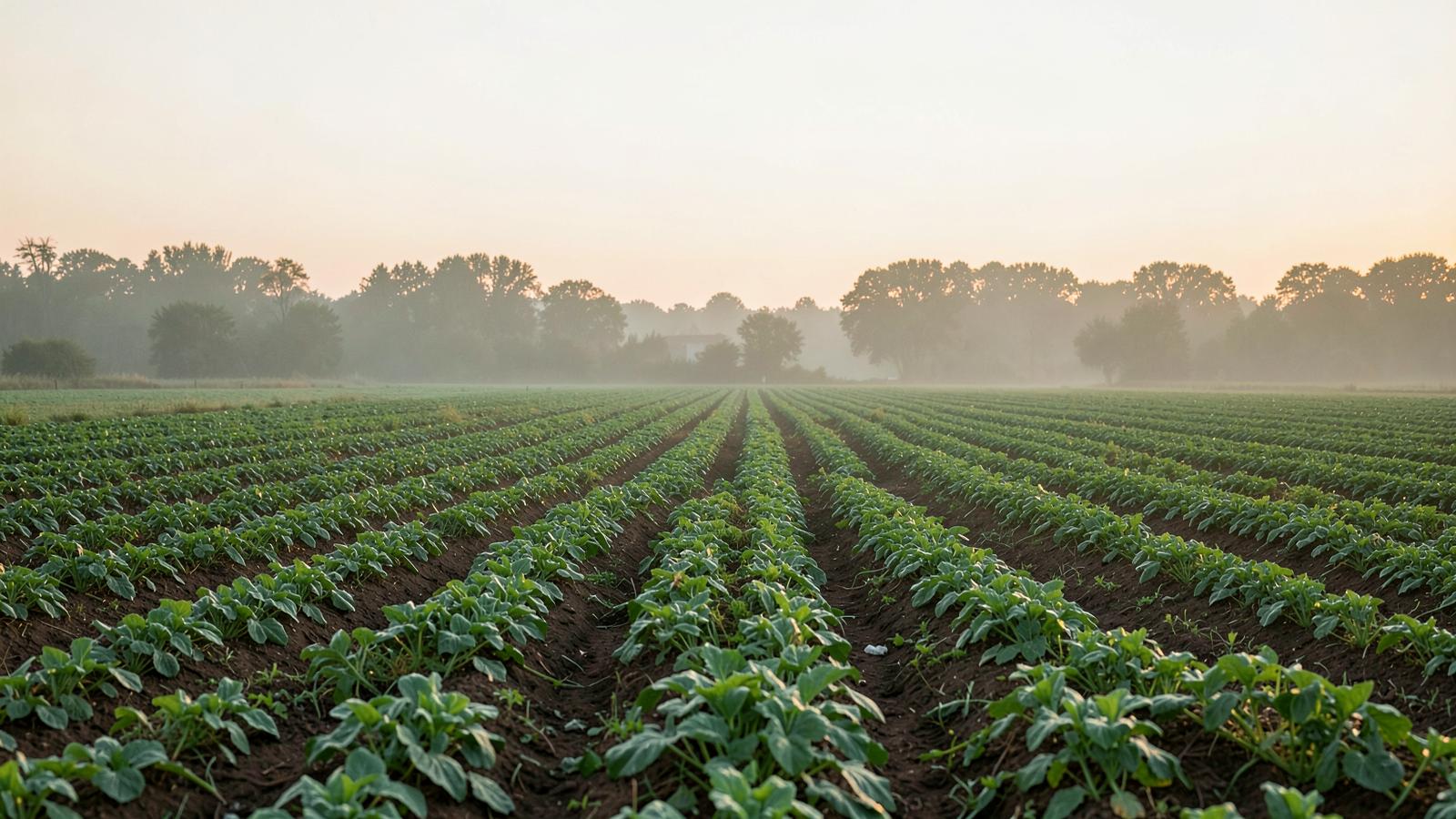
Ardhi ndiyo kiini
Roughly three quarters of global farmland is used for livestock, yet it supplies a minority of the world's calories. Shifting even part of that land back to crops, forest or wetland is the single largest lever most countries hold.
Hatua tano za kuchunguza dai
- 01Find the original sourceTrace the figure back to a study, dataset or public record rather than a headline restating it.
- 02Check the boundaryAsk what the number counts: farm gate only, or land use, feed, transport and processing too.
- 03Compare like with likePer kilogram, per gram of protein and per calorie can point in different directions.
- 04Look for the rangeCredible estimates come with uncertainty; a single precise-sounding figure often hides it.
- 05Ask who is affectedAnimals, workers, neighbouring communities and future readers all carry part of the cost.
Imani potofu na ushahidi
| Dai la kawaida | Ushahidi unaonyesha | Kwa nini ni muhimu |
|---|---|---|
| Local food is always the lowest-carbon choice | Transport is a small share of most food footprints; what is produced matters more than how far it travelled. | It redirects effort towards the choices with real leverage. |
| Plant-based eating cannot meet protein needs | Legumes, grains, soy foods, nuts and seeds cover protein and amino-acid needs in well-planned diets at every life stage. | Nutrition myths keep people from a change they were open to. |
| Higher-welfare labels mean animals are not harmed | Label standards vary widely and many permit routine practices readers would not expect. | Informed choices depend on knowing what a label actually certifies. |
| Individual choices are irrelevant next to policy | Demand shifts change what is produced, funded and legislated; the two move together. | It replaces fatalism with something you can act on this week. |
Msamiati wa mjadala
- Factory farming
- Intensive confinement systems that maximise output per animal and per unit of space.
- Life-cycle assessment
- A method that totals environmental impact across every stage of a product's life.
- Sentience
- The capacity to feel, perceive and experience — the basis of most animal-welfare law.
- Land-use change
- Conversion of forest, grassland or wetland into farmland, and the emissions it releases.
- Food-system resilience
- How well supply survives drought, disease and price shocks.
- Just transition
- Policy that protects farmers and workers while production shifts.
Kutoka ushahidi hadi maisha ya kila siku
Hii inaonekanaje sahanini
Numbers describe the system; meals, votes and purchases are how most people meet it. This field guide turns the reporting into concrete swaps, a four-week plan and the signals worth watching, so a page of research becomes something you can act on this week without pretending the hard parts are simple.
Mabadiliko yenye athari kubwa
| Badala ya | Jaribu | Kwa nini ni muhimu |
|---|---|---|
| Beef mince | Lentils, beans or soy mince | Beef carries by far the highest emissions and land use per gram of protein. |
| Dairy milk | Soy or pea milk | Comparable protein with a fraction of the land, water and emissions. |
| Cheese in daily meals | Nut or seed-based spreads, cashew cheese | Cheese is the most resource-intensive dairy product per kilogram. |
| Chicken and eggs | Tofu, tempeh, chickpeas | Removes the welfare cost of the most intensively farmed animals. |
| Farmed shrimp and salmon | Beans, jackfruit, seaweed-seasoned dishes | Avoids mangrove loss, bycatch and wild fish used as feed. |
| Butter | Olive or rapeseed oil | Lower emissions per kilogram and better cardiovascular profile. |
Mpango wa wiki nne unaodumu
Most people who change their diet permanently do it gradually, one meal slot at a time, keeping the food they already like at the centre.
- 01Week 1 — breakfastChange the meal with the fewest variables: swap milk, add fruit, keep everything else identical.
- 02Week 2 — three dinnersCook three plant-based dinners you already know how to make well, rather than new recipes.
- 03Week 3 — restockRebuild the cupboard around pulses, grains, tinned tomatoes, nuts and frozen vegetables.
- 04Week 4 — eating outFind two reliable options near work or home, so social meals never become the failure point.
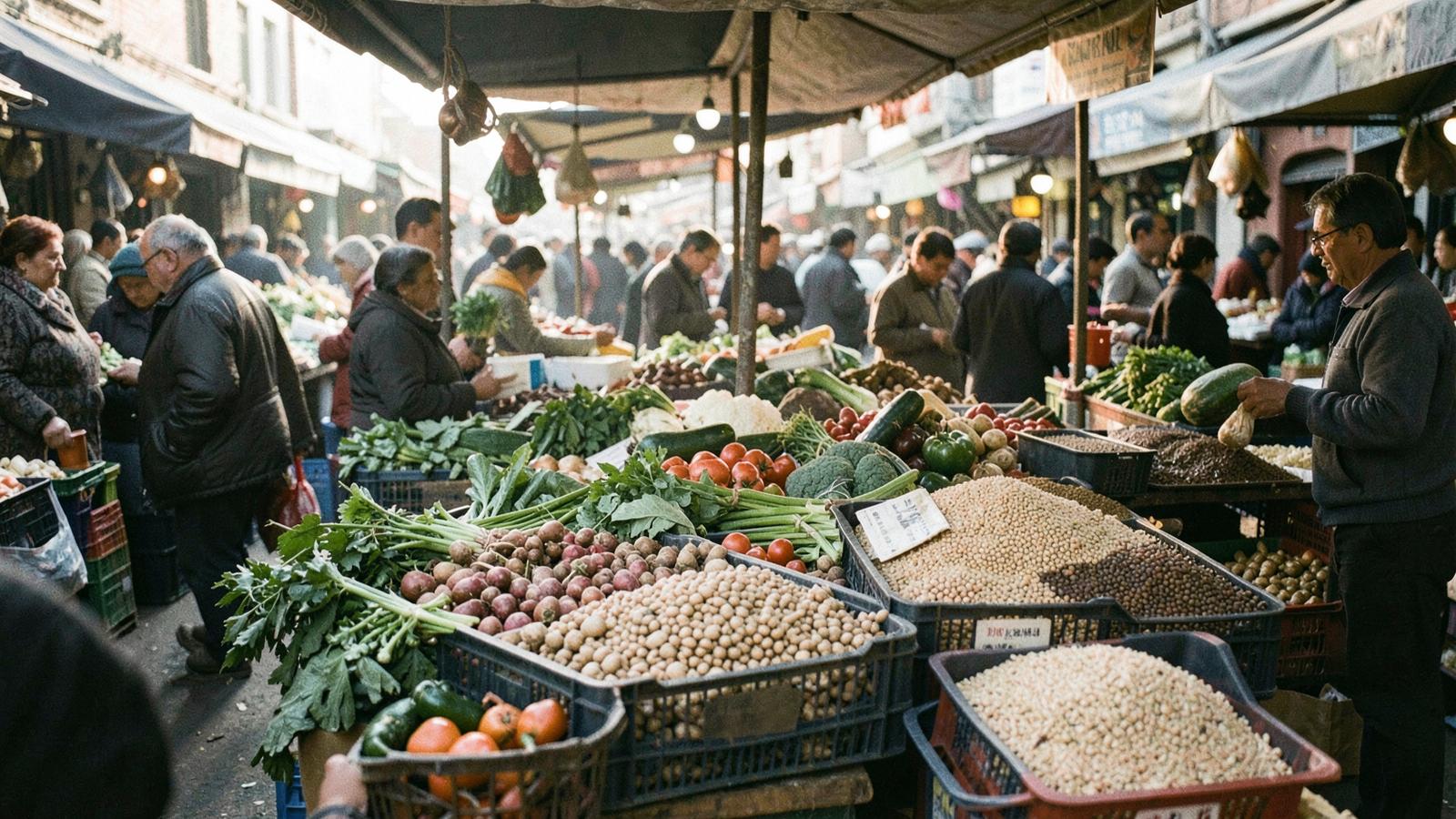
Mahali mabadiliko yanapoonekana
Markets are the clearest place to watch demand shift: as pulses, grains and vegetables take more shelf space, producers, buyers and policy follow the money rather than the argument.
Ishara za kufuatilia
- Retail shelf shareHow much space plant-based products hold is a better indicator than launch announcements.
- Cage and crate bansLegislation on confinement moves faster than diet change and affects billions of animals.
- Feed-crop areaLand planted for animal feed shows whether production is actually shifting.
- Institutional menusSchools, hospitals and canteens change the default meal for millions at once.
- Price parityWhen plant-based costs the same or less, adoption stops depending on conviction.
- Transparency rulesLabelling and inspection records determine what the public can even see.
Maswali ya vitendo
- Do I have to change everything at once?
- No. Reducing the most resource-intensive foods most often — beef, cheese and farmed fish — produces most of the measurable effect, and partial changes maintained for years outperform strict changes abandoned in a month.
- Is plant-based eating more expensive?
- Staples such as lentils, beans, rice, oats, seasonal vegetables and tofu are among the cheapest sources of protein and calories. Cost rises mainly with processed meat substitutes, which are optional.
- What about nutrients like B12, iron and omega-3?
- A B12 supplement is standard advice for anyone eating mostly or entirely plant-based. Iron comes from legumes, tofu and greens, absorbed better with vitamin C; omega-3 from flax, walnuts, chia or an algae supplement.
- Does any of this reach the animals themselves?
- Demand determines how many animals are bred, and legislation determines how they are kept. Reporting tracks both because neither works alone.
How the system actually works
A map of the food system this newsroom covers
Most coverage of animals, diets and climate arrives as isolated stories: a slaughterhouse investigation, a methane figure, a supermarket launch. They belong to one system with a small number of decision points. This map sets out that system stage by stage — who owns each step, where animals enter it, what the public can see, and which levers have historically moved it — so every article on this site can be read in context rather than as an isolated shock.
Stage by stage, from field to plate
Animal agriculture is a chain of separate businesses. Pressure applied at one link rarely stays there; it moves upstream to feed and land, or downstream to retail and price.
| Stage | What happens | Where the leverage sits |
|---|---|---|
| Land and feed | Soy, maize and grass are grown to feed animals, using roughly three quarters of agricultural land worldwide. | Deforestation rules, feed-import standards, and any fall in demand for animal products. |
| Breeding | Genetics companies supply fast-growing birds and high-yield dairy lines used across most of the industry. | Growth-rate standards; welfare commitments that specify breed, not just space. |
| Rearing | Animals are housed at density, typically indoors, with confinement systems that vary by species and country. | Cage, crate and stocking-density law — the fastest-moving area of animal legislation. |
| Transport and slaughter | Live animals move to centralised plants; a small number of companies process most of the volume. | Journey-time limits, CCTV and inspection rules, stunning requirements. |
| Processing and brands | Meat and dairy become branded products, with margins concentrated in processing rather than farming. | Labelling law, marketing claims, and corporate sourcing commitments. |
| Retail and food service | Supermarkets, canteens and restaurants set the default meal for most people most days. | Shelf share, menu defaults, procurement contracts and price parity. |
| The plate | Households choose within the range and prices the previous stages allow. | Repeat purchases, which retailers track far more closely than surveys. |
Who actually decides
Individual choices matter, but they are amplified or blunted by a handful of institutions that set defaults for millions of meals at a time.
- Supermarket buyersA handful of buyers decide what fills the shelves of an entire country, and their sourcing standards travel back up the chain to farms.
- Public procurementSchools, hospitals, prisons and armed forces buy meals in bulk; changing the default menu shifts millions of meals without asking anyone to change their mind.
- Regulators and inspectorsWhat can be documented determines what can be enforced. Inspection frequency and CCTV rules decide whether standards exist on paper or in practice.
- Subsidy designAgricultural support still flows mainly to animal products and feed crops, keeping prices below what the resource use would otherwise imply.
- Investors and lendersFinancing terms for new sheds, expansions and processing capacity set the size of the industry a decade ahead.
- Courts and citizen initiativesReferenda, lawsuits and ballot measures have repeatedly delivered confinement bans that legislatures would not pass on their own.
Land is the quiet variable
Most farmland on earth feeds animals rather than people directly. That single fact explains why diet, deforestation, wildlife loss and climate keep turning up in the same story.
The same system, different pressure points
| Region | What shapes outcomes there |
|---|---|
| European Union | Confinement law and labelling lead globally; the unresolved question is imported animal products produced to lower standards. |
| United States | State ballot measures drive welfare change while federal rules lag; litigation over interstate sales is the recurring battleground. |
| Brazil and South America | Feed-crop expansion and cattle ranching sit at the interface with forest loss, making land use the decisive issue. |
| China and East Asia | Rapid growth in intensive production alongside fast-growing plant-based and cultivated protein investment. |
| India and South Asia | The world's largest dairy sector, where welfare questions centre on cattle, transport and the fate of male calves. |
| Sub-Saharan Africa | Smallholder systems dominate today; whether intensive models are imported is still an open decision. |
What has already changed
Change in this system is slow, then sudden. These are the shifts that repeat across countries once they start.
- 01Battery cagesBans moved from single countries to whole blocs, then to corporate commitments covering supply chains beyond the law.
- 02Sow stalls and veal cratesRestricted in a growing list of jurisdictions once footage made routine confinement visible to voters.
- 03Plant-based milkMoved from specialty shelf to standard option in cafés and supermarkets within roughly a decade.
- 04Slaughterhouse CCTVIntroduced after undercover footage, converting sporadic scandal into continuous documentation.
- 05Deforestation-linked feedImport rules now require supply-chain evidence, tying European diets to land use elsewhere.
- 06Institutional menusCities and universities adopting plant-based defaults have produced the largest single-decision emissions cuts in catering.
How to read a claim about farming or diets
Most disputes come down to a handful of recurring tricks. Running a claim through these questions resolves the majority of them.
- Per what?Impacts per kilogram, per gram of protein and per calorie tell different stories. Ask which one is being used and why.
- Whose average?A best-case farm is not a national average, and a national average is not the global one behind imported products.
- Who funded it?Industry-funded studies are not automatically wrong, but disclosure changes how much weight a single result deserves.
- Legal or actual?A practice being legal says nothing about how common it is; enforcement records are the better source.
- Is the comparison fair?Comparing a processed substitute to a raw ingredient, or a farm to a factory, usually smuggles in the conclusion.
- What would change your mind?Claims that no evidence could falsify are advocacy, from any direction, and should be read as such.
Questions readers ask about the system
- Is factory farming the exception or the norm?
- It is the norm. The large majority of farmed land animals worldwide are raised in intensive systems; extensive and pasture-based farming accounts for a small share of total production, even where it dominates the imagery used to sell it.
- Why does land use matter so much?
- Around three quarters of agricultural land supports animal products that supply a minority of global calories and protein. Land is therefore the link between diets, deforestation, wildlife decline and climate targets.
- Do welfare reforms slow down bigger change?
- The evidence does not support that trade-off. Jurisdictions that banned confinement systems have generally also seen the fastest growth in plant-based alternatives, because both follow the same shift in public attention.
- Can individual choices matter in a system this large?
- Individually they are small; in aggregate they are the demand signal every other stage responds to. The measurable effects come from sustained changes across many people, and from the institutions that set default meals.
- Where does this newsroom get its figures?
- From peer-reviewed research, government inspection and production data, and named organisations. Where estimates are contested, articles say so and give the range rather than the most striking number.