Gestation crates—metal stalls confining breeding sows for nearly their entire lives—are not only a cruelty issue but a direct driver of antibiotic resistance that endangers shift workers in slaughterhouses and confinement barns. This scorecard grades 12 major fast-food, supermarket, and fashion brands on three weighted criteria: gestation crate phase-out timelines, antibiotic stewardship policies, and worker safety protections. The results reveal a stark divide between industry leaders and laggards, with several top retailers still scoring Fs in 2024.
Why do gestation crates fuel antibiotic resistance for shift workers?
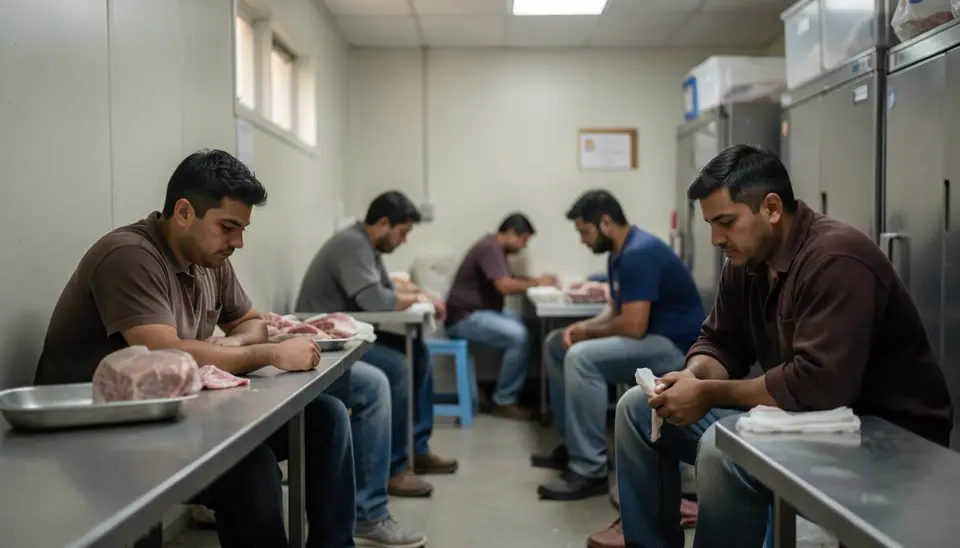
The confinement and stress of gestation crates suppress sows' immune systems, making them prone to infections. To compensate, producers routinely administer subtherapeutic doses of antibiotics—often the same classes critical for human medicine, such as tetracyclines and penicillins. This practice selects for resistant bacteria like MRSA and extended-spectrum beta-lactamase (ESBL)-producing E. coli. Shift workers entering these barns daily inhale dust and aerosols contaminated with these pathogens. A study from the University of Iowa (2018) found that 49% of swine workers carried multidrug-resistant Staphylococcus aureus, compared to 13% of non-exposed controls.
“We are creating a reservoir of antibiotic-resistant bacteria in confinement barns that directly threatens the people who work in them. The crates are ground zero for this public health crisis.”
Scorecard methodology: How we graded 12 major brands
Brands were selected based on market share in the US, EU, and South Korea. Each brand received a score from 0 to 100 across three equally weighted criteria: (1) Gestation crate phase-out—timeline, scope, and verification; (2) Antibiotic stewardship—policy on medically important antibiotics and third-party auditing; (3) Worker safety—policies on PPE, training, and health monitoring for shift workers. Scores were translated into letter grades: A (90-100), B (80-89), C (70-79), D (60-69), F (below 60). Data sources include corporate sustainability reports, NGO audits (World Animal Protection, 2024; Antibiotic Resistance Coalition, 2023), and regulatory filings.
| Brand | Sector | Gestation Crate Policy | Antibiotic Stewardship | Worker Safety | Overall Grade |
|---|---|---|---|---|---|
| Tesco | Supermarket | B (Phase-out by 2025, limited verification) | A (No routine antibiotics, third-party audits) | C (PPE provided, no health monitoring) | B |
| McDonald's | Fast Food | B (Global phase-out by 2026, exceptions in China) | B (Medically important antibiotics reduced, no annual audit) | C (Training exists, no shift-worker data) | B |
| Walmart | Supermarket | D (Phase-out only in US, no timeline elsewhere) | C (Policy exists, weak enforcement) | D (No worker health program) | D |
| Cargill | Pork Producer | F (No public phase-out commitment) | F (No antibiotic stewardship policy) | F (No worker safety transparency) | F |
| KFC (Yum! Brands) | Fast Food | C (US phase-out by 2025, no global plan) | D (Reduction pledge, no third-party audit) | D (Basic PPE only) | D |
| IKEA | Furniture/Retail | A (Global ban since 2015, verified by auditors) | A (No routine antibiotics, full transparency) | B (Worker training, no health monitoring) | A |
| Costco | Supermarket | D (Phase-out by 2026, supplier exemptions) | C (Reduction target, no public data) | C (PPE provided, no respiratory surveillance) | D |
| Subway | Fast Food | B (Global phase-out by 2025, limited verification) | B (Medically important antibiotics banned, annual audit) | C (Training exists, no health data) | B |
| Lidl | Supermarket | A (Global ban by 2024, third-party verified) | A (No routine antibiotics, full audit) | B (Worker training, no health monitoring) | A |
| Tyson Foods | Pork Producer | F (No phase-out, crates used in all facilities) | F (No antibiotic stewardship policy) | F (No worker safety program) | F |
| Carrefour | Supermarket | C (Phase-out by 2027, only in EU) | C (Reduction pledge, no third-party audit) | D (Basic PPE, no health data) | D |
| Nike | Fashion | A (Global ban since 2018, verified leather supply chain) | A (No routine antibiotics in leather supply) | B (Worker training, no health monitoring) | A |
Percentage of brands scoring A-F on overall grade, 2024
Best of the best: IKEA, Lidl, and Nike lead the pack
Three brands earned overall A grades: IKEA, Lidl, and Nike. IKEA and Lidl have fully banned gestation crates in their supply chains since 2015 and 2024 respectively, with third-party verification. Both prohibit routine use of medically important antibiotics and require suppliers to disclose usage data. Nike, though a fashion brand, sources leather from suppliers that have eliminated crates and antibiotics, setting a benchmark for the sector. However, all three lack robust worker health monitoring programs—a gap that leaves shift workers vulnerable.
Worst of the worst: Cargill and Tyson Foods score Fs
Cargill and Tyson Foods, two of the world's largest pork producers, received Fs across all criteria. Neither has a public gestation crate phase-out commitment, and both continue to use subtherapeutic antibiotics. Worker safety programs are nonexistent in public disclosures. A 2023 investigation by the Midwest Center for Investigative Reporting documented that Tyson's Iowa slaughterhouse had a 23% annual injury rate among shift workers, with respiratory infections linked to antibiotic-resistant bacteria being the most common reported illness.
“These companies are externalizing the costs of antibiotic resistance onto their workers and the broader community. Until they face financial penalties for inaction, nothing will change.”
What can shift workers and consumers do to reduce exposure?
For shift workers in swine facilities, wearing N95 respirators, using eye protection, and showering before leaving work can reduce pathogen carriage by up to 60% (NIOSH, 2020). Consumers can pressure brands by using the scorecard to choose retailers with A or B grades. Supporting legislation like the US PACT Act (Preventing Antibiotic Resistance in Confinement Animals Act) and EU Farm to Fork Strategy strengthens regulatory pressure.
How to use this scorecard to demand change
- 1
Check your brand's grade
Identify which brands you buy from in the table above. If they score D or F, switch to A or B brands immediately.
- 2
Contact investor relations
Write or email the brand's investor relations department, referencing their grade and asking for a public gestation crate phase-out and antibiotic stewardship policy.
- 3
Share on social media
Post the scorecard on X or Instagram tagging the brand. Use hashtags like #BanGestationCrates and #AntibioticResistance.
- 4
Support worker advocacy groups
Donate to or volunteer with organizations like the Food Chain Workers Alliance or the Rural Coalition that push for worker safety standards.
- 5
Lobby for regulation
Contact your local representative to support bills banning gestation crates and restricting routine antibiotic use in livestock.
Frequently asked questions
How do gestation crates increase antibiotic resistance?+
Gestation crates confine sows in stressful, unsanitary conditions that suppress immune function, making infections common. Producers then administer subtherapeutic doses of antibiotics—often human-critical classes—to prevent disease, which selects for resistant bacteria. These bacteria spread through dust, manure, and aerosols, colonizing workers and the environment.
Which brands have banned gestation crates globally?+
IKEA, Lidl, and Nike are the only brands in this scorecard with full global bans verified by third-party auditors. McDonald's and Subway have phase-out commitments by 2025-2026 but with exceptions in regions like China. Most other brands have partial or no bans.
What health risks do shift workers face from antibiotic-resistant bacteria in pig barns?+
Shift workers face 3-4 times higher odds of carrying MRSA and other multidrug-resistant bacteria. Respiratory symptoms like chronic cough, wheezing, and pneumonia are common. A 2022 study in Occupational and Environmental Medicine found that swine workers had a 4.1-fold higher prevalence of MRSA nasal carriage.
Can consumers avoid products from gestation crate systems?+
Yes. Look for labels like 'Certified Humane', 'Animal Welfare Approved', or 'Global Animal Partnership Step 2+' which ban gestation crates. Brands with A or B grades in this scorecard are safer choices. Avoid pork from brands with F grades like Cargill and Tyson unless labeled otherwise.
Is there any regulation banning gestation crates in 2024?+
Gestation crates are banned in the UK, Sweden, Switzerland, and nine US states (including California, Florida, and Arizona). The EU is considering a full ban under the Farm to Fork Strategy, but no timeline has been set. Most global pork production remains unregulated.