Indice
Temi
Vita vegetale per persone, animali e pianeta.
- Temi
- 506
- Articoli con tag
- 528
- Rubriche
- 8
- Lingue
- 22
In questa sezione
In Evidenza
Letture Correlate
- allevamento intensivo4
- benessere degli animali4
- proteine vegetali3
- gabbie di gestazione3
- attivismo per i diritti animali2
- diritti animali2
- etica animale2
- costi climatici allevamento2
- proteine vegetali pasta2
- consumatori consapevoli2
- lavoratori a turni2
- etichette2
- greenwashing2
- plant-based nutrition2
- sustainable living2
- pressione degli azionisti2
- tofu vs tempeh vs seitan1
- alternative alla carne1
- differenza tofu tempeh1
- valori nutrizionali seitan1
- cucinare il tempeh1
- soia fermentata1
- glutine di frumento1
- qual è più salutare tofu o tempeh1
- come si cucina il seitan1
- cucina vegana1
- benefici del tempeh1
- tofu vs tempeh vs seitan 20261
- proteine vegetali confronto1
- migliori organizzazioni per i diritti degli animali da sostenere1
- associazioni animaliste italiane1
- enti di beneficenza per animali1
- supportare cause animali1
- donazioni per cause animali1
- come scegliere un'associazione animalista?1
- organizzazioni vegane efficaci1
- differenza diritti e benessere animale1
- idee regalo sostenibili1
- regali ecologici1
- regali etici1
- doni a basso impatto1
- regali consapevoli1
- guida ai regali sostenibili1
- regali a impatto zero1
- come fare un regalo sostenibile1
- cosa regalare a un ecologista1
- idee regalo natale sostenibile1
- regali vegani1
- salvare le api1
- api selvatiche vs api mellifere1
- aiutare gli impollinatori1
- declino degli impollinatori1
- proteggere le api selvatiche1
- piante per api1
- hotel per api1
- apicoltura urbana rischi1
- come aiutare a salvare le api nel mio giardino1
- perché le api selvatiche sono importanti1
- differenza tra api e api selvatiche1
- commercio carne cani e gatti1
- ripaesaggio1
- biodiversità1
- uso del suolo1
- conservazione habitat1
- cosa succede commercio carne cani1
- impatto commercio carne animali1
- opportunità ripaesaggio1
- allevamento insetti benessere1
- benessere animale insetti1
- miti allevamento intensivo insetti1
- etica allevamento insetti1
- produzione sostenibile insetti1
- gli insetti possono provare dolore?1
- come si misura il benessere degli insetti?1
- normative allevamento insetti1
- separazione madre-vitello etica1
- campagna lattiero-casearia1
- benessere vitelli1
- impatto ambientale allevamento intensivo1
- consumo lattiero-caseario sostenibile1
- etica allevamento lattiero-caseario1
- come protestare separazione vitelli1
- strategie attivismo pro-animali1
- esportazione di animali vivi via aerea1
- ripristino ecologico1
- gestione del territorio1
- benessere animale trasporto1
- allevamento estensivo1
- agricoltura sostenibile Europa1
- trasporto animali lunga distanza1
- opportunità riwilding esportazione1
- storia del movimento diritti animali1
- benessere animale etichette1
- legislazione protezione animali1
- standard benessere animali1
- greenwashing animali1
- origine diritti animali1
- campagne diritti animali1
- gabbie in batteria1
- alternative plant-based1
- benessere animale galline1
- sicurezza alimentare1
- agricoltura sostenibile1
- proteine vegetali futuro1
- cosa sono gabbie in batteria1
- cucina vegana etiope1
- ricette etiopi senza carne1
- piano alimentare vegano 30 giorni1
- nutrizione etiope vegetale1
- diete a base vegetale africana1
- come iniziare dieta vegana etiope1
- benefici cucina etiope vegana1
- piatti etiopi vegetariani1
- Allevamento intensivo trota1
- Benessere trota fattoria1
- Comportamento naturale trota1
- Costi ambientali acquacoltura1
- Espansione cerchio morale pesci1
- Etica allevamento pesce1
- Impatto acquacoltura intensiva1
- Prezzo reale pesce1
- densità polli da carne1
- inquinamento letame avicolo1
- emissioni gas serra allevamento1
- agricoltura industriale impatto ambientale1
- benessere animale broiler1
- sostenibilità avicola1
- quali sono gli impatti della densità di polli sul clima?1
- come influisce la densità di polli sull'inquinamento da letame?1
- piatti di pasta vegani1
- politiche alimentari vegane1
- cucina vegana Campania1
- alternative senza lattosio pasta1
- sviluppo sostenibile alimentare1
- quale impatto hanno le politiche vegane in Campania1
- come si promuove la pasta vegana nelle scuole campane1
- H5N1 umani bovini pollame1
- prevenzione H5N1 costi1
- sicurezza alimentare famiglie1
- influenza aviaria allevamenti1
- rischio trasmissione H5N11
- salute pubblica H5N11
- costo vita allevamento intensivo1
- protezione famiglie animali1
- marchiatura bovina1
- identificazione animale dati1
- benessere bovino1
- agricoltura industriale dati1
- tracciabilità carne bovina1
- valutare impatto marchiatura bovina1
- conformità marchiatura animali1
- cosa analizzare marchiatura bovina1
- integratori vegani essenziali RV1
- dieta vegana barca1
- nutrizione vegana viaggio1
- carenze nutrizionali vegane1
- vitamina B12 vegana1
- Omega-3 vegetale1
- alimenti fortificati vegani1
- salute vegana mobile1
- integrazione vegana mito1
- micronutrienti vegani nomadi1
- Proposition 12 California1
- inquinamento da liquami1
- benessere animale suini1
- regolamentazione allevamenti1
- legge Prop 12 impatto ambientale1
- futuro gabbie gestazione?1
- colesterolo delle uova1
- dieta mista familiare1
- benessere animale uova1
- salute cardiaca uova1
- nutrizione vegetale Italia1
- fact-check colesterolo1
- prevenzione malattie uova1
- uova e colesterolo domande frequenti1
- trasparenza filiere agroalimentari1
- leggi alimentari Italia1
- sostenibilità agricola1
- impatto climatico cibo1
- etichettatura alimenti1
- tracciabilità prodotti1
- normative agroalimentari italiane1
- Come trovare prodotti agricoli trasparenti?1
- Quali sono i diritti dei consumatori sulla trasparenza?1
- gabbie di farrowing1
- benessere suino1
- santuario animali1
- alternativa gabbie parto1
- impatto ambientale suini1
- sofferenza animale allevamento1
- cosa sono le gabbie di farrowing?1
- menù vegano Nuovo Anno Lunare1
- ricette vegane per adolescenti1
- cucina asiatica vegana1
- Capodanno cinese vegano1
- alimentazione vegana per giovani1
- pasti senza carne Capodanno Lunare1
- come fare gnocchi vegani1
- idee per cena festiva vegana1
- gamberetti thailandesi1
- diritti umani industria gamberetti1
- benessere animale acquacoltura1
- Giornata Mondiale Animali d'Allevamento1
- industria gamberetti Thailandia1
- condizioni lavoratori gamberetti1
- etichettatura gamberetti1
- problemi pesca gamberetti Thailandia1
- sensibilità galline ovaiole1
- benessere animale galline ovaiole1
- etica allevamento galline1
- giustizia sociale animali1
- diritti animali e lavoro1
- intersezionalità allevamento1
- ricerca comportamento galline1
- protezione galline ovaiole1
- declino impollinatori sicurezza alimentare1
- conservazione impollinatori1
- biodiversità e cibo1
- salvare api selvatiche1
- impollinatori e ecosistemi1
- impatto api agricoltura1
- come aiutare impollinatori1
- risorse protezione api1
- proteine vegane in polvere1
- integratori vegani1
- nutrizione per turnisti1
- polvere proteica vegetale1
- migliori proteine vegane1
- proteine digeribili per vegani1
- quali proteine vegane scegliere per turnisti?1
- tacchini allevamenti intensivi1
- benessere tacchini1
- comportamenti naturali tacchini1
- citizen science animali1
- condizioni industriali tacchini1
- valutazione allevamenti intensivi1
- come analizzare benessere tacchini?1
- persona giuridica cetacei1
- diritti animali cetacei1
- leggi bavaglio animali1
- libertà di stampa attivismo1
- cetacei India Cile1
- persona non umana1
- protezione cetacei legislazione1
- diritto degli animali e media1
- ag-gag e cetacei1
- implicazioni legali cetacei1
- diritti giuridici cetacei1
- stampa e diritti animali1
- piede di carbonio cibo per animali da compagnia1
- emissioni gas serra cibo per animali1
- cibo per animali da compagnia Mediterraneo1
- ridurre piede di carbonio animali da compagnia1
- alimentazione sostenibile animali da compagnia1
- vegan fast food options ranked1
- fast food vegano per anziani1
- cibo vegano over 601
- opzioni vegane fast food classificate1
- nutrizione vegana per over 601
- proteine vegetali fast food1
- sodio nei fast food vegani1
- migliori catene vegan friendly1
- climate impact of imported produce1
- global food systems1
- carbon footprint of food1
- sustainable food choices1
- reduce food miles1
- imported fruits and vegetables1
- food miles calculator1
- food systems and climate change1
- tail docking scappatoie legali1
- malattia cronica e diritti animali1
- taglio coda suini leggi1
- dolore animale cronico1
- benessere suini legislazione1
- scienza del tail docking1
- scappatoie leggi benessere animale1
- cosa dice la scienza sul taglio coda1
- Teeth Clipping EU Subsidies1
- EU Farm Bill Animal Welfare1
- CAP Subsidies Teeth Clipping1
- PDO Teeth Clipping Loopholes1
- Animal Welfare EU Policies1
- Teeth Clipping Impact on Farm Subsidies1
- carne lavorata cancro colon1
- meccanismo nitrosammine1
- N-nitrosazione carne1
- cancro colorettale dieta1
- OMS carne lavorata cancerogena1
- processato carne rischio cancro1
- come la carne lavorata causa cancro1
- nitriti carne cancerogeni1
- dieta e cancro intestinale1
- carne rossa lavorata pericoli1
- costo regime alimentare vegano1
- costo regime alimentare onnivoro1
- famiglie LGBTQ+1
- salute regime alimentare1
- benefici regime alimentare vegano1
- prezzi cibi vegani1
- prezzi cibi onnivori1
- shackle lines1
- crudeltà nascosta macelli1
- shackle lines spiegate1
- cosa sono le shackle lines1
- shackle lines over 601
- sofferenza animali macelli1
- shackle lines crudeltà1
- shackle lines come funzionano1
- shackle lines video1
- shackle lines definizione1
- pasta vegana adolescenti1
- ricette vegane per teenager1
- pasta vegetale scuola1
- nutrizione vegana adolescenti1
- politiche alimentari scolastiche1
- pasta senza formaggio1
- come cucinare pasta vegana per ragazzi1
- promesse aziendali benessere animale1
- eliminazione gabbie suini1
- tracciamento impegni aziende1
- costi gabbie gestazione1
- quali marchi hanno eliminato le gabbie1
- scadenze promesse gabbie gestazione 20251
- benessere suini allevamento intensivo1
- corporate pledge tracker suini1
- verifica impegni aziende alimentari1
- vegan fish sauce alternatives Canada1
- umami-rich plant-based condiments1
- sustainable cooking ingredients1
- best vegan condiments for Canadian cuisine1
- ultra-processed vegan foods kids1
- vegan diet children health1
- processed foods impact on kids1
- healthier vegan alternatives1
- plant-based kids nutrition1
- evidenza1
- soprattutto per over 601
- standard di benessere1
- latte cancro prostata1
- coorte studio1
- dieta vegana RV1
- alimentazione barca1
- prevenzione cancro prostata1
- taglio del becco1
- sostenibilità1
- promesse dei grandi marchi1
- tracciabilità1
- pollame1
- polli da carne1
- allevamenti intensivi1
- etica nell'alimentazione1
- diritto degli animali1
- vegan breakfast1
- culture clash1
- budget-friendly1
- food habits1
- easy vegan recipes1
- immigrant experience1
- cultural integration1
- costo alimentare vegano1
- cucina vegana internazionale1
- salvataggio greyhounds Australia1
- programma adozione festività religiose1
- cani da corsa santuari1
- Ramadan greyhounds1
- Lent greyhounds1
- Yom Kippur greyhounds1
- Ekadashi greyhounds1
- pound seizure1
- industria animali da reddito1
- salute1
- animali da reddito1
- sanità pubblica1
- trasparenza1
- scienza indipendente1
- conflitto di interessi1
- ricerca finanziata dall'industria1
- riduzione carne scuola Italia1
- slaughterhouses sicurezza lavoratori1
- salute mentale lavoratori Italy1
- piloti riduzione carne scuola1
- benefici sicurezza salute mentale1
- tosaerba elettrico vs manuale1
- taglio erba sostenibile mediterraneo1
- impatto ambientale tosaerba1
- consumo acqua prato siccità1
- biodiversità giardino mediterraneo1
- emissioni CO2 tosaerba elettrico1
- manutenzione prato secco1
- alternativa ecologica taglio erba1
- quale tosaerba scegliere 20251
- impronta carbonio giardinaggio1
- rumore tosaerba elettrico1
- prato fiorito mediterraneo1
- condizioni scrofe allevamento intensivo1
- benessere animali allevamento1
- rewilding uso suolo1
- caratteristiche naturali scrofe1
- impatto ambientale allevamento suino1
- culled dairy cows1
- sussidi agricoli vacche da latte1
- farm bill vacche eliminate1
- PAC allevamento intensivo1
- filiera lattiero-casearia trasparenza1
- DOP formaggio benessere animale1
- sovvenzioni pubbliche crudeltà animale1
- cow culling subsidies Europe1
- cow culling subsidies USA1
- come i sussidi danneggiano le vacche da latte1
- accountability filiera latte1
- vacche da latte esauste destinate al macello1
- vitello a terra1
- etichetta benessere animale1
- vitelli maschi allevamento intensivo1
- greenwashing carne1
- disturbo alimentare recupero1
- filiera lattiero-casearia1
- certificazione RSPCA Assured1
- vitelli da latte1
- allevamento vitello1
- dieta e salute mentale1
- meat reduction public health1
- worker trauma meat industry1
- drought-prone regions health risks1
- true cost of meat1
- industry subsidies meat1
- sustainable food systems1
- Elephant rides ethics1
- Animal tourism1
- Elephant welfare1
- Responsible tourism1
- Animal rights1
- Elephant behavior1
- Dr. Maria Grazia Calvi1
- Farm System Reform Act1
- riforma del sistema agroalimentare1
- lega degli animali da reddito1
- benessere degli animali da fattoria1
- riforma delle leggi sul bestiame1
- tecniche di rammendo visibile Sashiko e Boro1
- riduzione degli sprechi1
- sostenibilità ambientale1
- regioni artiche e subartiche1
- riparazione dei capi di vestiario1
- silvopasture carbon offsets1
- industry marketing1
- independent science1
- climate change1
- global warming1
- IPCC1
- carbon footprint1
- sustainable farming1
- food systems1
- climate justice1
- clothing repair basics1
- fast fashion vs sustainable fashion1
- mending buttons1
- ethical consumption1
- waste reduction1
- zero waste fashion1
- chick maceration Italy1
- egg farm undercover Italy1
- animal welfare Italy1
- chick killing Italy1
- Italian livestock regulations1
- H5N1 in tropical climates1
- cetacean legal personhood1
- animal reservoir and industry practices1
- policy response to H5N11
- zoonotic disease risks in warm regions1
- on-farm euthanasia practices1
- kosher slaughter1
- halal slaughter1
- jhatka method1
- Jain ahimsa1
- religious traditions1
- animal welfare1
- cultural significance1
- ethical considerations1
- on-farm animal killing1
- castrazione senza anestesia1
- diritti dei lavoratori1
- forzatura di律oltura1
- allevamento1
- industrie alimentari1
- strategie sostenibili1
- etica1
- sistemi alimentari1
- alimentazione1
- cultura alimentare1
- vegan diet eating disorder recovery1
- evidence-based literature review1
- peer-reviewed studies1
- eating disorder support1
- Carne in fabbrica1
- sostituire la carne1
- leggi alimentari1
- impatto climatico1
- 20241
- carni vegane1
- charcuterie vegana1
- carni tradizionali1
- benefici delle carni vegane1
- carni vegane contro carni tradizionali1
Un ingresso utile · index
Capire il quadro più ampio
Un buon giornalismo ambientale aiuta a orientarsi, verificare un’affermazione e scegliere cosa approfondire. Uniamo dati, contesto e percorsi pratici senza trasformare temi complessi in slogan.
Prove
Basato sulla ricerca
Contesto
Connesso
Passo successivo
Pratico
Come usare questa sezione
| Inizia da | Troverai | Utile per |
|---|---|---|
| The overview | A clear answer and the essential terms | First-time readers |
| The evidence | Sources, comparisons and reported context | Checking a claim |
| The pathways | Related topics, tools and further reading | Going deeper |
Domande frequenti
Is this information opinion or reporting?
We separate evidence, interpretation and practical guidance. Claims should be traceable to research, public records or clearly identified editorial analysis.
Can one choice solve these problems?
No. Food systems, animal welfare and climate are connected systems. Individual choices matter, and so do policy, business and collective action.
Where should I continue?
Use the related topics, topic hubs and calculators on this page to move from a quick answer to the primary context behind it.
Contesto approfondito
Le prove dietro il sistema alimentare
Animal agriculture sits at the intersection of climate, land use, water, public health and animal welfare. These reference points recur across our reporting, so we keep them in one place: the numbers most often cited, the way we read a claim, the myths that survive longest, and the vocabulary you need to follow the debate in any language.
Dati di riferimento
- ~80 billion
- land animals farmed and slaughtered each year worldwide
- ~14.5%
- share of global greenhouse gas emissions linked to livestock supply chains
- ~77%
- of agricultural land used for grazing and feed production
- ~70%
- of freshwater withdrawals worldwide go to agriculture
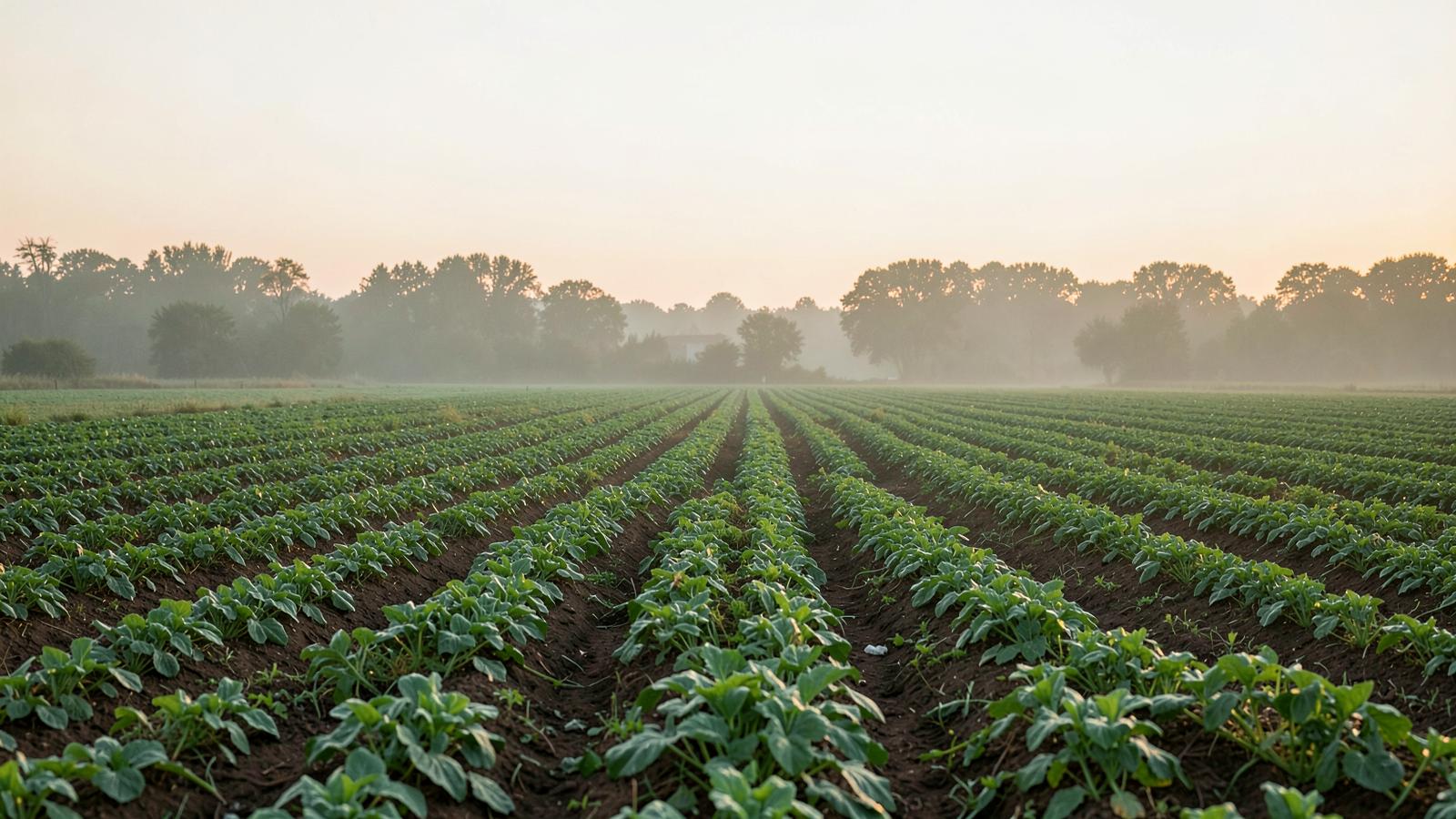
La terra è il perno
Roughly three quarters of global farmland is used for livestock, yet it supplies a minority of the world's calories. Shifting even part of that land back to crops, forest or wetland is the single largest lever most countries hold.
Leggere un’affermazione in cinque passaggi
- 01Find the original sourceTrace the figure back to a study, dataset or public record rather than a headline restating it.
- 02Check the boundaryAsk what the number counts: farm gate only, or land use, feed, transport and processing too.
- 03Compare like with likePer kilogram, per gram of protein and per calorie can point in different directions.
- 04Look for the rangeCredible estimates come with uncertainty; a single precise-sounding figure often hides it.
- 05Ask who is affectedAnimals, workers, neighbouring communities and future readers all carry part of the cost.
Mito e prove
| Affermazione comune | Cosa mostrano i dati | Perché conta |
|---|---|---|
| Local food is always the lowest-carbon choice | Transport is a small share of most food footprints; what is produced matters more than how far it travelled. | It redirects effort towards the choices with real leverage. |
| Plant-based eating cannot meet protein needs | Legumes, grains, soy foods, nuts and seeds cover protein and amino-acid needs in well-planned diets at every life stage. | Nutrition myths keep people from a change they were open to. |
| Higher-welfare labels mean animals are not harmed | Label standards vary widely and many permit routine practices readers would not expect. | Informed choices depend on knowing what a label actually certifies. |
| Individual choices are irrelevant next to policy | Demand shifts change what is produced, funded and legislated; the two move together. | It replaces fatalism with something you can act on this week. |
Il vocabolario del dibattito
- Factory farming
- Intensive confinement systems that maximise output per animal and per unit of space.
- Life-cycle assessment
- A method that totals environmental impact across every stage of a product's life.
- Sentience
- The capacity to feel, perceive and experience — the basis of most animal-welfare law.
- Land-use change
- Conversion of forest, grassland or wetland into farmland, and the emissions it releases.
- Food-system resilience
- How well supply survives drought, disease and price shocks.
- Just transition
- Policy that protects farmers and workers while production shifts.
Dalle prove alle scelte quotidiane
Come si traduce nel piatto
Numbers describe the system; meals, votes and purchases are how most people meet it. This field guide turns the reporting into concrete swaps, a four-week plan and the signals worth watching, so a page of research becomes something you can act on this week without pretending the hard parts are simple.
Le sostituzioni con l’effetto maggiore
| Al posto di | Prova | Perché conta |
|---|---|---|
| Beef mince | Lentils, beans or soy mince | Beef carries by far the highest emissions and land use per gram of protein. |
| Dairy milk | Soy or pea milk | Comparable protein with a fraction of the land, water and emissions. |
| Cheese in daily meals | Nut or seed-based spreads, cashew cheese | Cheese is the most resource-intensive dairy product per kilogram. |
| Chicken and eggs | Tofu, tempeh, chickpeas | Removes the welfare cost of the most intensively farmed animals. |
| Farmed shrimp and salmon | Beans, jackfruit, seaweed-seasoned dishes | Avoids mangrove loss, bycatch and wild fish used as feed. |
| Butter | Olive or rapeseed oil | Lower emissions per kilogram and better cardiovascular profile. |
Un piano di quattro settimane che regge
Most people who change their diet permanently do it gradually, one meal slot at a time, keeping the food they already like at the centre.
- 01Week 1 — breakfastChange the meal with the fewest variables: swap milk, add fruit, keep everything else identical.
- 02Week 2 — three dinnersCook three plant-based dinners you already know how to make well, rather than new recipes.
- 03Week 3 — restockRebuild the cupboard around pulses, grains, tinned tomatoes, nuts and frozen vegetables.
- 04Week 4 — eating outFind two reliable options near work or home, so social meals never become the failure point.
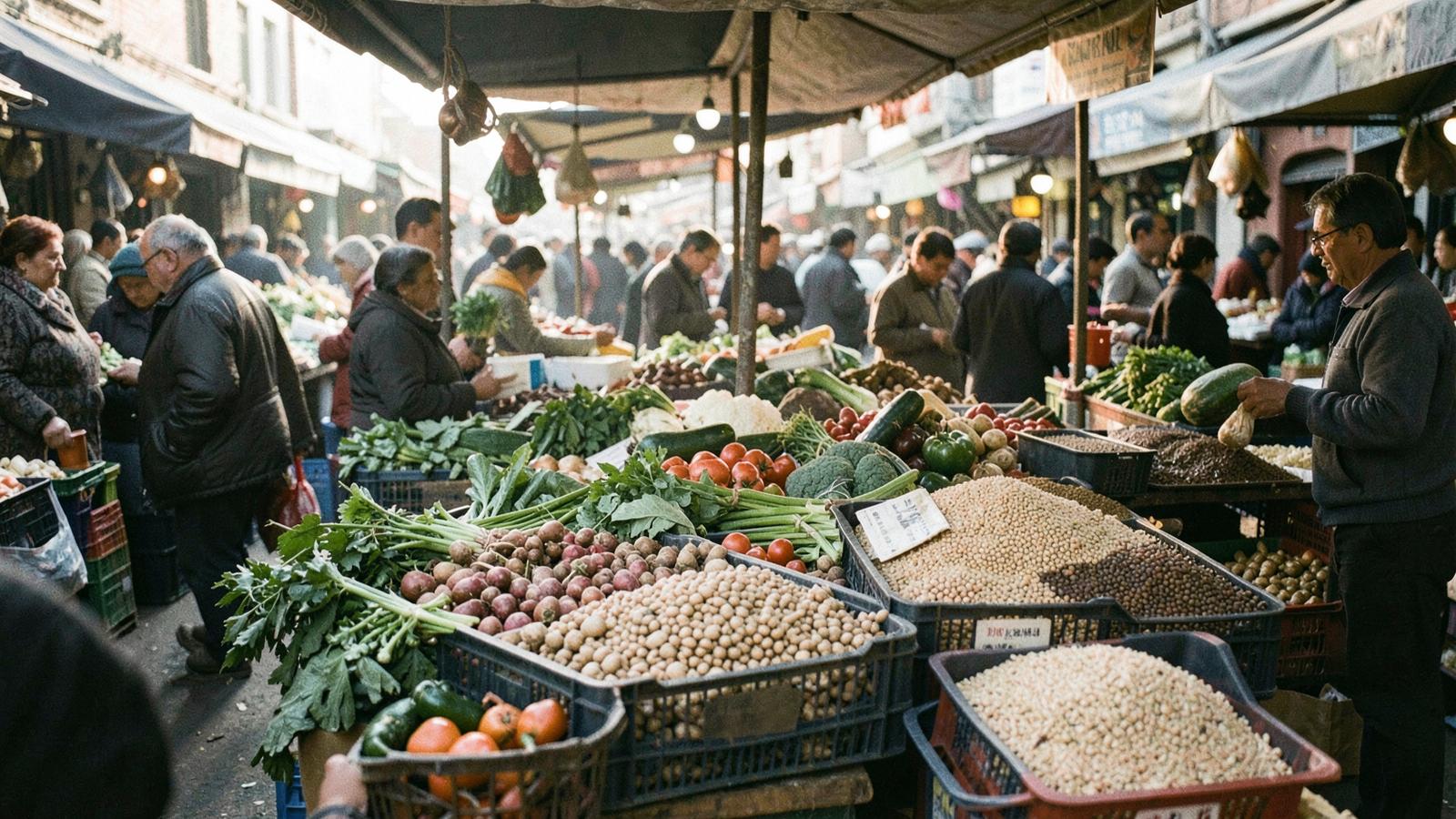
Dove il cambiamento si vede
Markets are the clearest place to watch demand shift: as pulses, grains and vegetables take more shelf space, producers, buyers and policy follow the money rather than the argument.
Segnali da osservare
- Retail shelf shareHow much space plant-based products hold is a better indicator than launch announcements.
- Cage and crate bansLegislation on confinement moves faster than diet change and affects billions of animals.
- Feed-crop areaLand planted for animal feed shows whether production is actually shifting.
- Institutional menusSchools, hospitals and canteens change the default meal for millions at once.
- Price parityWhen plant-based costs the same or less, adoption stops depending on conviction.
- Transparency rulesLabelling and inspection records determine what the public can even see.
Domande pratiche
- Do I have to change everything at once?
- No. Reducing the most resource-intensive foods most often — beef, cheese and farmed fish — produces most of the measurable effect, and partial changes maintained for years outperform strict changes abandoned in a month.
- Is plant-based eating more expensive?
- Staples such as lentils, beans, rice, oats, seasonal vegetables and tofu are among the cheapest sources of protein and calories. Cost rises mainly with processed meat substitutes, which are optional.
- What about nutrients like B12, iron and omega-3?
- A B12 supplement is standard advice for anyone eating mostly or entirely plant-based. Iron comes from legumes, tofu and greens, absorbed better with vitamin C; omega-3 from flax, walnuts, chia or an algae supplement.
- Does any of this reach the animals themselves?
- Demand determines how many animals are bred, and legislation determines how they are kept. Reporting tracks both because neither works alone.
Come funziona davvero il sistema
Una mappa del sistema alimentare che raccontiamo
Most coverage of animals, diets and climate arrives as isolated stories: a slaughterhouse investigation, a methane figure, a supermarket launch. They belong to one system with a small number of decision points. This map sets out that system stage by stage — who owns each step, where animals enter it, what the public can see, and which levers have historically moved it — so every article on this site can be read in context rather than as an isolated shock.
Fase per fase, dal campo al piatto
Animal agriculture is a chain of separate businesses. Pressure applied at one link rarely stays there; it moves upstream to feed and land, or downstream to retail and price.
| Fase | Cosa succede | Dove agisce la leva |
|---|---|---|
| Land and feed | Soy, maize and grass are grown to feed animals, using roughly three quarters of agricultural land worldwide. | Deforestation rules, feed-import standards, and any fall in demand for animal products. |
| Breeding | Genetics companies supply fast-growing birds and high-yield dairy lines used across most of the industry. | Growth-rate standards; welfare commitments that specify breed, not just space. |
| Rearing | Animals are housed at density, typically indoors, with confinement systems that vary by species and country. | Cage, crate and stocking-density law — the fastest-moving area of animal legislation. |
| Transport and slaughter | Live animals move to centralised plants; a small number of companies process most of the volume. | Journey-time limits, CCTV and inspection rules, stunning requirements. |
| Processing and brands | Meat and dairy become branded products, with margins concentrated in processing rather than farming. | Labelling law, marketing claims, and corporate sourcing commitments. |
| Retail and food service | Supermarkets, canteens and restaurants set the default meal for most people most days. | Shelf share, menu defaults, procurement contracts and price parity. |
| The plate | Households choose within the range and prices the previous stages allow. | Repeat purchases, which retailers track far more closely than surveys. |
Chi decide davvero
Individual choices matter, but they are amplified or blunted by a handful of institutions that set defaults for millions of meals at a time.
- Supermarket buyersA handful of buyers decide what fills the shelves of an entire country, and their sourcing standards travel back up the chain to farms.
- Public procurementSchools, hospitals, prisons and armed forces buy meals in bulk; changing the default menu shifts millions of meals without asking anyone to change their mind.
- Regulators and inspectorsWhat can be documented determines what can be enforced. Inspection frequency and CCTV rules decide whether standards exist on paper or in practice.
- Subsidy designAgricultural support still flows mainly to animal products and feed crops, keeping prices below what the resource use would otherwise imply.
- Investors and lendersFinancing terms for new sheds, expansions and processing capacity set the size of the industry a decade ahead.
- Courts and citizen initiativesReferenda, lawsuits and ballot measures have repeatedly delivered confinement bans that legislatures would not pass on their own.
La terra è la variabile silenziosa
Most farmland on earth feeds animals rather than people directly. That single fact explains why diet, deforestation, wildlife loss and climate keep turning up in the same story.
Lo stesso sistema, punti di pressione diversi
| Regione | Cosa determina i risultati |
|---|---|
| European Union | Confinement law and labelling lead globally; the unresolved question is imported animal products produced to lower standards. |
| United States | State ballot measures drive welfare change while federal rules lag; litigation over interstate sales is the recurring battleground. |
| Brazil and South America | Feed-crop expansion and cattle ranching sit at the interface with forest loss, making land use the decisive issue. |
| China and East Asia | Rapid growth in intensive production alongside fast-growing plant-based and cultivated protein investment. |
| India and South Asia | The world's largest dairy sector, where welfare questions centre on cattle, transport and the fate of male calves. |
| Sub-Saharan Africa | Smallholder systems dominate today; whether intensive models are imported is still an open decision. |
Cosa è già cambiato
Change in this system is slow, then sudden. These are the shifts that repeat across countries once they start.
- 01Battery cagesBans moved from single countries to whole blocs, then to corporate commitments covering supply chains beyond the law.
- 02Sow stalls and veal cratesRestricted in a growing list of jurisdictions once footage made routine confinement visible to voters.
- 03Plant-based milkMoved from specialty shelf to standard option in cafés and supermarkets within roughly a decade.
- 04Slaughterhouse CCTVIntroduced after undercover footage, converting sporadic scandal into continuous documentation.
- 05Deforestation-linked feedImport rules now require supply-chain evidence, tying European diets to land use elsewhere.
- 06Institutional menusCities and universities adopting plant-based defaults have produced the largest single-decision emissions cuts in catering.
Come leggere un’affermazione su allevamenti e diete
Most disputes come down to a handful of recurring tricks. Running a claim through these questions resolves the majority of them.
- Per what?Impacts per kilogram, per gram of protein and per calorie tell different stories. Ask which one is being used and why.
- Whose average?A best-case farm is not a national average, and a national average is not the global one behind imported products.
- Who funded it?Industry-funded studies are not automatically wrong, but disclosure changes how much weight a single result deserves.
- Legal or actual?A practice being legal says nothing about how common it is; enforcement records are the better source.
- Is the comparison fair?Comparing a processed substitute to a raw ingredient, or a farm to a factory, usually smuggles in the conclusion.
- What would change your mind?Claims that no evidence could falsify are advocacy, from any direction, and should be read as such.
Domande sul sistema
- Is factory farming the exception or the norm?
- It is the norm. The large majority of farmed land animals worldwide are raised in intensive systems; extensive and pasture-based farming accounts for a small share of total production, even where it dominates the imagery used to sell it.
- Why does land use matter so much?
- Around three quarters of agricultural land supports animal products that supply a minority of global calories and protein. Land is therefore the link between diets, deforestation, wildlife decline and climate targets.
- Do welfare reforms slow down bigger change?
- The evidence does not support that trade-off. Jurisdictions that banned confinement systems have generally also seen the fastest growth in plant-based alternatives, because both follow the same shift in public attention.
- Can individual choices matter in a system this large?
- Individually they are small; in aggregate they are the demand signal every other stage responds to. The measurable effects come from sustained changes across many people, and from the institutions that set default meals.
- Where does this newsroom get its figures?
- From peer-reviewed research, government inspection and production data, and named organisations. Where estimates are contested, articles say so and give the range rather than the most striking number.