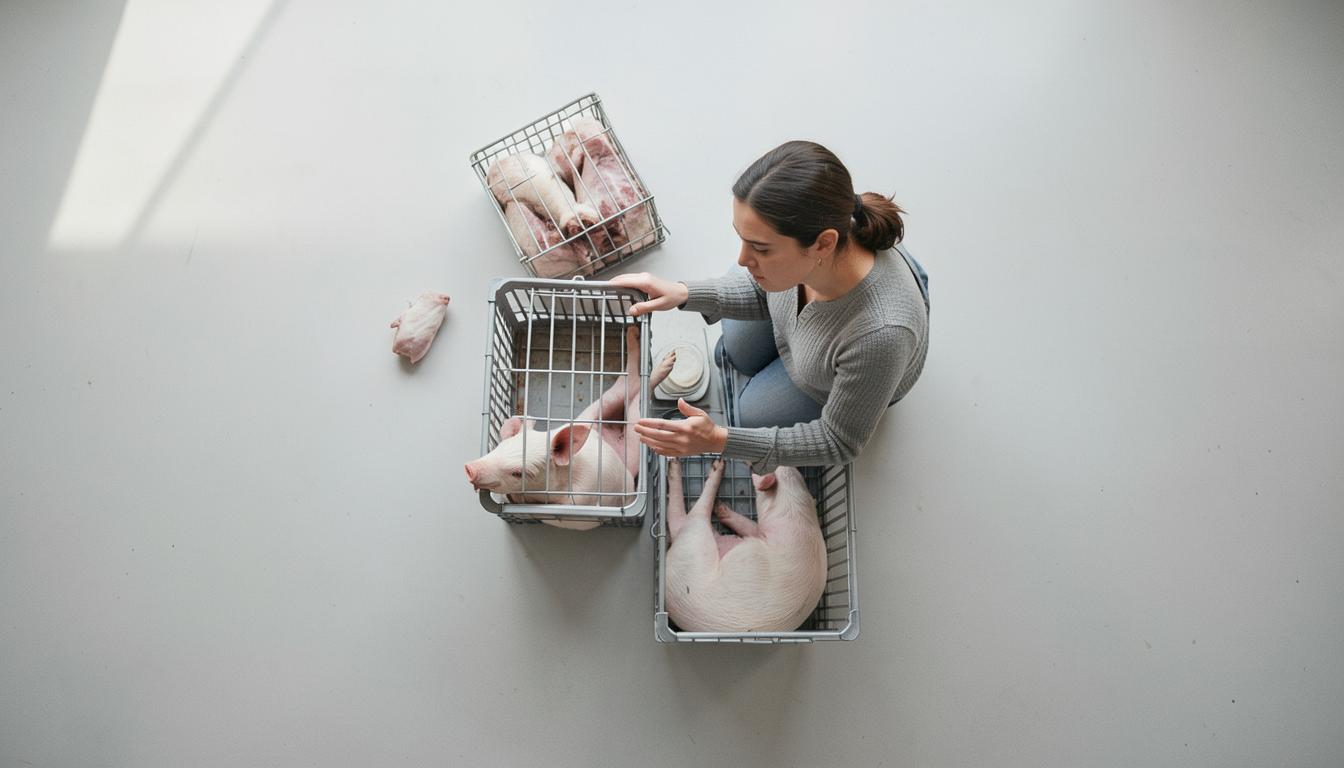
Halal certification in East Asia—spanning Indonesia, Malaysia, Japan, and South Korea—is widely assumed to guarantee humane treatment of animals, but evidence from supply chain audits and undercover investigations reveals significant gaps between religious principles and industrial practice. This article debunks five common myths about halal certification and animal welfare in the East Asian context, drawing on recent studies and regulatory reports.
Myth 1: 'Halal certification guarantees humane slaughter'
The reality: Halal certification primarily focuses on ritual compliance—who performs the slaughter, how the knife is used, and whether the animal is alive at the time of cutting—rather than on measurable welfare outcomes like stress levels, pain duration, or pre-slaughter handling. A 2023 study by the World Animal Protection and the International Islamic University Malaysia found that 68% of halal-certified abattoirs in Indonesia and Malaysia failed to meet basic welfare indicators such as low-stress handling and adequate stunning prior to slaughter (World Animal Protection, 2023). The gap between religious ethics and industrial practice is especially wide in high-throughput facilities where animals are processed at rates exceeding 100 per hour.
“Consumers assume the halal label means the animal was treated with dignity, but our audits show that in many East Asian facilities, the ritual is followed while the animal's suffering is ignored.”
Myth 2: 'Stunning is forbidden in halal slaughter'
The reality: Contrary to popular belief, stunning—rendering an animal unconscious before slaughter—is permitted by several major Islamic authorities, including the Indonesian Uleana Council (MUI), the Malaysian Department of Islamic Development (JAKIM), and the European Council for Fatwa and Research. The key condition is that stunning must not kill the animal or cause permanent injury; it must be reversible and allow the animal to regain consciousness if slaughter is not performed. In practice, however, adoption of stunning in East Asian halal supply chains remains low. A 2022 survey by the Southeast Asian Halal Science Centre found that only 23% of halal-certified abattoirs in Thailand and 31% in Malaysia used any form of stunning, citing cost, lack of training, and fear of invalidating certification as barriers (SEA Halal Science Centre, 2022). This contrasts with the European Union, where over 90% of halal slaughterhouses use stunning.

| Country | Halal abattoirs using stunning (%) | Primary stunning method |
|---|---|---|
| Malaysia | 31 | Electrical |
| Indonesia | 18 | Captive bolt |
| Thailand | 23 | Electrical |
| Japan | 45 | Captive bolt |
| South Korea | 52 | Electrical |
| Netherlands (EU reference) | 92 | Electrical |
Myth 3: 'Pre-slaughter stress does not affect halal status'
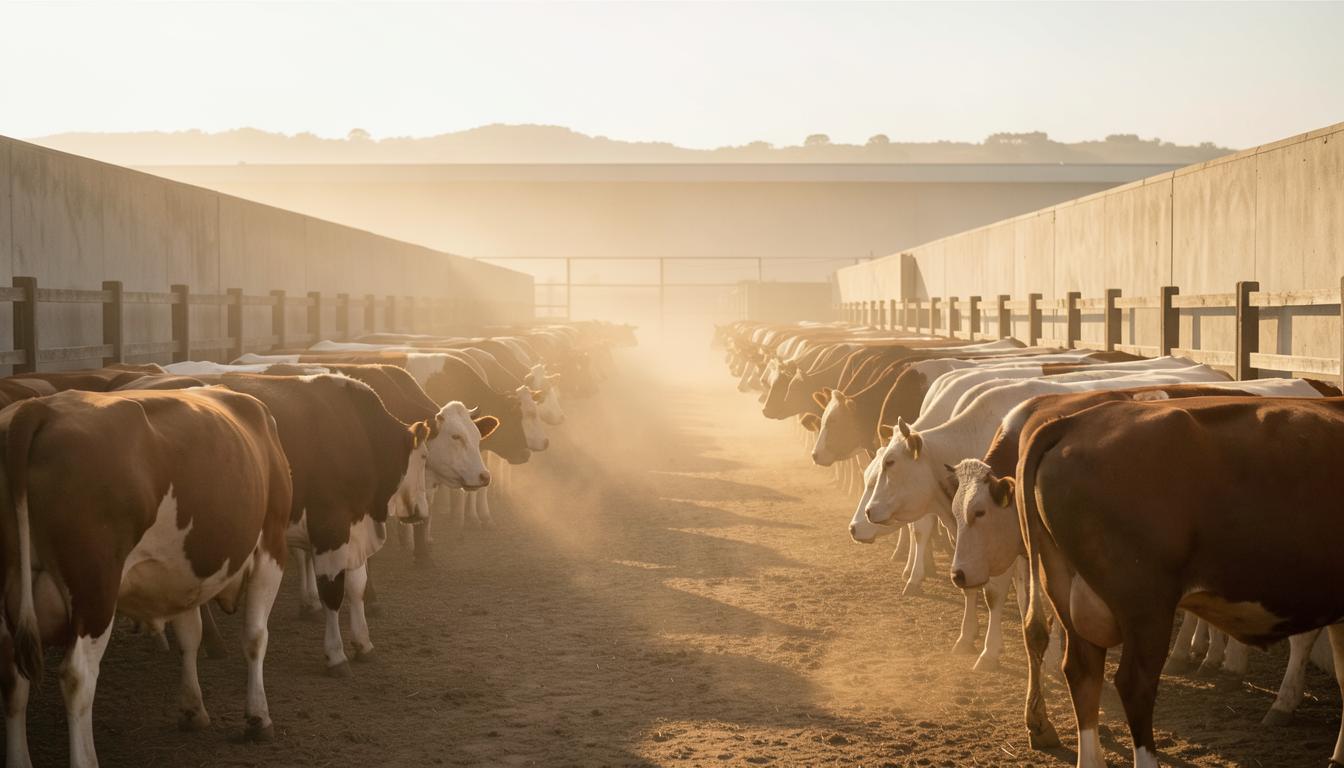
The reality: Pre-slaughter stress—caused by transport, handling, and lairage—directly impacts meat quality and animal welfare, yet it is rarely monitored in halal certification audits. A 2021 investigation by the animal rights group Animals Asia documented overcrowded trucks, electric prods, and prolonged waiting times at halal abattoirs in southern China, conditions that elevate cortisol levels and reduce glycogen stores, leading to dark, firm, dry (DFD) meat (Animals Asia, 2021). Islamic jurisprudence requires that animals be treated with compassion before slaughter, but certification bodies in East Asia typically do not include pre-slaughter handling in their checklists. The result is a system where the ritual moment is regulated, but the hours leading up to it are not.
Myth 4: 'Halal certification in Japan and South Korea is more stringent'
The reality: While Japan and South Korea have smaller halal markets, their certification schemes are often perceived as more rigorous due to higher general food safety standards. However, a 2024 comparative analysis by the Halal Research Institute at Osaka University revealed that Japanese halal certifiers—many of which are private companies—do not conduct unannounced welfare audits, and 60% of certified facilities in Japan were found to use slaughter methods that caused avoidable pain, such as improper neck cuts or delayed bleeding (Osaka University, 2024). In South Korea, the Korea Muslim Federation's halal certification includes a welfare checklist, but enforcement is weak; a 2023 government inspection found that 1 in 5 certified facilities had expired stunning equipment or untrained slaughtermen. The assumption that 'developed country' equals 'high welfare' does not hold for halal supply chains.
Welfare compliance rate in halal-certified abattoirs, East Asia vs EU, 2023
Myth 5: 'Consumers cannot influence halal animal welfare'
The reality: Consumer pressure is already driving change. In Malaysia, a 2022 campaign by the Malaysian Animal Welfare Association led to the introduction of a 'Humane Halal' label by the Selangor Islamic Religious Council, which requires stunning and third-party welfare audits. In Japan, the Tokyo-based Nippon Halal Association launched a pilot programme in 2023 that certifies only facilities using reversible electrical stunning, and early data shows a 25% premium on products carrying both halal and animal welfare certifications (Nippon Halal Association, 2024). Consumers can demand transparency by asking retailers for certification details, choosing brands that disclose stunning methods, and supporting advocacy groups pushing for regulatory reform. In Indonesia, a 2023 petition with 50,000 signatures urged the MUI to mandate stunning in all halal-certified abattoirs, and the council is currently reviewing the proposal.
Frequently asked questions
Is halal meat always slaughtered without stunning?+
No. Many Islamic authorities permit reversible stunning that does not kill the animal, including the Indonesian Ulema Council and Malaysia's JAKIM. However, adoption of stunning remains low in East Asia due to cost and training gaps. In Europe, over 90% of halal slaughterhouses use stunning, but in East Asia the figure is below 40% in most countries.
Does halal certification in Indonesia require animal welfare audits?+
The Indonesian Ulema Council (MUI) halal certification includes a general requirement for humane treatment, but specific welfare audits—covering pre-slaughter handling, stunning, and environmental conditions—are not mandatory. A 2023 study found that only 32% of MUI-certified abattoirs met basic welfare criteria.
How can I find halal meat that is also animal welfare certified?+
Look for dual-certified products carrying both a halal label and an animal welfare label such as 'Certified Humane' or 'Humane Halal'. In Malaysia, the Selangor Islamic Religious Council offers a 'Humane Halal' label. In Japan, the Nippon Halal Association certifies only facilities using stunning. Ask retailers for documentation.
What are the main animal welfare issues in halal slaughterhouses in East Asia?+
Key issues include lack of stunning, prolonged pre-slaughter stress from transport and lairage, improper knife sharpening leading to multiple cuts, and inadequate training of slaughtermen. Undercover investigations have documented animals being fully conscious during throat cutting and delayed bleeding that causes extended suffering.
Is there a movement to reform halal animal welfare standards in East Asia?+
Yes. Advocacy groups in Malaysia, Indonesia, and Japan are pushing for mandatory stunning, third-party welfare audits, and transparent labelling. In 2023, a petition in Indonesia with 50,000 signatures urged the MUI to mandate stunning. The Malaysian government is also reviewing its halal certification standards to incorporate welfare criteria.
The five myths debunked here reveal a system where religious ethics and industrial efficiency often conflict, leaving animals to suffer in the gap. For consumers in East Asia—and globally—the path forward lies in demanding transparency, supporting certification schemes that integrate stunning and welfare audits, and recognising that a halal label is not a substitute for humane practice. Only when animal welfare becomes a non-negotiable component of halal certification will the promise of compassion be fulfilled.