Temas
developing countries
Vida plant-based para personas, animales y el planeta.
Aún no hay artículos.
Una guía útil · index
Entender el panorama completo
El buen periodismo ambiental ayuda a orientarse, comprobar una afirmación y decidir qué explorar después. Reunimos evidencia, contexto y pasos prácticos sin convertir asuntos complejos en eslóganes.
Evidencia
Basado en investigación
Contexto
Conectado
Siguiente paso
Práctico
Cómo usar esta sección
| Empieza por | Encontrarás | Ideal para |
|---|---|---|
| The overview | A clear answer and the essential terms | First-time readers |
| The evidence | Sources, comparisons and reported context | Checking a claim |
| The pathways | Related topics, tools and further reading | Going deeper |
Preguntas frecuentes
Is this information opinion or reporting?
We separate evidence, interpretation and practical guidance. Claims should be traceable to research, public records or clearly identified editorial analysis.
Can one choice solve these problems?
No. Food systems, animal welfare and climate are connected systems. Individual choices matter, and so do policy, business and collective action.
Where should I continue?
Use the related topics, topic hubs and calculators on this page to move from a quick answer to the primary context behind it.
Contexto en profundidad
La evidencia detrás del sistema alimentario
Animal agriculture sits at the intersection of climate, land use, water, public health and animal welfare. These reference points recur across our reporting, so we keep them in one place: the numbers most often cited, the way we read a claim, the myths that survive longest, and the vocabulary you need to follow the debate in any language.
Datos de referencia
- ~80 billion
- land animals farmed and slaughtered each year worldwide
- ~14.5%
- share of global greenhouse gas emissions linked to livestock supply chains
- ~77%
- of agricultural land used for grazing and feed production
- ~70%
- of freshwater withdrawals worldwide go to agriculture

La tierra es la clave
Roughly three quarters of global farmland is used for livestock, yet it supplies a minority of the world's calories. Shifting even part of that land back to crops, forest or wetland is the single largest lever most countries hold.
Cómo leer una afirmación en cinco pasos
- 01Find the original sourceTrace the figure back to a study, dataset or public record rather than a headline restating it.
- 02Check the boundaryAsk what the number counts: farm gate only, or land use, feed, transport and processing too.
- 03Compare like with likePer kilogram, per gram of protein and per calorie can point in different directions.
- 04Look for the rangeCredible estimates come with uncertainty; a single precise-sounding figure often hides it.
- 05Ask who is affectedAnimals, workers, neighbouring communities and future readers all carry part of the cost.
Mito y evidencia
| Afirmación habitual | Lo que muestra la evidencia | Por qué importa |
|---|---|---|
| Local food is always the lowest-carbon choice | Transport is a small share of most food footprints; what is produced matters more than how far it travelled. | It redirects effort towards the choices with real leverage. |
| Plant-based eating cannot meet protein needs | Legumes, grains, soy foods, nuts and seeds cover protein and amino-acid needs in well-planned diets at every life stage. | Nutrition myths keep people from a change they were open to. |
| Higher-welfare labels mean animals are not harmed | Label standards vary widely and many permit routine practices readers would not expect. | Informed choices depend on knowing what a label actually certifies. |
| Individual choices are irrelevant next to policy | Demand shifts change what is produced, funded and legislated; the two move together. | It replaces fatalism with something you can act on this week. |
Vocabulario del debate
- Factory farming
- Intensive confinement systems that maximise output per animal and per unit of space.
- Life-cycle assessment
- A method that totals environmental impact across every stage of a product's life.
- Sentience
- The capacity to feel, perceive and experience — the basis of most animal-welfare law.
- Land-use change
- Conversion of forest, grassland or wetland into farmland, and the emissions it releases.
- Food-system resilience
- How well supply survives drought, disease and price shocks.
- Just transition
- Policy that protects farmers and workers while production shifts.
De la evidencia a la vida diaria
Cómo se ve todo esto en el plato
Numbers describe the system; meals, votes and purchases are how most people meet it. This field guide turns the reporting into concrete swaps, a four-week plan and the signals worth watching, so a page of research becomes something you can act on this week without pretending the hard parts are simple.
Cambios con mayor efecto medido
| En lugar de | Prueba | Por qué importa |
|---|---|---|
| Beef mince | Lentils, beans or soy mince | Beef carries by far the highest emissions and land use per gram of protein. |
| Dairy milk | Soy or pea milk | Comparable protein with a fraction of the land, water and emissions. |
| Cheese in daily meals | Nut or seed-based spreads, cashew cheese | Cheese is the most resource-intensive dairy product per kilogram. |
| Chicken and eggs | Tofu, tempeh, chickpeas | Removes the welfare cost of the most intensively farmed animals. |
| Farmed shrimp and salmon | Beans, jackfruit, seaweed-seasoned dishes | Avoids mangrove loss, bycatch and wild fish used as feed. |
| Butter | Olive or rapeseed oil | Lower emissions per kilogram and better cardiovascular profile. |
Un plan de cuatro semanas que suele funcionar
Most people who change their diet permanently do it gradually, one meal slot at a time, keeping the food they already like at the centre.
- 01Week 1 — breakfastChange the meal with the fewest variables: swap milk, add fruit, keep everything else identical.
- 02Week 2 — three dinnersCook three plant-based dinners you already know how to make well, rather than new recipes.
- 03Week 3 — restockRebuild the cupboard around pulses, grains, tinned tomatoes, nuts and frozen vegetables.
- 04Week 4 — eating outFind two reliable options near work or home, so social meals never become the failure point.

Donde el cambio se ve
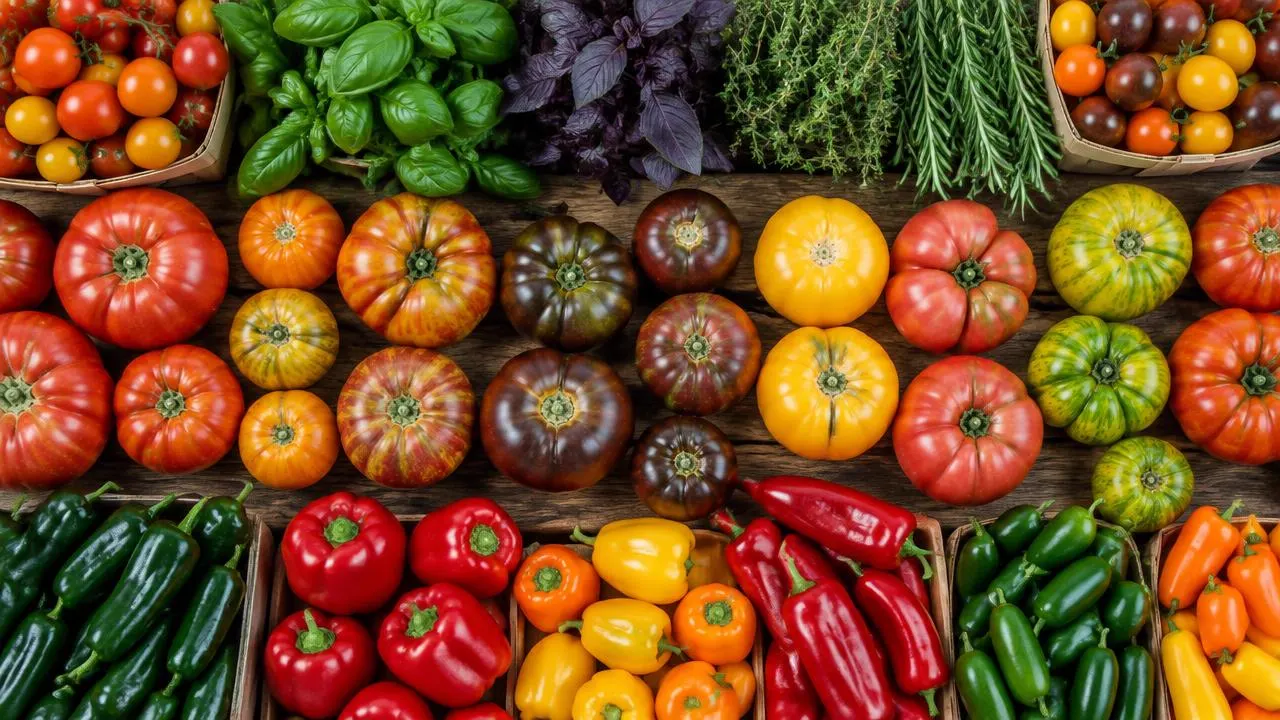
Markets are the clearest place to watch demand shift: as pulses, grains and vegetables take more shelf space, producers, buyers and policy follow the money rather than the argument.
Señales a seguir
- Retail shelf shareHow much space plant-based products hold is a better indicator than launch announcements.
- Cage and crate bansLegislation on confinement moves faster than diet change and affects billions of animals.
- Feed-crop areaLand planted for animal feed shows whether production is actually shifting.
- Institutional menusSchools, hospitals and canteens change the default meal for millions at once.
- Price parityWhen plant-based costs the same or less, adoption stops depending on conviction.
- Transparency rulesLabelling and inspection records determine what the public can even see.
Preguntas prácticas
- Do I have to change everything at once?
- No. Reducing the most resource-intensive foods most often — beef, cheese and farmed fish — produces most of the measurable effect, and partial changes maintained for years outperform strict changes abandoned in a month.
- Is plant-based eating more expensive?
- Staples such as lentils, beans, rice, oats, seasonal vegetables and tofu are among the cheapest sources of protein and calories. Cost rises mainly with processed meat substitutes, which are optional.
- What about nutrients like B12, iron and omega-3?
- A B12 supplement is standard advice for anyone eating mostly or entirely plant-based. Iron comes from legumes, tofu and greens, absorbed better with vitamin C; omega-3 from flax, walnuts, chia or an algae supplement.
- Does any of this reach the animals themselves?
- Demand determines how many animals are bred, and legislation determines how they are kept. Reporting tracks both because neither works alone.