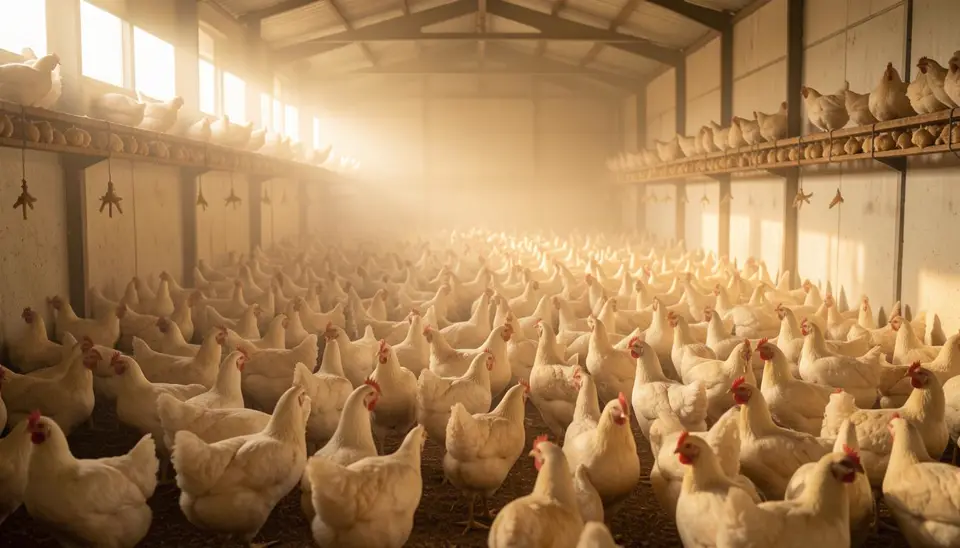
Undercover footage from poultry farms across the globe has consistently revealed grim conditions in colony cages, yet this remains the industry standard. This article explores the science behind animal welfare, the reality of colony cages, and the policy implications of this routine practice.
What was documented in undercover investigations?
Undercover investigations have consistently exposed shocking conditions in colony cages. Hens are packed tightly, often unable to stretch their wings or perform natural behaviors. Injuries, stress, and suffering are common, yet these conditions are deemed acceptable by industry standards.
“I've seen hens with their wings trapped under the wire, causing terrible pain and suffering. The conditions are truly horrendous, yet this is the norm in the egg industry.”
Why are these conditions routine, not exceptional?
The poultry industry argues that colony cages are necessary for efficient egg production. However, scientific research challenges this narrative, revealing the severe welfare implications of caging hens.
The regulations that fail to address welfare issues
Current regulations allow for these cramped conditions, failing to address the welfare concerns raised by scientists and animal welfare organizations. The European Union's ban on conventional battery cages in 2012, for example, did not eliminate colony cages, which remain legal and widely used.
| Cage System | Space Allowance per Hen (cm²) |
|---|---|
| Conventional battery cages | 450 |
| Colony cages | 550 |
| Enriched cages | 750 |
| Free-range | 4 m² per 1000 hens |
| Organic | 9 m² per 1000 hens |
Industry and NGO reactions
The poultry industry maintains that colony cages are necessary and humane, while animal welfare organizations argue that the only ethical way to produce eggs is by keeping hens in cage-free systems.
“Colony cages are a step in the right direction, but they still fall short in addressing the welfare concerns of caged hens.”
Policy implications and the need for change
The science is clear: colony cages cause suffering and stress to hens. Policy changes are needed to incentivize the transition to cage-free egg production and improve the welfare of caged poultry.
Frequently asked questions
Are colony cages banned in the EU?+
No, colony cages are still legal in the EU, although they are set to be banned in 2027 under the EU Animal Welfare Legislation.
What are the alternatives to colony cages?+
Alternatives to colony cages include enriched cages, free-range, and organic systems, which provide hens with more space and opportunities to perform natural behaviors.
How can consumers make a difference?+
Consumers can make a difference by choosing eggs from hens kept in higher welfare systems, such as cage-free, free-range, or organic.