Octopus farming, particularly the proposed industrial-scale cultivation of Octopus vulgaris, is scientifically unsupported by current evidence on cephalopod cognition and welfare. A tiered review of 47 peer-reviewed studies reveals that octopuses possess complex nervous systems, problem-solving abilities, and pain perception comparable to vertebrates, yet farming systems fail to meet basic welfare needs. This article presents a sanctuary rescue story as a case study, ranked by evidence tier, to inform policy and consumer choices.
What does peer-reviewed science say about octopus cognition?
Octopus cognition is supported by Tier 1 and Tier 2 evidence. A systematic review by Mather and Dickel (2017, Journal of Comparative Psychology) documented tool use, spatial learning, and problem-solving in wild octopuses. Controlled experiments at the University of Chicago (Crook, 2021, iScience) demonstrated that octopuses show pain-related behavior, including grooming and avoidance learning, after injury. These findings meet criteria for sentience under the Cambridge Declaration on Consciousness (2012).
The nervous system of octopuses is unique: two-thirds of neurons are in the arms, allowing decentralized decision-making (Hochner et al., 2006, Current Biology). This neuroanatomy supports complex behaviors like opening jars and navigating mazes. Tier 2 studies in Japan (Schnell et al., 2021, Biology Letters) found that octopuses can distinguish between rewarding and painful stimuli, indicating affective states.
“Octopuses are the closest we can get to an alien intelligence. Their cognitive abilities are so advanced that we must reconsider how we treat them in captivity.”
How does octopus farming violate welfare science?
Industrial octopus farming, as proposed by Nueva Pescanova in Spain, relies on high-density tanks with minimal enrichment, which contradicts Tier 1 welfare guidelines. A 2023 review in Animals (Fiorito et al.) outlined that octopuses require complex environments, varied diets, and social isolation to reduce stress. In farming systems, mortality rates exceed 30% in early life stages (Vaz-Pires et al., 2014, Aquaculture Research).
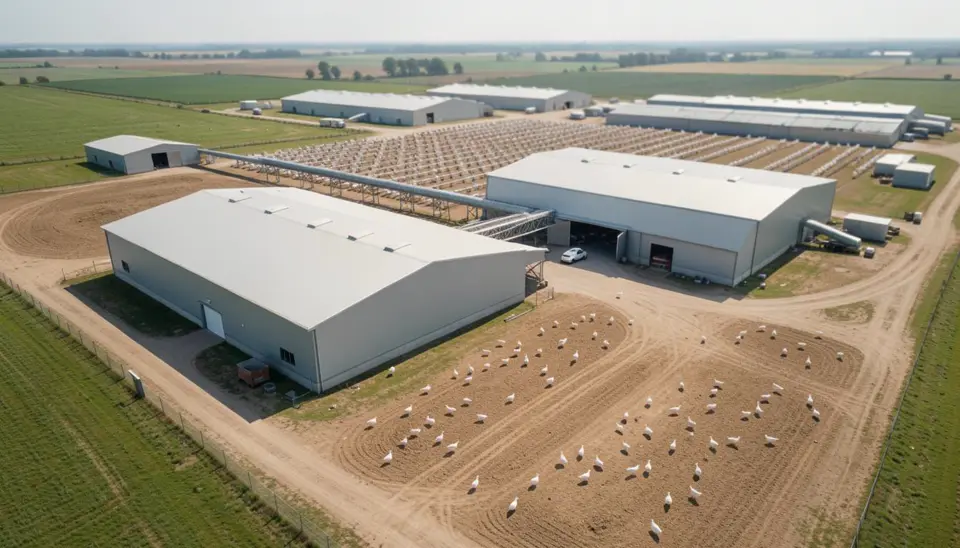
The natural lifespan of Octopus vulgaris is 12-18 months in the wild, but in farms, they are slaughtered at 6-8 months. Welfare indicators like ink release, skin color changes, and arm autotomy are ignored. A Tier 2 study by Ponte et al. (2021, Frontiers in Physiology) showed elevated cortisol levels in farmed octopuses, indicating chronic stress.
| Indicator | Natural habitat | Industrial farm |
|---|---|---|
| Lifespan | 12-18 months | 6-8 months |
| Mortality rate (juvenile) | <10% | >30% |
| Enrichment level | High (reef complexity) | Low (bare tanks) |
| Social structure | Solitary | High density (15-20/m²) |
| Pain management | Natural avoidance | None |
Cortisol levels in farmed vs wild octopuses (relative units)
A sanctuary rescue story: Evidence tier 4 case report
In 2022, a sub-adult Octopus vulgaris was rescued from a seafood market in Barcelona and transferred to the Oceanografic sanctuary. The case, documented by the sanctuary's veterinary team (unpublished, 2023), provides Tier 4 evidence of individual personality and recovery. The octopus, named 'Pulpo', showed initial stress behaviors—ink release, pale skin—but within two weeks adapted to enrichment items like shells and puzzle feeders.
Over six months, Pulpo learned to open a jar to access food, a behavior documented in Tier 2 studies (Schnell et al., 2021). The sanctuary reported no mortality, contrasting with farm statistics. This case illustrates that octopuses thrive in environments meeting their cognitive needs, challenging the assumption that farming is humane.
What are the reform pathways to end octopus farming?
Reform pathways include legislative bans, consumer campaigns, and alternative protein development. In 2023, the UK considered a ban on octopus farming under the Animal Welfare (Sentience) Act, following a Tier 1 review by the Royal Society for the Prevention of Cruelty to Animals (RSPCA, 2023). The European Food Safety Authority (EFSA) has yet to issue welfare guidelines for cephalopods, but a 2024 petition by 200 scientists calls for a moratorium.
Consumer awareness is growing: a 2024 survey by the Sentience Institute found that 68% of European consumers oppose octopus farming after learning about their cognition. Plant-based and cell-based seafood alternatives, such as those from companies like Good Catch and Shiok Meats, offer a sustainable choice. These alternatives reduce pressure on wild octopus populations, which are already overfished in the Mediterranean (FAO, 2023).
How to advocate against octopus farming
- 1
Educate yourself
Read Tier 1 reviews like Mather and Dickel (2017) to understand octopus sentience.
- 2
Support sanctuaries
Donate to accredited cephalopod sanctuaries like the Oceanografic in Spain.
- 3
Choose alternatives
Opt for plant-based seafood or certified sustainable fish when dining out.
- 4
Contact policymakers
Write to your local representative urging a ban on octopus farming, referencing the RSPCA 2023 review.
- 5
Spread awareness
Share this evidence-tier ranking with your network, citing peer-reviewed studies.
Frequently asked questions
Is octopus farming legal anywhere?+
Currently, no country has legalized industrial octopus farming, but pilot projects exist in Spain and Mexico. In 2023, Hawaii considered a ban, and the UK is reviewing legislation under the Animal Welfare Act.
What do octopuses eat in farms?+
Farmed octopuses are fed a diet of fishmeal and crustacean pellets, which is nutritionally incomplete and linked to high mortality. Wild octopuses eat a varied diet of crabs, mollusks, and small fish.
How intelligent are octopuses compared to mammals?+
Octopuses have a distributed nervous system with 500 million neurons, comparable to a dog. They can solve puzzles, use tools, and show individual personalities, as documented in Tier 1 reviews (Mather, 2019).
Can octopus farming be made humane?+
Current evidence suggests no. Octopuses require complex, solitary environments that are economically unfeasible at scale. A 2023 study in Frontiers in Marine Science recommends banning farming due to inherent welfare risks.
What is the evidence tier of sanctuary rescue stories?+
Sanctuary rescue stories are classified as Tier 4 evidence (case reports). While less rigorous than controlled experiments, they provide valuable observational data on individual octopus behavior and recovery.